Sometimes you’ll read a story about travel and you’ll never believe it’s true — even though it really is.
There was the woman who tried to escape airport police on her motorized suitcase.
Or the story of Vesna Vulovic, who was working as a flight attendant onboard JAT Yugoslav Airlines’ Flight 367 on January 26, 1972, when a suspected bomb brought down the plane among the mountains over Czechoslovakia (now known as the Czech Republic). All 27 other passengers and crew died but Ms Vulovic survived.
And does anyone remember that back in January 2020, a Delta Air Lines flight from Los Angeles to Shanghai had an engine issue, so it turned back not long after departure. But before landing, the pilots of the Boeing 777 jettisoned fuel (here’s why), and that fuel sprinkled down onto folks below. In all, 60 people needed medical care.
Another “this just can’t be true” story
This event happened in 2003, but we’re just hearing about it now.
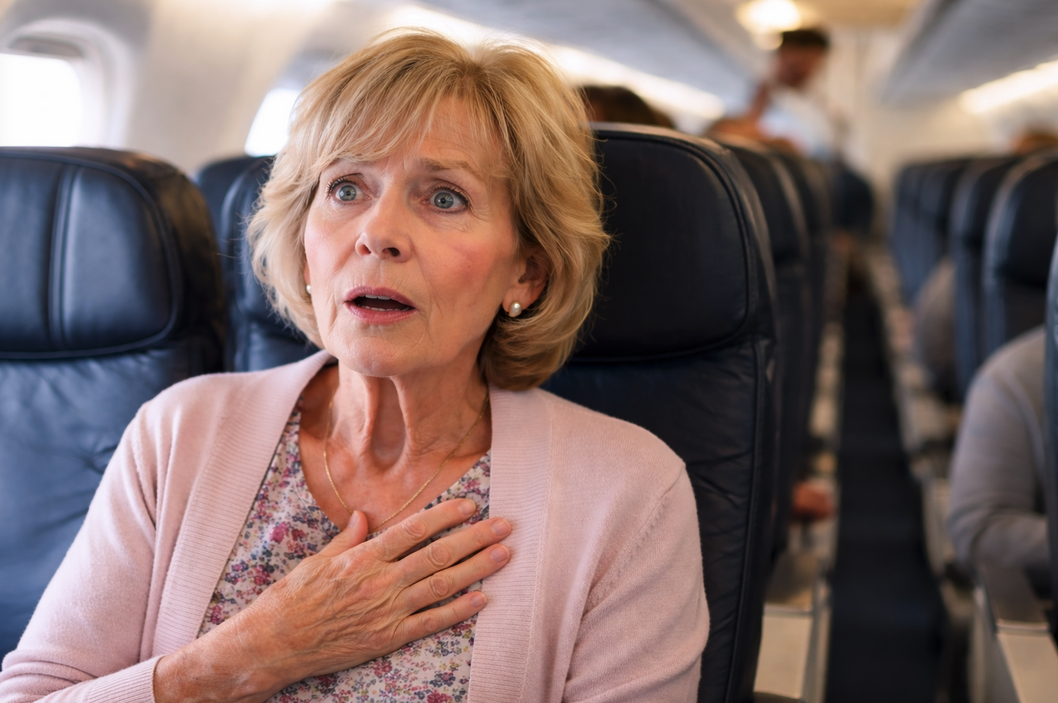
According to the BBC, it happened on a transatlantic flight in November 2003. There was a sudden in-flight announcement but it wasn’t about credit card offers, turbulence, or preparations for landing. Nope, it was a call for medical assistance — probably one of the top 3 most somber in-flight announcements you can hear.
That call was for Dorothy Fletcher, a 67-year-old grandmother from Liverpool.
She and her daughter, Christine, were traveling from Manchester to Florida. The flight was supposed to be a very happy occasion — she was going to attend Christine’s wedding in Orlando. Instead, Fletcher had suddenly developed severe chest pain in the middle of the flight. The pain radiated across her back and down her arm, and she was also experiencing sweating and vomiting. They were all textbook symptoms of someone having a heart attack — and definitely not something anyone wants to experience while flying over the Atlantic Ocean.
The flight attendants did exactly what you’d hope flight attendants would do: remained calm, offered Fletcher oxygen, monitored her, and let those in the cockpit know what was going on.
Unfortunately, Fletcher’s condition worsened, so the crew made the classic announcement, asking if there was a doctor onboard.
At first, the cabin was silent. But then people started standing up. Lots of people.
All told, over a dozen passengers stood up. And they were all doctors.
It gets better though — they weren’t “just” doctors. Cardiologists. Fifteen of them. And they were all heading to an American Heart Association conference in Central Florida.
If there were ever 15 people in the right place at the right time, this was it.
The doctors immediately took over. They used the aircraft’s emergency medical kit to stabilize Fletcher. They were able to monitor her heart and provide critical care. And meanwhile, while those 15 cardiologists were saving Fletcher’s life, the pilots diverted the flight to North Carolina, where emergency crews were already waiting on the ground.
Fletcher recalled, later on, hearing one of the doctors say, “I think we’re losing her.” But then another doctor, thankfully, found a pulse.
The plane landed without issues, and Fletcher was brought by ambulance to Charlotte Medical Center. She was in intensive care for two days, then spent several more days on a general ward.
Doctors later said that without the immediate expert intervention that the cardiologists on the plane had administered, she might not have made it.
A happy ending
Despite nearly dying on the plane, Fletcher recovered amazingly fast and was able to fly to Florida (this time without incident) just a few days later. About a week after the incident, she was in Central Florida, attending her daughter’s wedding — very much alive.
“I couldn’t believe what happened,” Fletcher said. “All these people came rushing towards me. The doctors were wonderful. They saved my life.”
Unfortunately, she never was able to learn any of their names.
“I wish I could thank them,” she said. “I wish I could thank them but I have no idea who they were, other than they were going to a conference in Orlando.”
Her daughter, Christine Penman, later reflected on the emotional whiplash of the experience. “2003 was my best year and almost my worst,” she said. “My mum wouldn’t be here today if it wasn’t for those doctors — and in the rush, we never even got their names.”
Did it really happen?
Again, the BBC reported about the event back in 2003. So did The Telegraph. And stateside, it was covered by CBS News. That should be enough — I mean, none of those are exactly the Weekly World News — but the story still wound up in Snopes.
Want to comment on this post? Great! Read this first to help ensure it gets approved.
Want to sponsor a post, write something for Your Mileage May Vary, or put ads on our site? Click here for more info.
Like this post? Please share it! We have plenty more just like it and would love it if you decided to hang around and sign up to get emailed notifications of when we post.
Whether you’ve read our articles before or this is the first time you’re stopping by, we’re really glad you’re here and hope you come back to visit again!
This post first appeared on Your Mileage May Vary