We plan for late flights as if it were the default setting in air travel. Not because we’re pessimists, but because experience teaches you to expect it. Airlines build in buffers, weather stacks up, crews time out, gates back up — and if you’ve ever landed only to sit on the taxiway watching your “arrival time” drift later by the minute, you already know the drill. Even a flight that’s technically “on time” can end up late in the ways that actually matter.
What almost nobody plans for is the opposite problem — because it sounds like it shouldn’t even count as a problem. What happens when your flight arrives way earlier than scheduled? Not “ten minutes early,” the kind of early that makes you re-check the scheduled arrival time. At first, it sounds like a win… until you realize the rest of your travel day was built around the scheduled arrival time, not the surprise reality.
Early arrivals are happening more often
Sometimes an “early arrival” is just math. Airlines pad block times (gate-to-gate) for operational breathing room, and because nobody gets rewarded for publishing schedules that look risky. When everything goes smoothly, you land a bit early, and everyone pretends it’s proof that the system works. Delta is a great example of how airlines can even turn that into a mini celebration — including app confetti — for arriving a handful of minutes ahead of schedule.
But there’s another type of early arrival that’s becoming harder to ignore — the kind created by strong tailwinds, especially on longer routes. A recent One Mile at a Time post pointed out flights arriving dramatically early — in one case, 75 minutes ahead of schedule — because winds along the route were doing much of the work. The plane isn’t suddenly faster; the air around it is just helping more than usual. And when those winds are unusually strong (or positioned just right), arrival times can swing by an amount that schedule padding alone doesn’t explain.
Schedule padding is the harmless kind of “early” — the 10 or 15 minutes that doesn’t change anything. The early arrivals that actually matter are the bigger ones, when tailwinds shave off half an hour (or more) and your whole day suddenly runs ahead of the schedule you planned around. That’s when you realize how much of travel is timed to the published arrival: drivers, tours, hotel check-in, and even how much sleep you thought you’d get on a red-eye.
This happened to us, and it messed up our plans in Iceland

Landing early in Iceland didn’t get us to see the waterfalls any faster.
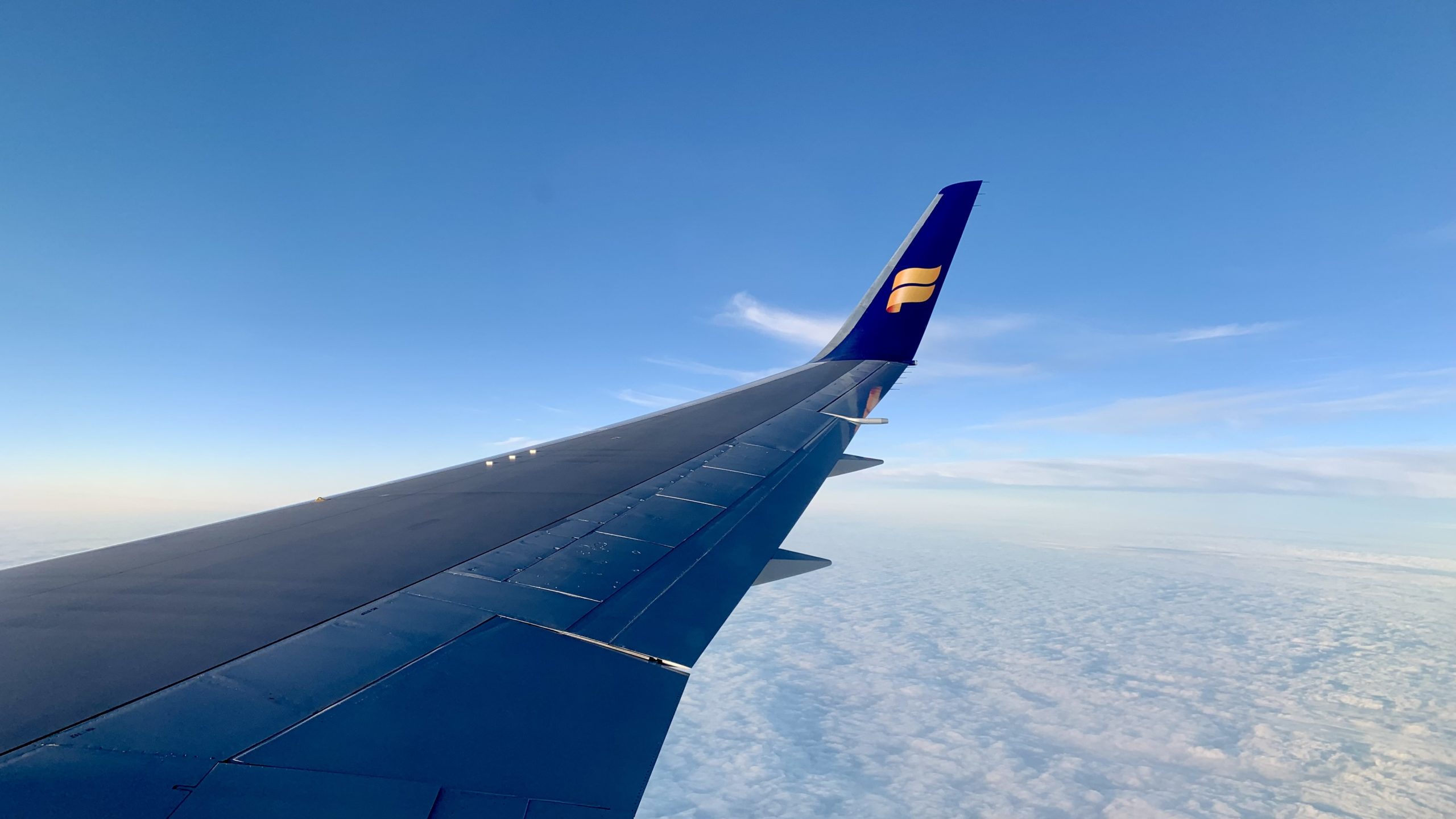
We had this happen on a flight from New York (JFK) to Reykjavik (KEF).
We actually left late, but still arrived much earlier than scheduled. The flight time ended up being under five hours — extremely short for an overnight trip across the Atlantic. At the time, it felt like a novelty and made for a funny “Canadian sky police” moment.
But it also created a very real travel issue: our plans were built around the scheduled arrival time, not the actual one.
Why arriving early can be just as inconvenient as arriving late
Here’s the part nobody thinks about: airports (and everything connected to them) don’t instantly reconfigure because your flight had a rocket boost from the jetstream.
When you arrive dramatically early, you can run into problems like:
- No gate available: you may get a remote stand, a bus gate, or a long taxi/hold while they figure out parking.
- Ground ops lag: baggage handlers, staffing, and customs/immigration may be operating on the schedule — not your surprise arrival.
- Transportation mismatch: drivers, shuttles, and tour pickups often key off the scheduled arrival time. If you’re early, you wait (and sometimes you wait outside, tired, with bags, wondering why you were excited about being “early”).
- Hotel reality doesn’t change: early arrival doesn’t magically create early check-in. If you planned to “push through until lunch,” being 60 minutes early can turn that into a longer slog — especially on a red-eye.
- Shorter flight = less sleep: this is the sneaky one. A red-eye that gets trimmed by 45 minutes doesn’t just “arrive early.” It steals the only decent chunk of sleep you were hoping for.
In Iceland, we hit at least two of these: the flight’s early arrival meant remote parking + busing, and our pre-booked pickup wasn’t timed to our actual arrival, so we waited around until close to the original schedule anyway.
What to do about it (so “early” doesn’t turn into a headache)
You can’t control the wind — but you can plan for the fact that early arrivals happen:
- If you book a driver: choose one that tracks flights automatically, or message the service that you landed early.
- If you’re landing before businesses open: have a “Plan B” that’s not just “stand there.” Even knowing where the 24/7 area is (or whether the arrivals hall has anything open) helps.
- If you’re doing a tight same-day plan: leave slack on the front end too. Everyone buffers for delays — the smarter move is buffering for volatility.
- If it’s a red-eye: assume your sleep window could shrink. If your day hinges on you being functional, this is where having a nap option pays off.
Final Thought
Less time on a plane sounds like a win — and sometimes it is.
But the travel world is built around scheduled arrival times. When the jetstream hands you a surprise hour, it doesn’t always translate into “more vacation.” Sometimes it just means you’re standing in an airport earlier than you planned, waiting for the rest of your trip to catch up.
Want to comment on this post? Great! Read this first to help ensure it gets approved.
Want to sponsor a post, write something for Your Mileage May Vary, or put ads on our site? Click here for more info.
Like this post? Please share it! We have plenty more just like it and would love it if you decided to hang around and sign up to get emailed notifications of when we post.
Whether you’ve read our articles before or this is the first time you’re stopping by, we’re really glad you’re here and hope you come back to visit again!
This post first appeared on Your Mileage May Vary

1 comment
Early arrival? Easy solution: Michelin brunch, then head for the hotel. Fabulous meal plus a story to tell. Winner! Stop complaining and spend some money.