When you book a hotel room in the U.S., you probably don’t think too hard about the bed description.
King. Queen. Double. Two Queens.
Those words usually mean something specific — and most of the time, they match what you expect when you walk into the room.
But once you start booking hotels in Europe, those same words can suddenly mean something very different. And if you don’t look closely, you might end up with a bed setup you weren’t expecting — even in a high-end hotel.
The same bed can have three different names
While planning our upcoming trip, I started noticing something strange when comparing room descriptions across different hotel brands.
U.S.-based chains like Marriott and IHG tend to use familiar terminology, even when the hotel is overseas.
 A Marriott listing might say: “Guest room, 1 King.”
That sounds straightforward. But the actual bed might not be a U.S.-size king at all. In many European hotels, that “King” could be:
- a 180 cm bed (about 71 inches wide), or
- two 90 cm mattresses pushed together.
Meanwhile, a non-U.S. chain might describe almost the exact same setup very differently.
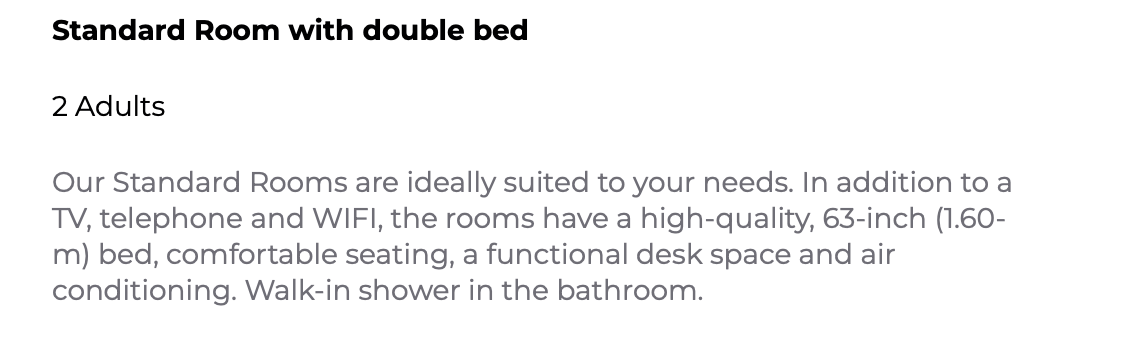
An Accor property I looked at described the room as having a “63-inch (1.60 m) double bed.”
To American travelers, “double” often sounds smaller — like a Full bed back home. But at 160 cm wide, that mattress is actually wider than a U.S. Queen.
Same bed. Different language.
Boutique European hotels don’t translate — they just give you the measurements
The differences become even clearer when you look at smaller European hotels.
Instead of using Queen or King, some boutique properties list the actual dimensions:
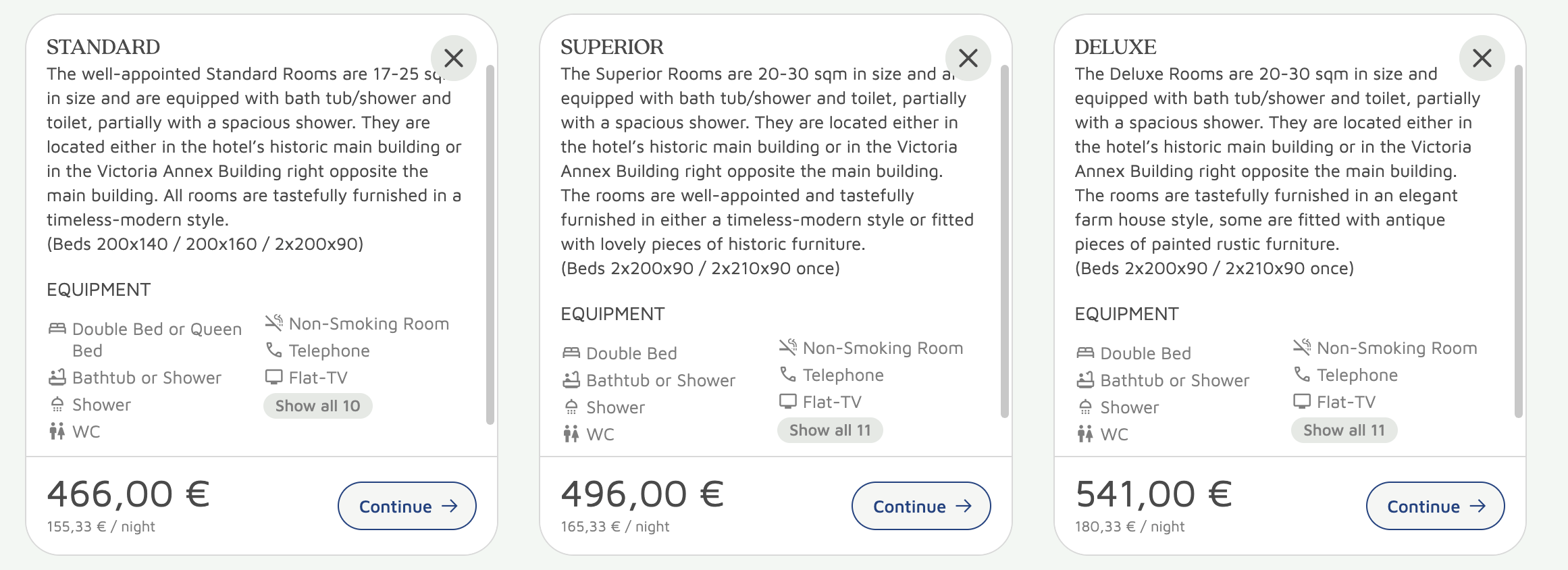
You’ll see descriptions like:
- 200×140
- 200×160
- 2x200x90
That might look confusing at first, but it’s actually the most honest way to describe what you’re getting.
For example:
- 200×160 = one 160 cm wide bed (roughly Queen-sized)
- 2x200x90 = two twin mattresses pushed together — often marketed by U.S. chains as a King
European hotels often focus on the furniture itself, not the marketing label.
Even luxury suites don’t always mean one big mattress
This is something we’ve experienced firsthand.
During a stay at the Goldener Hirsch in Salzburg — a property that definitely qualifies as high-end — our suite still had two mattresses and separate duvets.
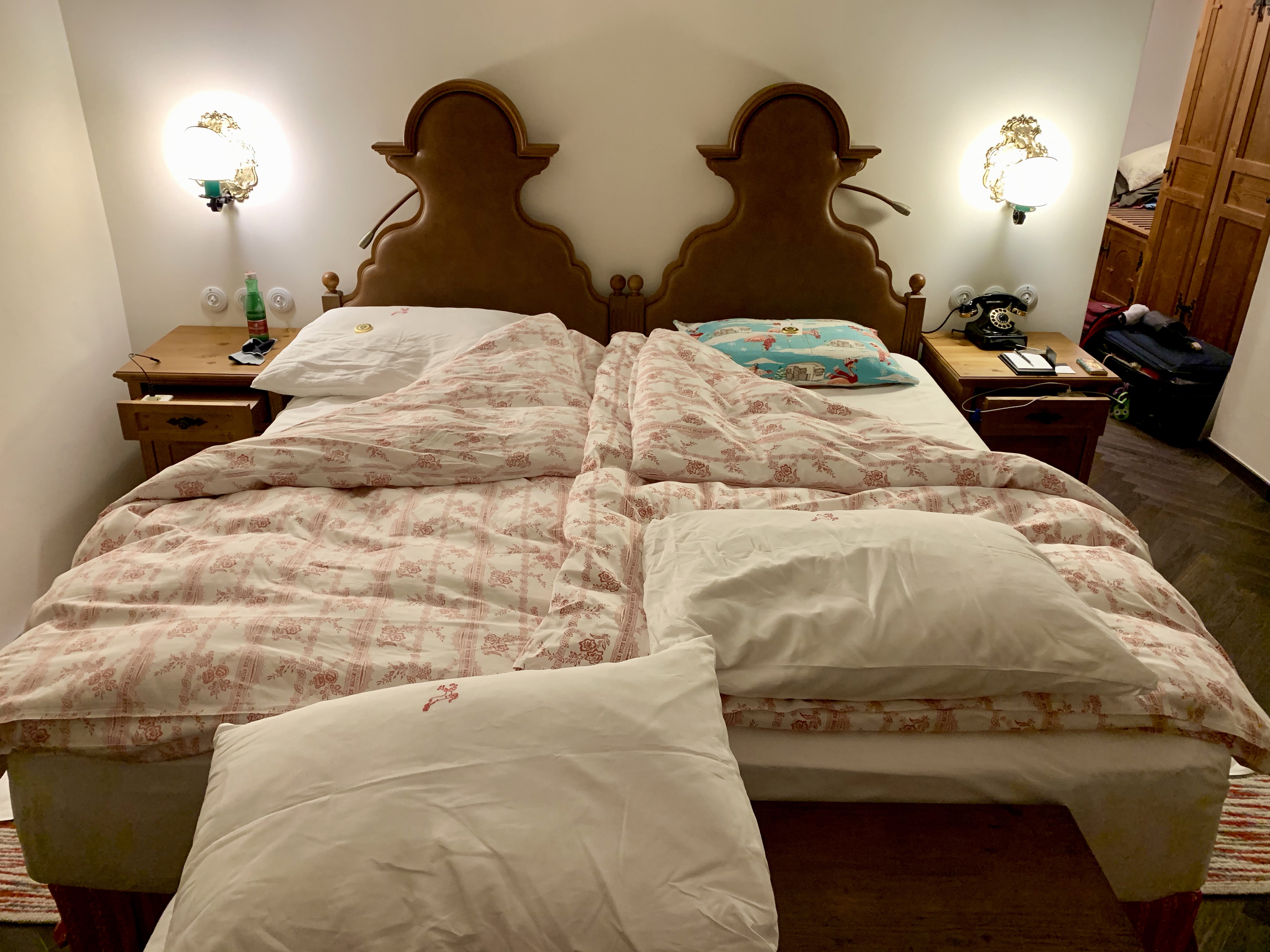
At first glance, it looks like one large bed. But look closer:
- two individual mattresses
- two separate covers
- a classic Central European setup
This isn’t a downgrade. It’s just how beds are commonly arranged in Austria and Germany, even at luxury properties.
In fact, separate duvets are the norm in many parts of Europe. Some travelers love it because nobody steals the blankets. Others find it takes some getting used to.
Why don’t the names match
After comparing listings across several brands, the pattern became pretty clear.
U.S. chains translate the experience.
They use familiar terms like Queen and King because that’s what their loyalty members understand.
European chains use hybrid language.
You’ll often see “Double” along with metric measurements.
Boutique hotels describe the actual bed configuration.
Instead of marketing labels, they tell you the mattress sizes.
None of these approaches are wrong — but they’re definitely not interchangeable.
The mistake that’s easy to make
The biggest trap is assuming a bed name means the same thing everywhere.
A “Double” room in Europe might be:
- wider than a Queen,
- narrower than a King, or
- Two single mattresses combined.
And a “King” room might not have one single mattress at all.
If you’re someone who really prefers a specific bed setup, this matters more than you might think.
How to avoid surprises when booking overseas
After digging through listings and comparing photos, I’ve started doing a few things differently when booking hotels outside the U.S.:
- Look for actual measurements (cm or inches) whenever possible.
- Zoom in on room photos — you can often spot the seam between two mattresses.
- Pay attention to phrases like “boxspring” or “twin beds together.”
- Don’t rely on the word Double alone.
A few extra minutes of research can prevent that “wait… this isn’t what I expected” moment at check-in.
Final Thought
When you’re comparing hotel rooms in another country, it’s easy to assume familiar bed names mean the same thing they do at home. But in reality, those labels often change depending on the brand, the region, and who the hotel expects to be booking the room.
Sometimes that difference won’t matter at all. Other times, it might be enough to make you choose a different property — especially if you know you don’t want a European “Double” or a split mattress setup.
Either way, taking a closer look at the details before you book can save you from surprises later. And honestly, once you start noticing the differences, you’ll probably never look at hotel bed descriptions the same way again.
Want to comment on this post? Great! Read this first to help ensure it gets approved.
Want to sponsor a post, write something for Your Mileage May Vary, or put ads on our site? Click here for more info.
Like this post? Please share it! We have plenty more just like it and would love it if you decided to hang around and sign up to get emailed notifications of when we post.
Whether you’ve read our articles before or this is the first time you’re stopping by, we’re really glad you’re here and hope you come back to visit again!
This post first appeared on Your Mileage May Vary