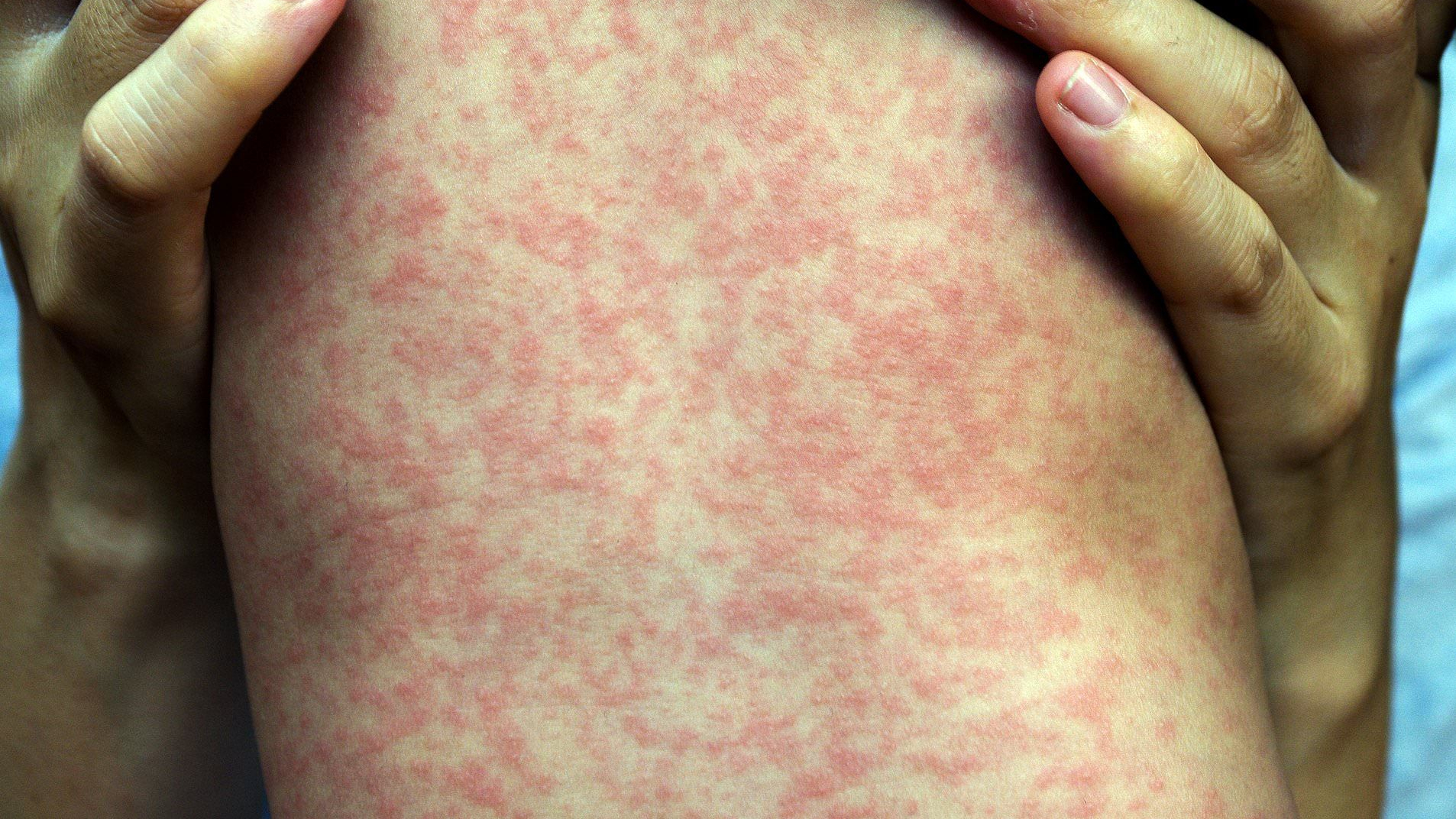
Before the measles vaccine was introduced in the 1960s, it’s estimated that 3 to 4 million people in the U.S. contracted the disease every year. Among reported cases, 400 to 500 people died, 48,000 were hospitalized, and about 1,000 developed encephalitis (brain swelling) from measles. Since then, the United States has done a good job vaccinating children against the disease — to the point that in 2000, the Centers for Disease Control declared measles eliminated from the U.S.
Update (February 2026): Measles is no longer just a “sporadic” headline in the U.S. The CDC reports 2,280 confirmed measles cases in 2025 and 910 confirmed cases already in 2026 (as of February 12), with most cases linked to outbreaks. That’s happening while kindergarten MMR coverage remains below the level typically needed to prevent community spread.
Then why do we keep seeing news reports about measles outbreaks?
As is often the case, there are multiple reasons which are contributing to the recent outbreaks.
One of the biggest contributors to the apparent comeback of measles is international travel. While the U.S. has done a great job controlling the disease, a combination of Americans traveling overseas and foreign visitors and workers entering the country has begun to expose our weaknesses.
Nationally, childhood vaccination coverage is still in the low 90% range — but that’s not enough to prevent outbreaks when measles gets introduced into under-vaccinated communities.
CDC reports that during the 2024–2025 school year, U.S. kindergarten coverage for the MMR vaccine was 92.5%, and the number of exemptions rose to 3.6%. That’s well below the 95% coverage target often cited as the level that helps prevent outbreaks, and local “pockets” can be much lower than the national average.
International travel is still one of the most common ways measles is reintroduced into the U.S. The CDC’s guidance is straightforward: if you’re traveling internationally, make sure you’re fully vaccinated and do so at least two weeks before you leave (or get a dose even if your trip is sooner).
CDC’s travel page is here: https://www.cdc.gov/measles/travel/index.html
Do you need to get a measles shot?
If you have documentation showing you received two doses of MMR, CDC generally does not recommend additional doses for most people. Two doses are estimated to be 97% effective at preventing measles.
The CDC does not recommend that people born before 1957 receive the vaccine because of the prevalence of measles at the time. All people of that generation are assumed to be exposed and, therefore, immune. However, if you were born after 1957, the older you are, the more likely you may be to want an additional measles vaccine dose.
There’s also a small group of people who may have been vaccinated with an older measles vaccine that wasn’t effective. CDC notes that people vaccinated before 1968 with a “killed” measles vaccine (or an unknown vaccine type) should be revaccinated with MMR, depending on their situation and risk.
Before 1989, most people received only 1 dose of the MMR vaccine. For those at low risk, there is no need to receive another dose. However, there are special situations:
Students in postsecondary educational institutions, international travelers, and household or close personal contacts of immunocompromised persons with no evidence of immunity to measles, mumps, or rubella: 1 dose MMR if previously received 1 dose MMR, or 2-dose series MMR at least 4 weeks apart if previously did not receive any MMR
If you’ve only received one dose of MMR, it’s recommended that you get a second dose if you travel internationally. Even if you think where you are going is safe, think again.
Measles continues to circulate globally, and outbreaks can pop up in places that feel “routine” for tourists. The risk isn’t limited to one region — which is why CDC’s standing advice is simple: if you’re traveling internationally and you’re not fully vaccinated, you’re at risk.
If you want an always-current reference, CDC maintains a travel notice here: https://wwwnc.cdc.gov/travel/notices/level1/measles-globe
Final Thoughts
So while it’s easy to think of measles as a disease of the past, it’s still out there. We’ve just eliminated it from our area of the earth, but the more we explore other areas, the more we need to protect ourselves from getting sick and bringing those diseases back home.
Just a reminder to rely on reputable sources for information about vaccines. Stick to major scientific websites like CDC.gov or Vaccines.gov in the US, or the NHS vaccines website in the UK. There’s a lot of misinformation out there, so it’s important to stick to trustworthy sources.
Want to comment on this post? Great! Read this first to help ensure it gets approved.
Want to sponsor a post, write something for Your Mileage May Vary, or put ads on our site? Click here for more info.
Like this post? Please share it! We have plenty more just like it and would love it if you decided to hang around and sign up to get emailed notifications of when we post.
Whether you’ve read our articles before or this is the first time you’re stopping by, we’re really glad you’re here and hope you come back to visit again!
This post first appeared on Your Mileage May Vary

3 comments
Useful. I thought I was safe for life but maybe not. Thanks for bringing this up.
In case it might be useful to others…
I just returned from a trip that included Australia and the Solomon Islands. Proof of measles vaccination was required for the latter. [https://travel.state.gov/content/travel/en/international-travel/International-Travel-Country-Information-Pages/SolomonIslands.html]
My parents had me vaccinated as a child but I do not have any proof. It was not clear how my insurance would cover this vaccination as an adult.
In the end, I paid out of pocket to get tested at my usual lab [Measles, Mumps, Rubella (MMR) Immunity Profile]. I walked in, had blood drawn, and got the results in less than 48 hours.
Fortunately, my immunity to all three is strong after all of these decades. I assume that laboratory evidence of immunity is accepted by countries that require immunization. I will keep a printout with my passport for future trips.
I was born in 1958 so was in the window of vaccine I received wasn’t as effective. Therefore I got a vaccine at local pharmacy last summer when news of the outbreak was just starting. No big deal. Also got flu and Covid shots last fall before trip to Europe. Personally I proactively get any vaccine or booster but that is a personal decision.