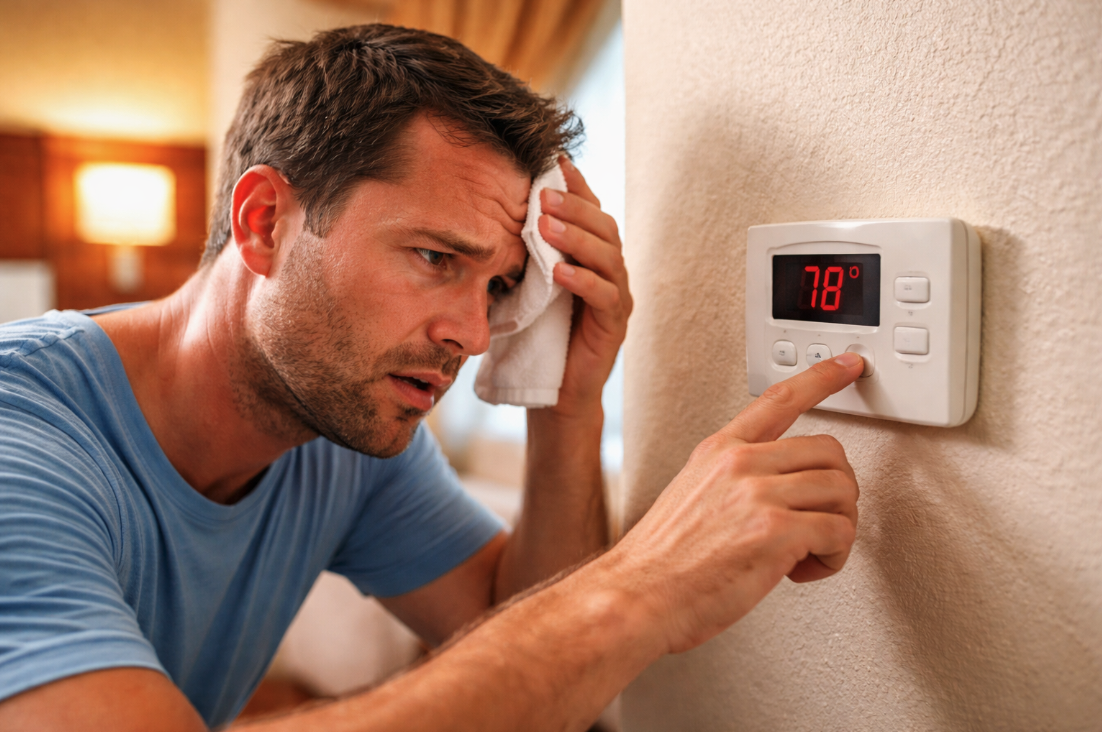
For years, travelers shared hotel thermostat hacks to wrestle control back from stubborn room temperatures. But those tricks are starting to fail—and it’s not because guests forgot how to use them.
We’ve previously explained how hotel thermostat overrides work, and why they became so popular with travelers. We’ve also shared real-life examples of how to hack over 50 different hotel thermostats. Here’s why many of those hacks are becoming less reliable. The shift has less to do with guest behavior and more to do with how hotel HVAC technology has evolved.
Quick history: hotel heating/air conditioning
Modern-day hotel rooms in the United States almost always offer air conditioning and heating. In low-to-mid-level hotels, they’ll typically offer an under-the-window unit that can be turned on and off by the guest manually, with options for heat, cold, and what speed the fan should be if it’s on.
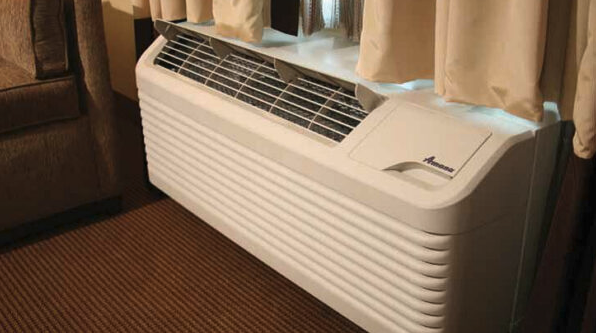
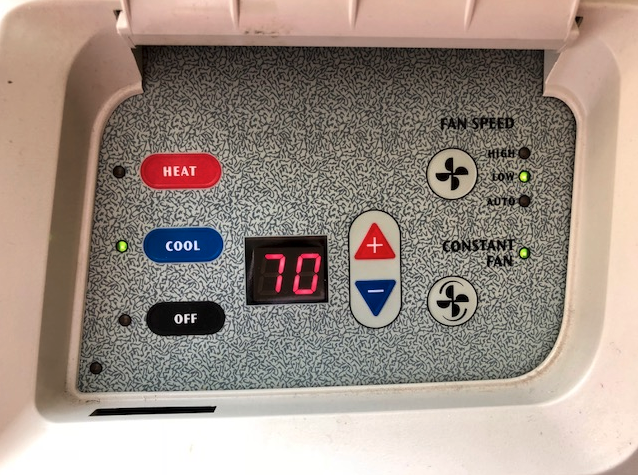
But as technology improved, so did that of air conditioners. Instead of having a single unit per hotel room, hotels’ HVAC became more similar to the central air conditioning system in a home—the temperature in your room was controlled by a wall-mounted thermostat, and instead of the A/C or heat coming from the room unit, it was pumped from some different place in the hotel.
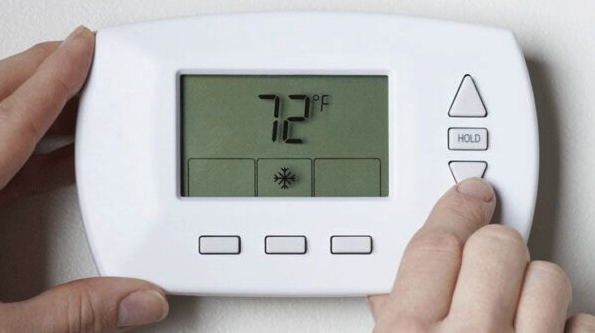
There was nothing wrong with that, since the guests still had control of the room’s temperature.
As energy costs rose, manufacturers began offering more tightly controlled systems
Of course, the more heat that was on during the winter, and more A/C in the summer meant higher energy bills for hoteliers. Years ago, manufacturers got wind of that and started to offer thermostats that required you to have a card in a slot to keep the HVAC running, or had a motion sensor attached (so if you weren’t in the room—or were sleeping and not moving around—the HVAC would shut off, and you’d wake up to a room that was 76 degrees).
Then manufacturers started offering thermostats that the hotelier could limit to highest and lowest limits. This meant you could set your room’s thermostat to 62 at night, but the room would never get any cooler than, say, 74 degrees, because that’s what the hotel owner set as the lowermost limit.
Manufacturers were smart but guests were smarter
Of course, all of those systems had manufacturer-installed overrides built in, and over the years, guests learned how to hack most of these thermostats to use those overrides. We’ve listed a good portion of those hacks in this post. They were popular because guests want their hotel room to be what THEY feel is comfortable, not what a hotel owner sets it so they can save more money.
Why manufacturers are starting to win the battle
Unfortunately, with technology continuing to improve, thermostat manufacturers are starting to make thermostats that are effectively resistant to guest overrides. Many newer systems can:
- Detect occupancy
Newer systems can tell if you’re in the room or not, and if you’re out, the HVAC will automatically shut down, regardless of how you set the thermostat. - Reset automatically
You may set that thermostat to 60-something, but it’ll go right back to 74. - Ignore manual changes
You could encounter a thermostat that ignores you entirely. The room temps are set by the hotel manager and the system is purposely made to have no way to override it from the in-room thermostat—only from the manager.
These changes aren’t accidental—they’re part of a broader effort to manage energy use across entire properties.
So the hacks that may have worked in 2021 don’t necessarily work in 2026. All those YouTube, TikTok, and Instagram entries (and trust me, there are hundreds, if not thousands of them) won’t help at all if a hotel updates their system—or builds a new hotel with a 2026-era thermostat.
This trend has become clearer over time. I’ve updated our thermostat hacks post annually since 2018, and this year produced fewer changes than any previous update. If newer systems can’t be hacked, people don’t make videos of them.
However, in my research, I did find thermostat manufacturers that specify how hoteliers can bypass guests’ attempted hacks.
What newer hotel thermostats can do
Newer HVAC systems like GlacierGrid and GridRabbit are built to block guest overrides entirely. Controls are set remotely by hotel owners, and if override features aren’t enabled, there’s nothing a guest can access from the room. These systems are designed to prioritize property-wide efficiency over individual room adjustments.
That’s why many thermostat hacks stopped working—not because guests forgot the tricks, but because the systems no longer allow them.
Looking ahead
The era of easy thermostat hacks isn’t completely over, but it’s clearly winding down. As hotels upgrade their systems, guests are seeing less direct control over room temperatures.
What still works—for now
For now, many hotel thermostats can still be overridden—but fewer than in the past. Our updated guide explains which methods may still work and when.
Want to comment on this post? Great! Read this first to help ensure it gets approved.
Want to sponsor a post, write something for Your Mileage May Vary, or put ads on our site? Click here for more info.
Like this post? Please share it! We have plenty more just like it and would love it if you decided to hang around and sign up to get emailed notifications of when we post.
Whether you’ve read our articles before or this is the first time you’re stopping by, we’re really glad you’re here and hope you come back to visit again!
This post first appeared on Your Mileage May Vary