You’d think winning Olympic gold would come with a smooth trip home.
Instead, Team USA’s men’s hockey players (and plenty of other NHLers involved in the tournament) ran into the same wall thousands of travelers hit this week:
Weather disruption on a scale that breaks the entire system.
Multiple reports noted that Team USA’s return plans to the New York area were altered because of the Northeast storm, with the team routing back through Miami instead. Yahoo Sports reported the change, noting that the blizzard made a proper hometown return difficult. Newsweek also cited the NBC broadcast, noting the Miami plan due to snowstorms.
And that’s the point.
If it can happen to them, it can happen to you.
This Wasn’t A “Delay” — It Was A Meltdown
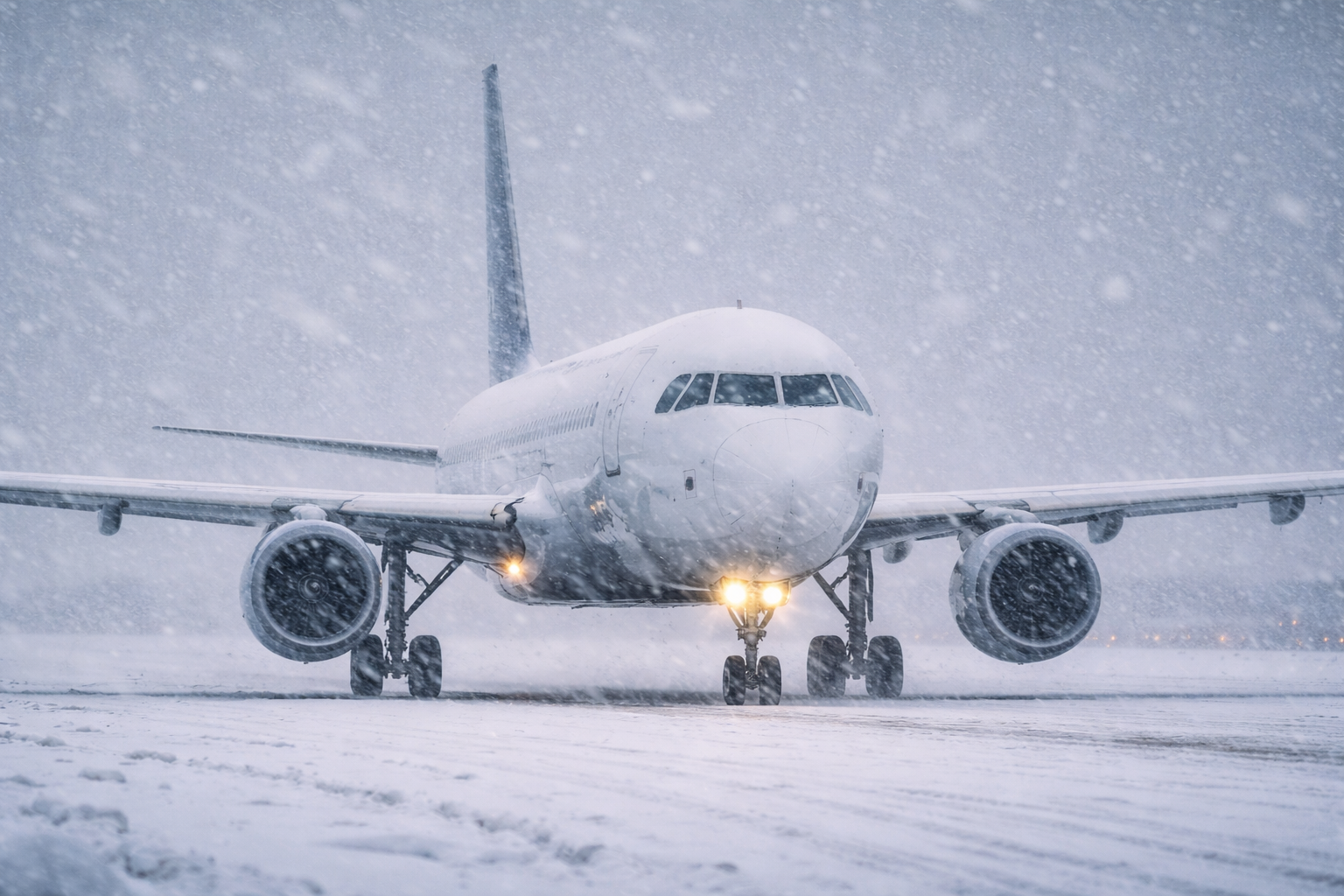
This storm wasn’t about a little turbulence or a de-icing line that moved too slowly.
It was big enough to trigger mass cancellations and reroutes across the Northeast and beyond. Reuters reported that the storm forced more than 8,000 U.S. flight disruptions (cancellations and delays) as airlines struggled to recover.
And if you were anywhere near the New York area airports, you felt it. Barron’s noted that airports like Boston Logan, LaGuardia, and Newark saw cancellation rates that were essentially “near shutdown” territory.
Once you hit that level of disruption, this stops being “your flight is delayed” and becomes:
- Planes aren’t where they’re supposed to be
- Crews aren’t where they’re supposed to be
- Connections start failing in bulk
- Airlines triage the entire schedule
At that point, it doesn’t matter if you’re a casual traveler, a frequent flyer, or an Olympic champion.
What This Means For The Rest Of Us
There’s a misconception that travel problems mostly happen because people book “bad itineraries.”
Sometimes that’s true.
But storms like this are a reminder that you can do everything right and still lose to the weather.
The best you can do is build a plan that gives you options.
How To Prepare (Because You Actually Can…Sometimes)
When you’re traveling in winter — especially through major hubs — a few choices can reduce your odds of getting stranded:
- Avoid the last flight of the day whenever you can (there’s no later backup if it cancels).
- Pick routes with multiple daily frequencies (more chances to rebook without waiting 24 hours).
- Build buffer time for anything important (events, cruises, international departures, work commitments).
- Know your fallback airports (in the Northeast, that might mean being open to EWR/JFK/LGA/PHL/BOS, depending on your trip).
- Pack like you might be stuck: chargers, meds, essentials, and at least a change of clothes in your carry-on.
Those things help. A lot.
But Here’s The Truth Nobody Likes
Sometimes there’s nothing you can do.
If the storm shuts down an entire region, the system can’t “fix” itself instantly. Airlines can add flights and shuffle aircraft, but if crews are out of position, airports are restricted, and the weather keeps moving, you’re in triage mode.
That’s exactly why the Team USA example is so useful: it cuts through the illusion that the right status, the right airline, or the right “connections” can always solve the problem.
Weather doesn’t care.
Final Thought
The real takeaway isn’t “don’t travel in winter.”
It’s this:
Plan smart, build flexibility, and accept that sometimes the only winning move is being ready to adapt.
Because if Olympic gold medalists can get rerouted by a blizzard… the rest of us definitely can too.
Want to comment on this post? Great! Read this first to help ensure it gets approved.
Want to sponsor a post, write something for Your Mileage May Vary, or put ads on our site? Click here for more info.
Like this post? Please share it! We have plenty more just like it and would love it if you decided to hang around and sign up to get emailed notifications of when we post.
Whether you’ve read our articles before or this is the first time you’re stopping by, we’re really glad you’re here and hope you come back to visit again!
This post first appeared on Your Mileage May Vary