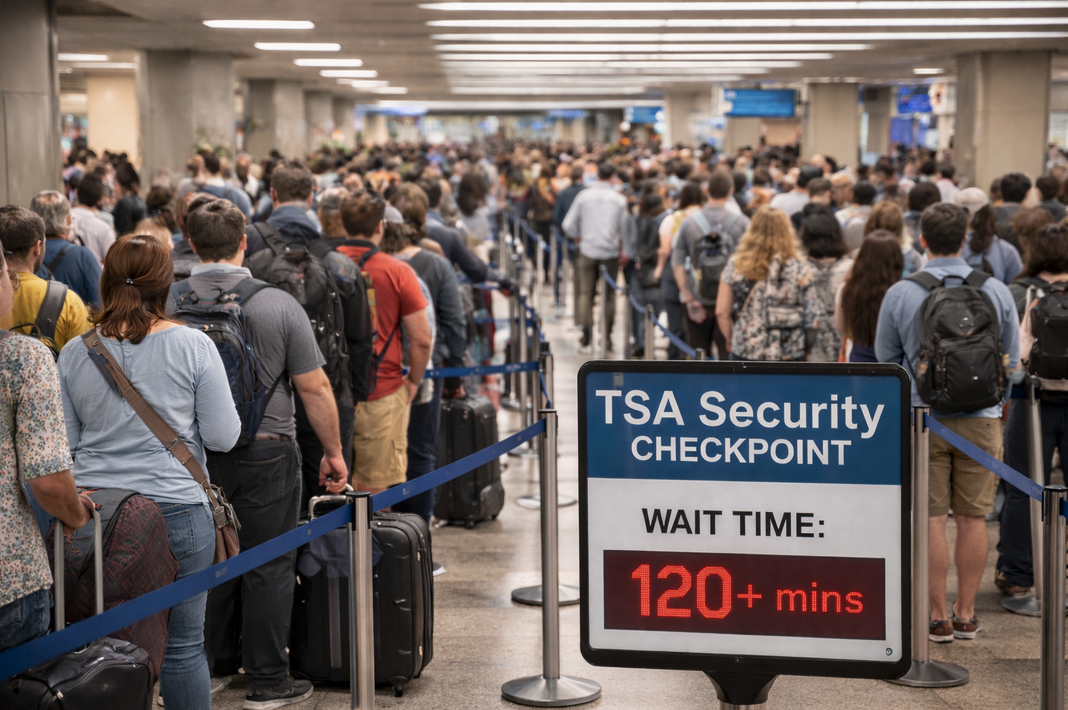
Travelers at several U.S. airports have recently reported extremely long waits at TSA security checkpoints, with some passengers waiting hours and even missing flights.
The delays are being blamed on a combination of staffing shortages during the current government shutdown and a surge of spring break travelers passing through airports at the same time.
The issue of TSA wait times has been widely reported in recent days.
News reports from around the country
- CNBC: TSA staff shortages lead to hours long security lines for travelers at some airports
- Houston Chronicle: Hobby Airport travelers wait hours in TSA lines Sunday as some report missing flights
- FOX 5 Atlanta: Shutdown causes long security lines at airport, including Atlanta
- USA Today: “Airports, including Houston’s William P. Hobby Airport and Louis Armstrong New Orleans International Airport, reported unusually long wait times at Transportation Security Administration checkpoints. At one point Sunday afternoon, security lines at Hobby Airport averaged about three and a half hours. By 6 p.m., waits were still around three hours.”
It wasn’t this bad during the last shutdown
The most recent government shutdown — which lasted from October 1 through November 12, 2025 — was the longest in U.S. history at 45 days.
While that shutdown did affect some TSA operations, security lines generally didn’t reach the levels travelers are seeing now.
The current partial shutdown began on February 14, 2026 and has already produced bigger disruptions at several airports.
Why is there a partial shutdown?
The partial shutdown began on February 14 after lawmakers were unable to reach a funding deal for the Department of Homeland Security. While most of the federal government is still operating normally, agencies under DHS — including the Transportation Security Administration (TSA) — are directly affected.
Why is it so bad this time?
There appear to be two main reasons.
1. The last shutdown was very recent
TSA officers are considered essential employees, meaning they must continue working during a shutdown even if they’re not receiving paychecks. Although they’re guaranteed back pay once the shutdown ends, many workers still face immediate financial pressure.
That pressure is even greater this time because the previous government shutdown ended only about three months ago. For many TSA workers — whose starting salary is under $35,000 and averages roughly $46,000 to $55,000 — that hasn’t been enough time to rebuild savings.
Government shutdown or not, people still have bills to pay: rent, mortgages, insurance, medical bills, groceries, etc. With that, more TSA officers have reportedly been calling out of work in order to take on other jobs or side gigs.
Fewer officers on duty means slower security screening.
2. It’s peak spring break travel season
The timing of the shutdown is also creating problems.
The previous shutdown occurred during a relatively quiet travel period. But the current shutdown coincides with spring break, when millions of travelers — including college students and families with school-age children — are flying.
More passengers combined with fewer available screeners naturally leads to longer waits at security checkpoints.
What travelers should expect
Conditions vary widely depending on the airport and time of day. Some travelers may still move through security quickly, while others could face long waits during peak travel periods.
Checking TSA wait time estimates through airport websites or the MyTSA app (which is not being monitored during the shutdown, but appears to be updating as waits change) can sometimes give travelers a better idea of what to expect before arriving at the airport.
FAQ
Why are TSA lines so long right now?
Long TSA waits at some airports are being driven by a combination of staffing shortages during a government shutdown and increased passenger traffic during spring break travel season.
Put those two factors together — fewer TSA officers working and significantly more people flying — and the result is predictable: much longer security lines.
If you’re traveling during the shutdown, allow extra time at the airport. And regardless of how you normally feel about the TSA, a little patience with the officers who are working right now would go a long way.
Want to comment on this post? Great! Read this first to help ensure it gets approved.
Want to sponsor a post, write something for Your Mileage May Vary or put ads on our site? Click here for more info.
Like this post? Please share it! We have plenty more just like it and would love it if you decided to hang around and sign up to get emailed notifications of when we post.
Whether you’ve read our articles before or this is the first time you’re stopping by, we’re really glad you’re here and hope you come back to visit again!
This post first appeared on Your Mileage May Vary

3 comments
The claim about rebuilding savings can’t be correct: when the shutdown ended workers received back pay. No one had to work for free in any previous shutdown (they just had their paycheck delayed).
And if that back pay was used to pay bills incurred while they weren’t getting paid? Then what? Again, 3 months is not enough time to build up another cushion – especially when grocery, gasoline and everything else has prices that are going sky high, on top of shutdowns that are lasting more than a month at a time.
You used your cushion and the back-pay replenished it.
Starting Point – no pay but bills > you have to use savings
Shutdown end – back-pay arrived > you use this to pay credit cards and replenish savings
That you don’t have enough savings for a long period without pay, inflation is high, rent is higher every year, …. is an issue but they were paid for the last shut-down (not during but retro-active).