You’d think a “streaming” bonus category would be pretty straightforward. Subscribe to a streaming service, pay the bill, earn bonus points. Done.
Except that’s not how it always works.
I only noticed this because of something completely unrelated.
Why “Streaming” Isn’t As Simple As It Sounds
I received a statement for my Citi Strata card, which was unusual because I hadn’t used the card in a while. I know that if this happens, I need to find out why the bank sent me a statement. It could mean someone made a fraudulent charge on my account, or sometimes it might be due to a change in the card terms.
In this case, it was the latter.
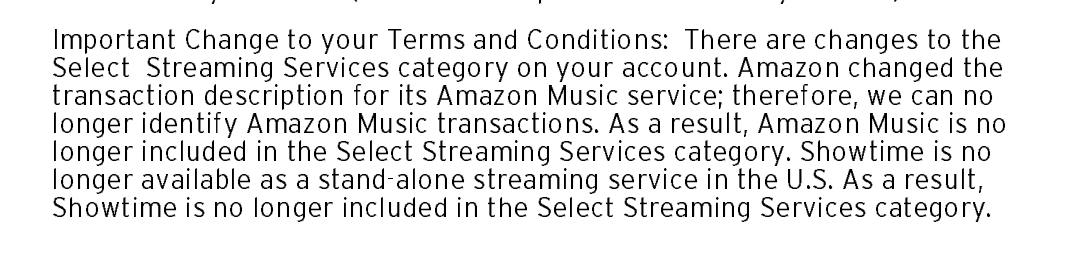
It turns out Citi is removing Amazon Music from its 3X streaming services category, one of the self-select bonus categories on the Citi Strata card.
Because Citi says it can no longer distinguish Amazon Music from other Amazon purchases, the service has been removed from the list of eligible streaming subscriptions.
How Banks Decide What Counts
Credit card bonus categories aren’t based on what you bought. They’re based on how the transaction is reported to the bank.
So even if you’re paying for a music subscription, the card issuer may not recognize “Amazon Music” at all. It may just see Amazon, or a more general billing description tied to the broader Prime ecosystem.
Last year, I paid for my annual Amazon subscription with my Discover card. I went back to see how the charge was listed.
It didn’t show up as Amazon Music. It posted as “Amazon Prime.”
That one detail helps explain why some cards might reward the purchase as streaming while others won’t.
Why Things Get Messy With Amazon
Amazon is probably one of the biggest trouble spots when it comes to assigning categories. The company bundles its products and services under one umbrella, including retail purchases, Prime memberships, video, music, and other subscriptions.
That makes it harder for banks to identify exactly what a charge is for.
And because Citi can no longer distinguish a streaming subscription from other purchases, it has removed it from the list of eligible services.
How Different Banks Handle Streaming Categories
This is where things get interesting, because not all issuers handle streaming the same way.
Citi: Citi’s list is open to select streaming services. without listing which ones are eligible. Only if the purchase no longer comes through in a way Citi can recognize as streaming does it fall out of the category.
Chase: Chase takes a narrower approach with cards like the Sapphire Preferred, where bonus points apply only to a list of streaming services.
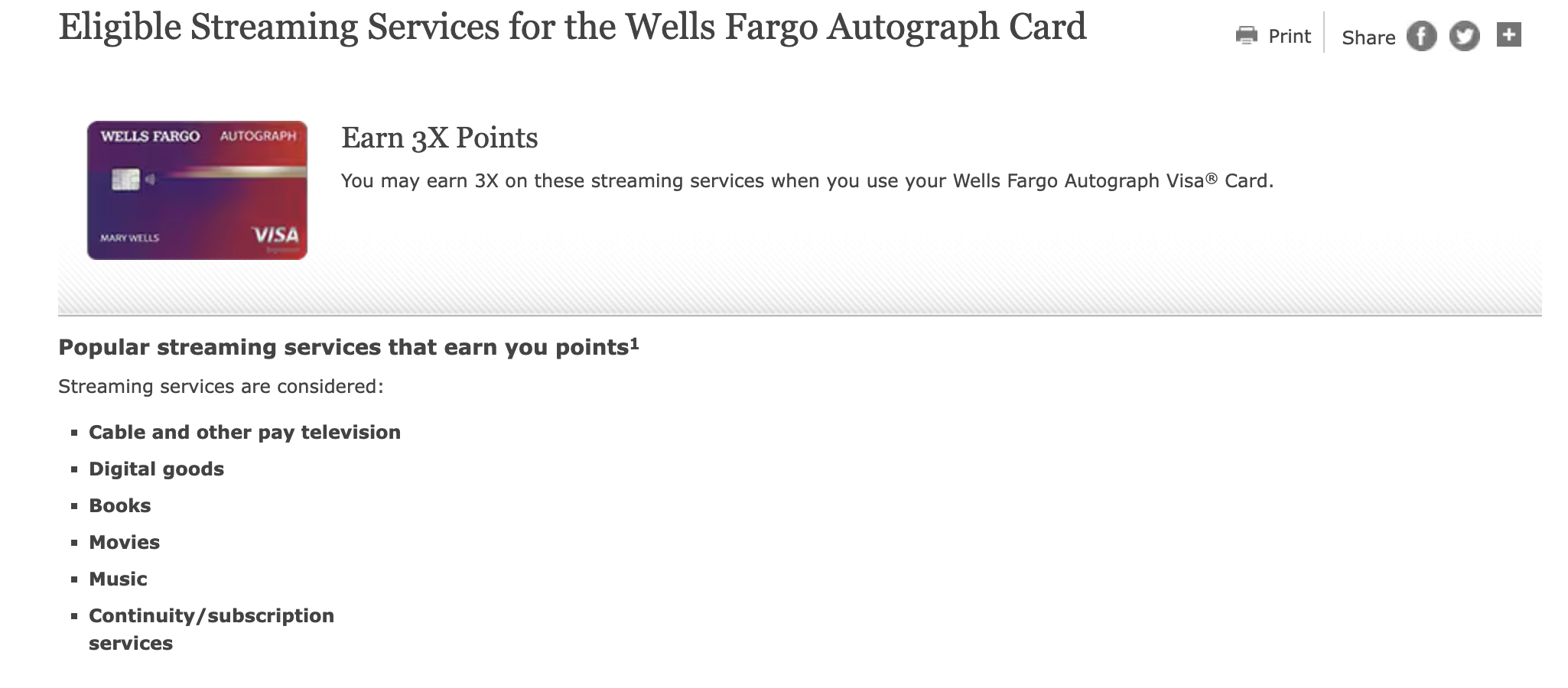
Wells Fargo: Wells Fargo’s Autograph card has a broader streaming category, at least on paper. But even then, eligibility still depends on how the transaction is coded and described when it reaches the issuer.
American Express: AMEX may have a slight edge here because American Express is both the lender and the processor. That could give it more visibility into transaction data than banks issuing Visa or Mastercard products. So, in some cases, AMEX may be better positioned to correctly identify a subscription. Still, even that has limits, especially when a charge is bundled into something larger like Amazon Prime.
Why One Card Might Reward It And Another Won’t
This is the part that makes these categories so frustrating.
The exact same purchase can earn a bonus on one card and not on another. That doesn’t necessarily mean one bank is being stingy and another is being generous. Sometimes it just means the cards are looking for different things.
Discover didn’t need to determine whether my Amazon charge counted as streaming. It only needed to know that it was an Amazon purchase during a quarter when Amazon was a 5% category.
A card like Citi Strata is trying to answer a different question. It has to determine whether the purchase qualifies as a streaming purchase. And if the charge only shows up as Amazon Prime, that becomes much harder to do.
What This Means For Cardholders
If you’re trying to maximize a streaming category, the safest bets are usually standalone subscriptions that bill directly and clearly, such as Netflix, Spotify, Disney+, or similar services.
Once a service gets wrapped into a larger ecosystem, things become less predictable.
Amazon is a perfect example. What seems like an obvious streaming purchase to you may not look that way to the bank at all.
Final Thought
Streaming sounds like a simple bonus category, but it really isn’t.
In the end, it all comes down to how the charge gets reported and whether the bank can match it to the category you think you’re buying.
If your Amazon Music subscription shows up as “Amazon Prime,” that alone may be enough to keep you from earning the bonus you expected.