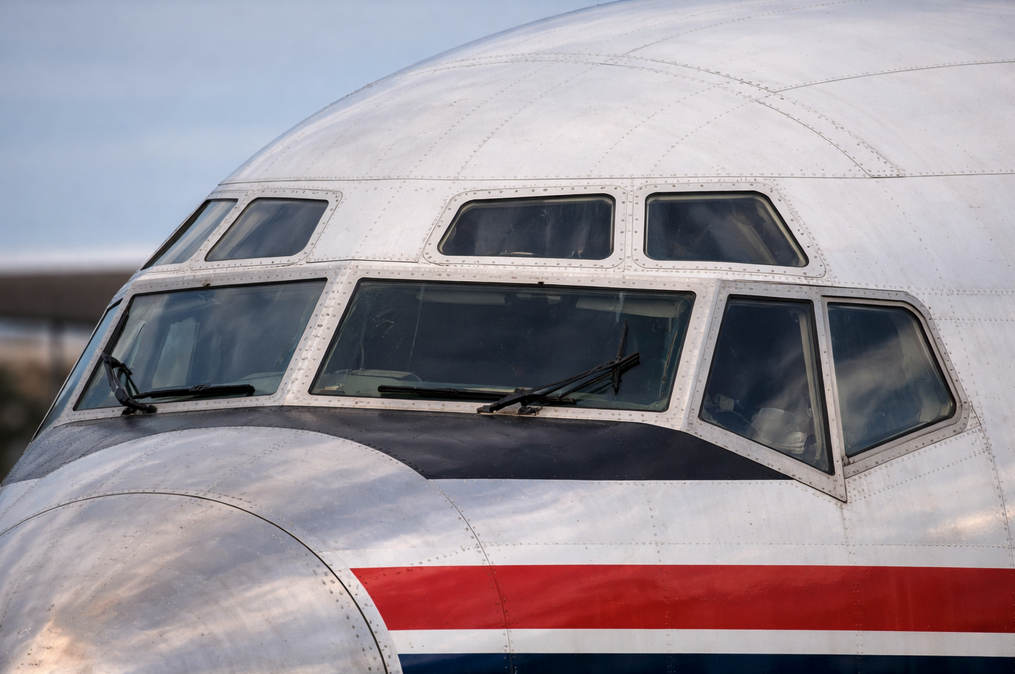
If you’ve ever looked closely at older Boeing planes, you may have noticed something unusual above the cockpit.
As is the case with nearly any vehicle, over the course of time, aircraft designs have evolved. And just like their train and automobile counterparts, most of these updates have had to do with aerodynamics, so they could be more fuel efficient.
However, sometimes a change is made for a totally different reason.
Back when Boeing was releasing its earlier jets, some of their 707, 727 and early 737 aircraft had an interesting feature. Besides the standard Boeing cockpit windows that are so easily recognizable, these planes also had a set of small, slanted panes of glass above both sides of the cockpit.
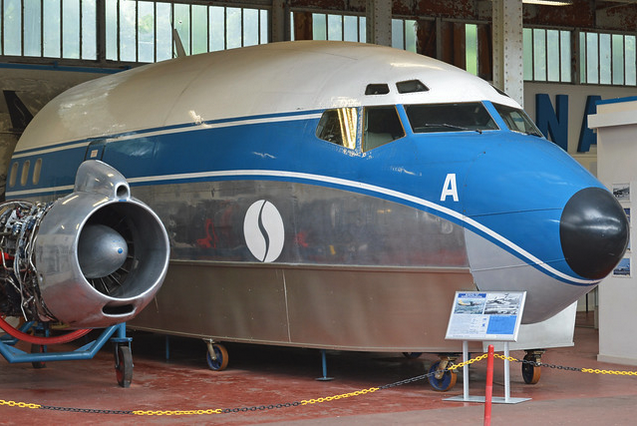
Nose of Boeing 707-329 ‘A’
PC: Alan Wilson / flickr / CC BY-SA 2.0
For obvious reasons, they were nicknamed “eyebrow windows.”
Why were “eyebrow windows” made?
When they were first introduced in the mid-20th century, eyebrow windows had two purposes:
Visibility of the sky
A pilot can only see as much as their cockpit windows allow them to see. Having extra windows above them allowed them to catch glimpses of the sky during turns or, since this was a time when manual celestial navigation was still a backup skill for long-haul flights, to navigate by the stars.
Better visibility of wings and engines
Having the extra windows would also give the crew in the cockpit a supplemental view of the plane’s engines and wings (granted, they’d have to stand up to see it). Since this was a time before more advanced onboard diagnostics, it could allow the crew to check for ice buildup or mechanical issues.

Why did they become obsolete
Technology improvements
As technology improved, eyebrow windows were less of a necessity. Thanks to automation, pilots no longer had to look at the sky during turns, and celestial navigation went by the wayside as GPS, weather radar and other automated features did those extra checks.
Practical liabilities
Eyebrow windows also came with practical downsides. The extra windows meant there were more cuts in the fuselage – every such weakness on a plane requires structural reinforcement, which costs money and adds extra weight.
Extra windows also meant something else that could crack, leak, ice up or fog up – so they increased inspection time and maintenance.
What pilots thought of them
Some crew members in the cockpit reportedly liked the extra light that the eyebrow windows brought into the cockpit, especially during longer flights. But as they became more unnecessary due to technology improvements, more pilots found them to be more distracting than helpful.
The end of an era
Seeing the writing on the wall, Boeing began phasing out eyebrow windows in the mid-1980s with the 737 Classic series of aircraft, making them optional. By the time their 737 NG was introduced in the late 1990s, eyebrow windows were no longer an option; they were discontinued.
Airlines that still have planes with eyebrow windows
A few aircraft with eyebrow windows are still flying today—but as older planes are retired, this once-common feature is quickly disappearing.
Want to comment on this post? Great! Read this first to help ensure it gets approved.
Want to sponsor a post, write something for Your Mileage May Vary, or put ads on our site? Click here for more info.
Like this post? Please share it! We have plenty more just like it and would love it if you decided to hang around and sign up to get emailed notifications of when we post.
Whether you’ve read our articles before or this is the first time you’re stopping by, we’re really glad you’re here and hope you come back to visit again!
This post first appeared on Your Mileage May Vary