Chase’s latest round of targeted spending offers is now live—and this time, the pattern is a little strange.
We ended up with four different offers across four different co-branded Chase cards, all focused on the same everyday categories: grocery stores, gas stations, and restaurants.
At first glance, that might not seem unusual. But once you dig into the details—and especially the fine print—the real value of these offers isn’t quite what it appears.
And as always with these promotions, you’ll need to enroll first before any bonus earnings count.
Ritz-Carlton Card
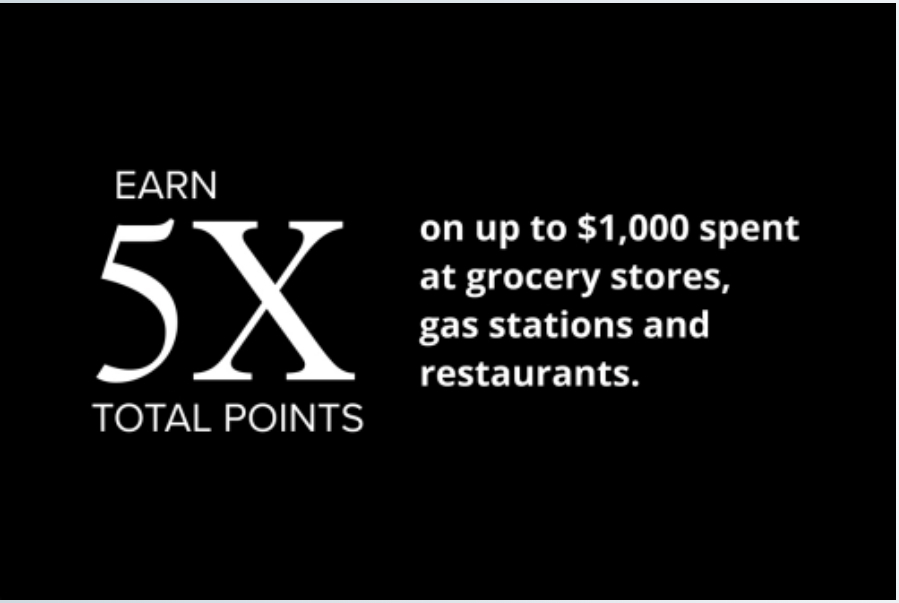
This offer provides 5X total Marriott Bonvoy points on up to $1,000 in combined purchases at grocery stores, gas stations, and restaurants.
The key here is total.
The Ritz-Carlton Card already earns:
- 3X on dining
- 2X on all other purchases
So in practice:
- Dining = +2X bonus (3X → 5X)
- Grocery/Gas = +3X bonus (2X → 5X)
Using a value of about 0.77 cents per Marriott point, this works out to roughly 3.85% back at the full 5X rate.
Not bad—but not quite as exciting as “5X” might suggest.
Disney Visa Card
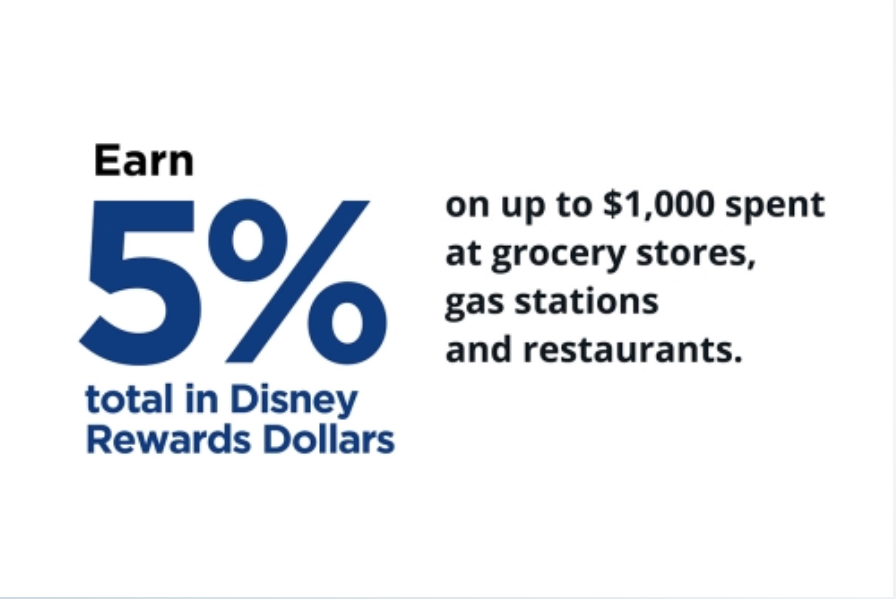
This offer is much simpler: 5% back in Disney Rewards Dollars on up to $1,000 in spend in the same categories.
Since Disney Rewards Dollars are essentially cash-equivalent at 1 cent each, this is a straight 5% return.
The card normally earns 1% in these categories, so this is really a +4% increase.
Southwest Rapid Rewards Priority Card
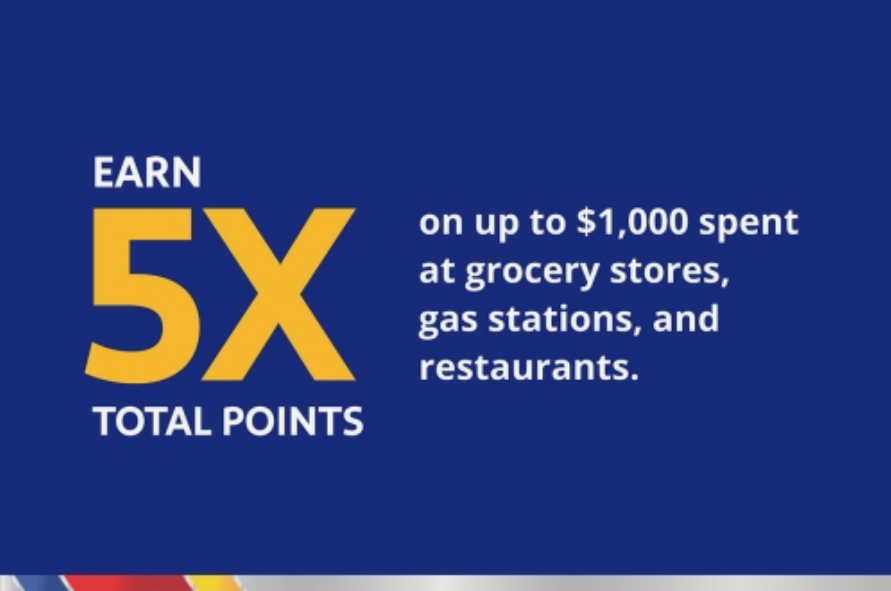
This offer gives 5X total Rapid Rewards points on up to $1,000 in grocery, gas, and dining purchases.
Again, that’s total earnings—not additional.
The Southwest Priority card already earns:
- 2X at gas stations
- 2X at restaurants
So in those categories, this is really a +3X bonus.
Still, Southwest points are generally worth about 1.2 to 1.5 cents each (with ~1.3 cents as a reasonable midpoint), which means:
- 5X total ≈ 6% to 7.5% return
Even accounting for the “total points” structure, this is still the strongest offer of the bunch.
IHG One Rewards Premier
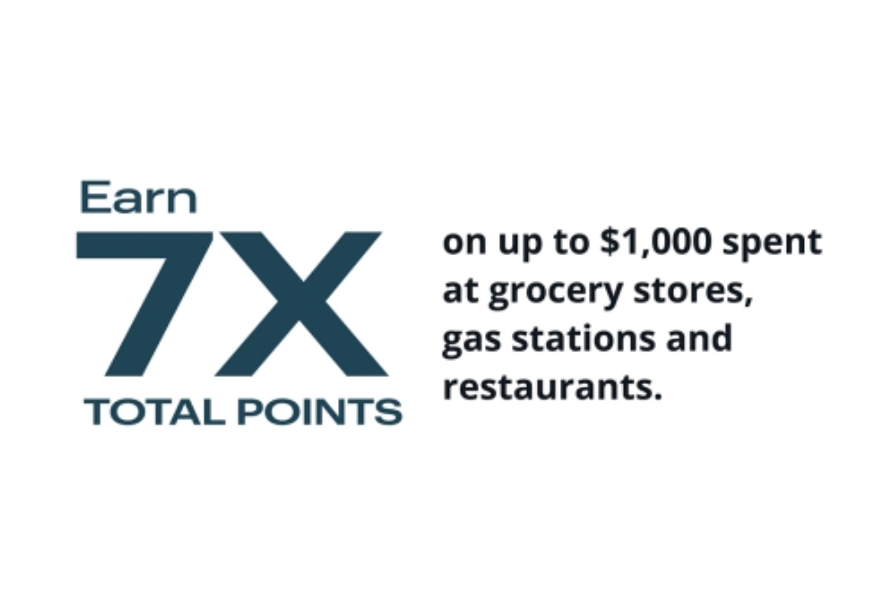
This one has the biggest headline number: 7X total IHG points.
But as always, the value depends on what those points are worth.
Using a value of about 0.5 cents per IHG point, this works out to roughly 3.5% back.
So, despite the higher multiplier, this is actually the least valuable offer of the group in dollar terms.
Comparing The Offers
All four offers cover the exact same spending categories. But once you translate everything into approximate dollar value—and account for the fact that these are total earnings—the ranking looks very different from the headline numbers.
- Southwest: ~6%–7.5% return (best)
- Disney: 5% return
- Ritz-Carlton (Marriott): ~3.85% return
- IHG Select: ~3.5% return
So the card with the highest multiplier (IHG at 7X) ends up at the bottom once you factor in point values.
Checking Your Cards
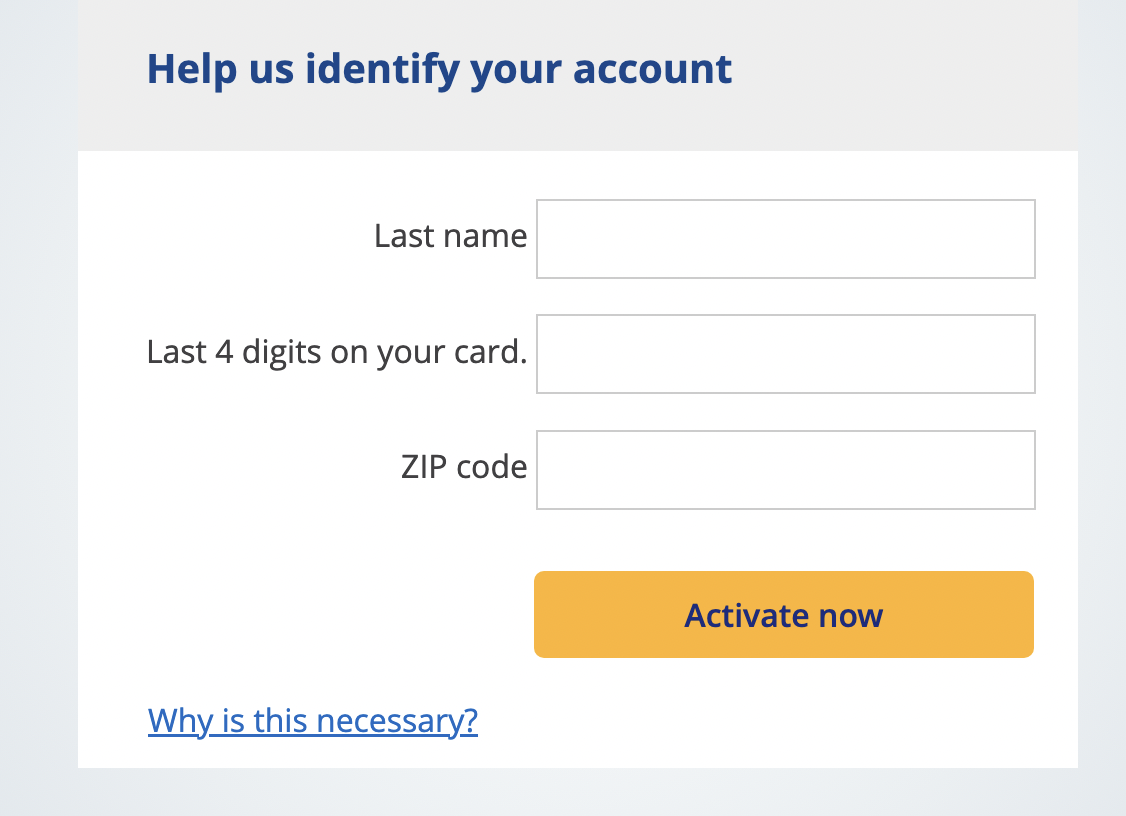
You can see if any of your cards are eligible by visiting Chase MyBonus and entering your last name, ZIP code, and the last four digits of your card.
If you do find an offer, make sure to enroll first. Any bonus points or cashback only apply after activation, but once you’re registered, eligible purchases made during the promotional period should count—even if they were made earlier in the quarter.
Is It Worth Changing Your Spending?
This is where things get very YMMV.
Just because an offer looks good on paper doesn’t mean it’s the best choice for your wallet.
For example, if you’re currently earning:
- 4X Membership Rewards at supermarkets with an Amex Gold
Is it really worth switching to earn:
- 5X Southwest points instead?
That depends entirely on how you value those currencies.
If you value:
- Membership Rewards at ~1.8–2.0 cents each → that’s already ~7%–8% return
In that case, sticking with your current setup might actually be the better move—even compared to the “best” Chase offer.
The same goes for:
- Chase Ultimate Rewards
- Bilt points
- Capital One miles
If you’re earning strong multipliers in flexible currencies, these targeted offers may not be worth shifting spend for—especially since they’re capped at $1,000 anyway.
Final Thoughts
This round of Chase targeted offers is a good reminder that headline multipliers don’t tell the whole story.
Between:
- “total points” instead of bonus points
- different point valuations
- and your existing earning strategy
…the best offer isn’t always the one with the biggest number.
For us, the Southwest offer is the clear winner on paper. But whether we actually shift spending to take advantage of it is another question entirely.
As always, the right move depends on how you value your points—and what you’re trying to earn.
Want to comment on this post? Great! Read this first to help ensure it gets approved.
Want to sponsor a post, write something for Your Mileage May Vary, or put ads on our site? Click here for more info.
Like this post? Please share it! We have plenty more just like it and would love it if you decided to hang around and sign up to get emailed notifications of when we post.
Whether you’ve read our articles before or this is the first time you’re stopping by, we’re really glad you’re here and hope you come back to visit again!
This post first appeared on Your Mileage May Vary