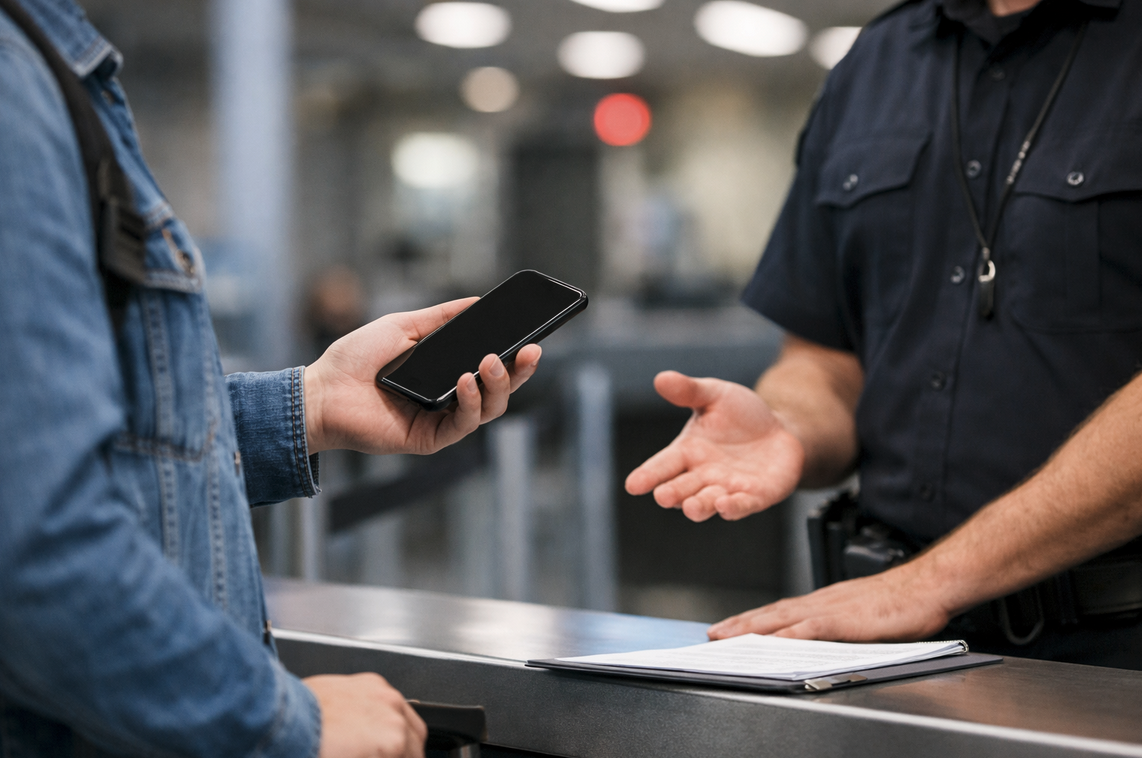
If you pay attention to the travel world, you probably saw that the Hong Kong government recently revised its National Security Law implementation rules and can now demand phone and computer passwords from those who are suspected of breaching said law. Travelers who refuse to hand over passwords or deny access to electronic devices at airports can now be treated as criminals.
However, Hong Kong is far from the only country with laws allowing police to access electronic equipment. Here are six others:
Australia
Border staff in Australia have the power to examine electronic devices.
Travelers can refuse to unlock their devices. But that doesn’t mean the devices are off-limits—authorities can still seize them and examine them.
Refusing to unlock a device—especially if officers believe it may contain evidence of a crime—can lead to fines, imprisonment, or deportation.
Canada
According to the Canada Border Services Agency, border officers have the power to examine someone’s electronic devices under the Customs Act.
Officers don’t need a warrant, and travelers can be required to provide passwords on request.
There are conditions an officer must meet to request this—according to the CBSA website, they include: “if they have indicators or concerns that border laws may have been contravened.”
That could include suspicion that someone is importing regulated or illegal items, or concerns about their identity.
Mainland China
Laws can differ depending on what region of China you are in. However authorities do have the power to inspect electronic devices, and the information on the devices can be examined.
This is also particularly true if there are concerns regarding national security.
New Zealand
If they have a reasonable suspicion that something illegal is happening, border officers in New Zealand have the power to look at electronic devices as one enters the country. This law went into effect in 2018, however searches are rare.
If an officer does have this suspicion and makes the request, the owner of the electronic device(s) may have to provide passwords for the search. Refusal can mean a fine of as much as NZ$5,000, around US$2,855.
Russia
There are multiple warnings for those who go to Russia – you shouldn’t expect to have much privacy on your devices.
An advisory from the US State Department says that authorities in Russia have the power to seize devices.
Also, those who visit Russia can also be detained because of what authorities find on their devices. Unfortunately, much like Mainland China, the enforcement of this law can be unpredictable.
United States
Whether or not you’re a US citizen, officers at the US border have the ability to search your devices without a warrant.
These searches can be carried out during routine inspections at the border.
Refusing to provide a password isn’t a criminal offense, but devices can still be seized, and if you are not a US citizen, then you could face other difficulties relating to immigration.
Under the current administration, the US government has also revealed plans to introduce a ‘social media check‘ for tourists at the border; this could include the past five years of someone’s social media history. However, to date, this is not in force.
Need an ending.
FAQ: But I’m an American citizen. What about my freedom?
Being an American citizen doesn’t change the rules when you’re entering another country. During those kinds of situations, you go by the rules of the country you’re trying to enter or exit, not those of the United States of America.
And even in the U.S., when you’re entering or exiting the country, the government is allowed to search your devices without a warrant. From legalguides.net:
The U.S. Constitution’s Fourth Amendment typically requires warrants for searches, but the “border search exception” allows customs and border protection officers to conduct searches without warrants in three specific scenarios: routine searches, searches based on reasonable suspicion, and searches based on probable cause. These exceptions stem from historical and legal precedents that prioritize national security and immigration control.
Bottom line: once you’re at a border, the rules change—and your phone might not be as private as you’d like.
Want to comment on this post? Great! Read this first to help ensure it gets approved.
Want to sponsor a post, write something for Your Mileage May Vary, or put ads on our site? Click here for more info.
Like this post? Please share it! We have plenty more just like it and would love it if you decided to hang around and sign up to get emailed notifications of when we post.
Whether you’ve read our articles before or this is the first time you’re stopping by, we’re really glad you’re here and hope you come back to visit again!
This post first appeared on Your Mileage May Vary