When you rent a car in the U.S., there’s usually a simple question to answer at the counter: Do you want to use your own insurance or buy coverage from the rental company?
But once you leave the country, that question gets a lot more complicated.
For most travelers, your personal auto insurance won’t apply overseas. That means you’re left figuring out whether your credit card coverage is enough—or if you should be paying an extra $20, $30, or even $40 per day for additional protection.
And the answer isn’t as straightforward as you might think.
What Your Credit Card Actually Covers
If you have a travel credit card like the Chase Sapphire Preferred or Capital One Venture X, you already have rental car coverage built in.
In most cases—especially outside the U.S.—that coverage is primary, which means you don’t need to involve any other insurance.
But here’s what that coverage actually includes:
- Damage to the rental car
- Theft of the vehicle
- Loss-of-use charges from the rental company
That sounds like full coverage. It’s not.
What your credit card doesn’t cover is just as important:
- Liability (damage to other vehicles or property)
- Injuries or medical costs
- Things like damage to tires, glass, or interior damage
So while your credit card can replace the rental company’s collision damage waiver (CDW), it doesn’t replace actual insurance.
Before you rely on your credit card coverage, it’s worth taking a few minutes to read the fine print in your card’s Guide to Benefits.
That’s where you’ll find details about what’s actually covered, what’s excluded (like tires or glass), and any country-specific restrictions. It’s not the most exciting read—but it’s a lot better than finding out what’s not covered after something goes wrong.
Are There Countries Where Coverage Doesn’t Apply?
Yes—and this is something many travelers don’t realize.
Most credit cards offer rental car coverage worldwide, but there are often exceptions. Common exclusions include countries such as Ireland, Israel, and Jamaica.
If you’re traveling to one of those destinations, your credit card coverage may not apply at all—so it’s especially important to check before your trip.
Why Renting Outside The U.S. Changes Everything
Since your personal auto policy usually won’t follow you abroad, your coverage typically comes from a mix of:
- Your credit card (for the rental car itself)
- The rental company (for required liability coverage)
- Optional add-ons or travel insurance (to fill in the gaps)
That’s why the decision at the counter feels so different overseas—you’re not just declining coverage, you’re deciding how much risk you’re willing to take on.
And that’s where location really starts to matter.
Iceland: Coverage That Actually Matches The Risk

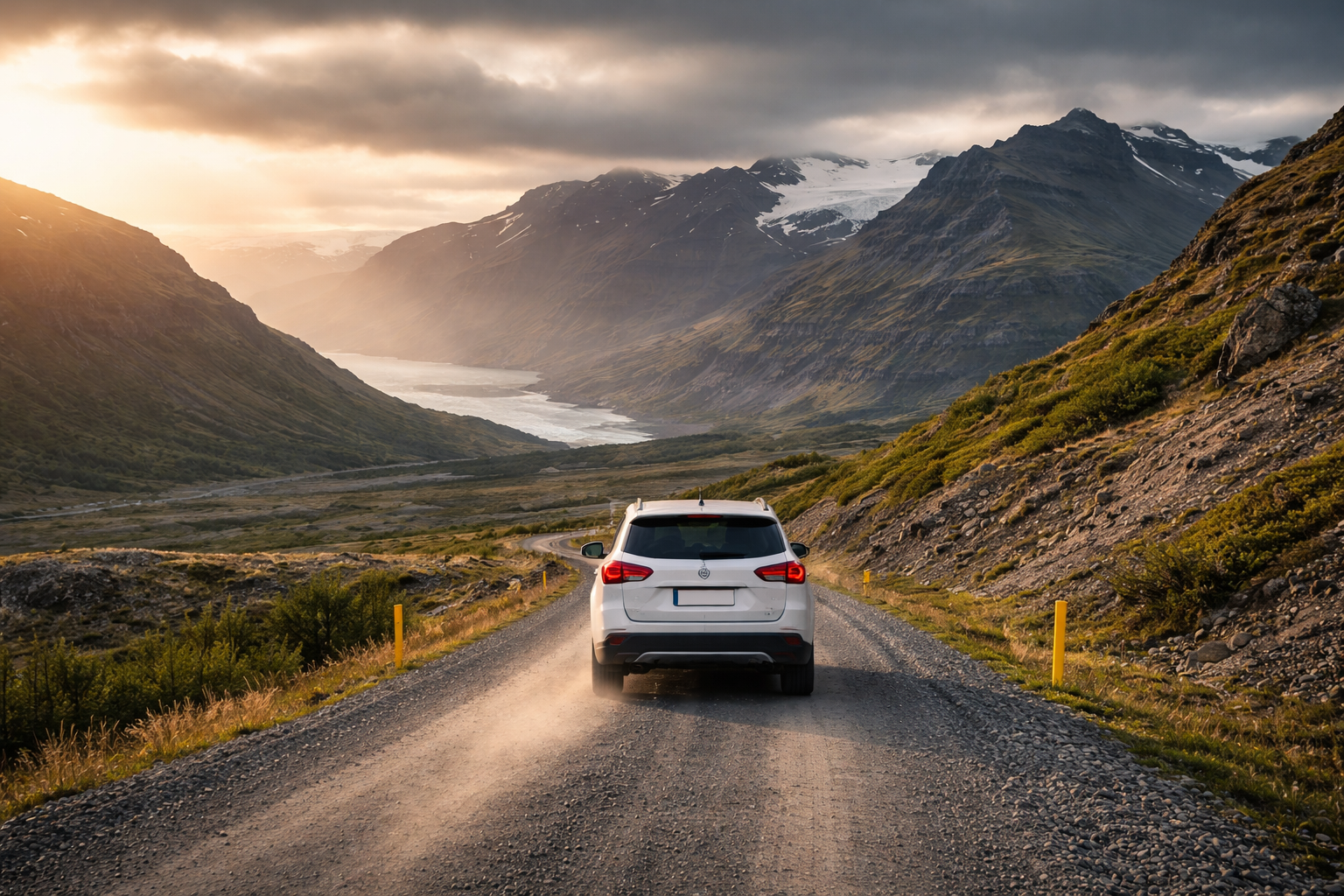
When we rented a car in Iceland, the list of optional coverage felt almost excessive.
There were add-ons for gravel roads, sand and ash damage, tire protection—even wind damage.
At first, it looked like a classic upsell. But the more we looked into it, the more it made sense.
The biggest risks in Iceland aren’t other drivers—they’re the environment:
- Gravel roads can crack windshields and chip paint
- Strong winds can rip car doors open
- Sand and ash storms can damage the exterior
- Remote areas increase the chances of tire issues
Those are all things that may not be covered by your credit card.
In that case, paying extra for coverage wasn’t about convenience—it was about protecting against real, common risks.
Germany: A Completely Different Set Of Risks
Now compare that to renting a car in Germany. The risks look completely different.
You’re far more likely to deal with:
- Tight parking garages
- Narrow streets
- Parallel parking in close quarters
- Minor scratches or dings
What you won’t typically deal with are extreme environmental hazards, as you see in Iceland.
That changes the equation entirely.
Is Liability Insurance Included?
This is one of the biggest differences between renting in the U.S. and Europe.
In countries like Germany, liability insurance is usually included by law in your rental.
That means you’re already covered for:
- Damage to other vehicles
- Property damage
- Injuries to other people
That’s important because liability is the one thing your credit card does not cover at all.
So unlike in the U.S., where declining coverage can feel risky, you’re already starting with a baseline level of protection in many European countries.
Will The Rental Car Agent Accept Your Credit Card Coverage?
Usually, yes—but that doesn’t mean the conversation at the counter will be simple.
Rental car agents may still ask whether you want to purchase the company’s own protection, and in some locations, they may ask for proof of coverage or require a credit card with enough available credit to cover a large security hold. In other words, having credit card coverage doesn’t always mean the agent will just nod and move on.
It’s also important to remember that some countries are excluded from credit card rental coverage, and some destinations have local insurance rules that can limit your ability to decline certain protections. That’s why it’s worth checking both your card’s Guide to Benefits and the rental company’s country-specific terms before your trip.
If you want to rely on your card, it can help to have a copy of your benefits guide or a letter from the benefits administrator showing that your card includes rental car coverage. You may never need it—but if an agent asks, you’ll be glad you have it.
So, Do You Need To Buy Extra Coverage?
This is where it becomes less about rules and more about context.
Instead of asking, “Should I buy rental car insurance?” a better question is:
What’s most likely to happen where I’m driving—and am I covered for that?
- In Iceland, the answer pointed toward buying extra protection
- In Germany, it feels more like a choice between saving money and avoiding hassle
Your credit card will cover the big things—major damage or theft of the vehicle.
But the smaller, more common issues (like tire damage, glass damage, or minor scrapes) are often where rental companies make their case.
Final Thought
The biggest mistake is assuming rental car insurance works the same way everywhere. It doesn’t.
When you’re renting outside the U.S., your personal insurance usually isn’t part of the equation. That means your credit card is doing more of the heavy lifting—but it’s still only covering part of the story. In some places, like Iceland, paying for extra coverage can make complete sense. In others, like Germany, it’s more about how much hassle you’re willing to deal with if something goes wrong.
Either way, the right answer isn’t just about what your credit card covers—it’s about where you’re driving.
Want to comment on this post? Great! Read this first to help ensure it gets approved.
Want to sponsor a post, write something for Your Mileage May Vary, or put ads on our site? Click here for more info.
Like this post? Please share it! We have plenty more just like it and would love it if you decided to hang around and sign up to get emailed notifications of when we post.
Whether you’ve read our articles before or this is the first time you’re stopping by, we’re really glad you’re here and hope you come back to visit again!
This post first appeared on Your Mileage May Vary