When people travel abroad for leisure, safety is usually one of the first things they consider. Most travelers probably aren’t planning trips to places experiencing active conflict or political instability, such as Haiti, Ukraine, or Sudan.
Safety perceptions also aren’t fixed. A country that feels secure at one point in time can become riskier as circumstances change — and destinations once seen as dangerous can stabilize. Because of that, a number of organizations regularly track how safe different countries are for foreign visitors.
One of those organizations is Berkshire Hathaway Travel Protection, a company that sells travel insurance. Since risk directly affects pricing, the company closely monitors global safety conditions. A trip to Russia, for example, would generally be considered higher risk — and more expensive to insure — than a trip to Canada.
That focus on risk has led Berkshire Hathaway Travel Protection to publish annual rankings of the world’s safest countries to visit since 2018. And in its newly released list for 2026, one result stands out:
The United States didn’t make the top 15.
Here’s the list
According to survey data collected by the company, travelers felt safest visiting the Netherlands over the past five years. Australia ranked second, followed by Austria in third. The rest of the top 10, in order, are Iceland, Canada, New Zealand, the United Arab Emirates, Switzerland, Japan, and Ireland.
Their full list of the 15 safest countries for 2026 is:
- Netherlands
- Australia
- Austria
- Iceland
- Canada
- New Zealand
- United Arab Emirates
- Switzerland
- Japan
- Ireland
- Belgium
- Portugal
- France
- United Kingdom
- Denmark
To produce the final rankings, Berkshire Hathaway Travel Protection combined its own survey results with data from outside sources to calculate a weighted safety score for each country. Only travelers who had visited countries the company considers generally safe were allowed to rate them. The rankings also incorporate the Global Peace Index, Numbeo data (which calculates safety rates), and GeoSure Global‘s city-level safety scores.
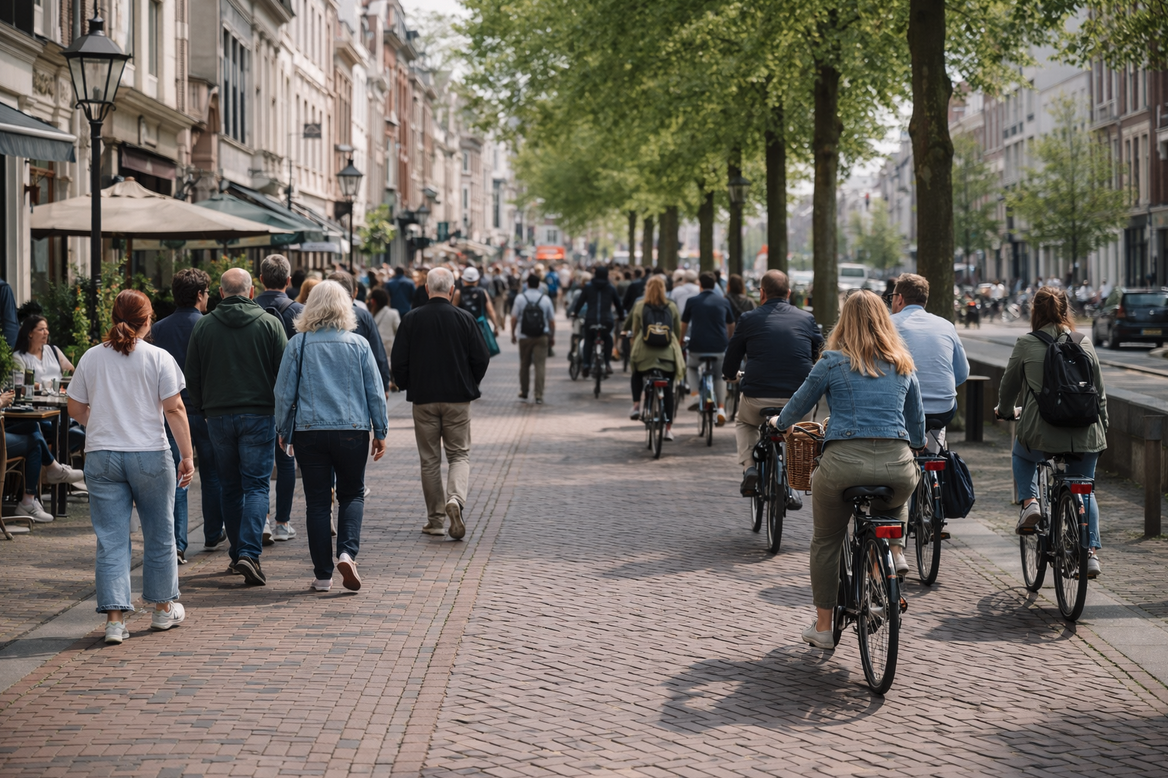
Travelers who ranked the Netherlands highest cited its strong health infrastructure, safety for female travelers, and acceptance of diverse visitors. Many also noted that visitors to major cities like Amsterdam should stay alert for cyclists (we just visited Amsterdam for the first time – I know, I know…we should have gone MUCH sooner – and YES on the bike riders! It was almost as bad as crossing the street in Vietnam!).
Australia’s high ranking was attributed to its low crime rate, stable political system, and strict gun control laws. Travelers are advised to familiarize themselves with Australia’s customs regulations, including what they are and are not allowed to bring into the country, as well as its strict animal quarantine requirements.
Comparison to past years
In the company’s 2025 rankings, Iceland was named the safest country to visit, followed by Australia, Canada, Ireland, and Switzerland. That same year, the Netherlands ranked much lower, coming in at No. 14.
Here’s what 2025’s ranking looked like:
- Iceland
- Australia
- Canada
- Ireland
- Switzerland
- New Zealand
- Germany
- Norway
- Japan
- Denmark
- Portugal
- Spain
- United Kingdom
- Netherlands
- Sweden
And 2024’s:
- Canada
- Switzerland
- Norway
- Ireland
- Netherlands
- United Kingdom
- Portugal
- Denmark
- Iceland
- Australia
- New Zealand
- Japan
- France
- Spain
- Brazil
2023’s:
- Netherlands
- Denmark
- Iceland
- Australia
- Norway
- Canada
- Germany
- Sweden
- Switzerland
- New Zealand
- Spain
- Ireland
- United Arab Emirates
- United Kingdom
- Belgium
Note that the United States wasn’t listed in any of those years, either (anyone surprised? Bueller? Bueller?). In fact, the United States has NEVER made Berkshire Hathaway’s list of the 15 safest countries since it began in 2018.
We really should work on that…
Want to comment on this post? Great! Read this first to help ensure it gets approved.
Want to sponsor a post, write something for Your Mileage May Vary, or put ads on our site? Click here for more info.
Like this post? Please share it! We have plenty more just like it and would love it if you decided to hang around and sign up to get emailed notifications of when we post.
Whether you’ve read our articles before or this is the first time you’re stopping by, we’re really glad you’re here and hope you come back to visit again!
This post first appeared on Your Mileage May Vary

4 comments
Pretty amusing to see UAE up there.
Germany has taken a tumble. A lot of issues with immigration (sadly).
I would have thought Japan would be easily in the top 5.
Japan is interesting because you’re safe in the way that violent crime is rare, ie: your chances of being shot even in the bad parts of town are almost nil compared to places like the US, but on the other hand there’s varying levels of theft, scams, extortion, road rage, and such so a level of caution is needed.
The UAE has — particularly Dubai and Abu Dhabi — a mass surveillance security state, brutal criminal justice system, and is working immigrant heavy. Thus visitors feel safe.
Germany was on the list in about half of the last couple of years, and immigrant numbers haven’t changed that drastically within the last four years in Germany.
Some of these make sense, but you can slice and dice data however you want to come up with these “top” whatever “lists”. One reason I think this study has bad data is that Berkshire Hathaway Travel Protection policies are marketed to U.S. residents traveling domestically or internationally, with coverage available for trips to international locations, including the U.S., as long as they are not subject to published travel restrictions. So most claims or loss data they would have would be from Americans having issues in Non-USA countries.
Then you add in data from the GPI, which is flawed. The GPI relies on SUBJECTIVE indicators like PERCEPTIONS of criminality, political instability, and militarization. For example, I “perceive” that Cleveland is dangerous because they don’t have enough solar farms and the police actually carry firearms. You can make up whatever you want.
Numbeo’s data bias stems primarily from its crowdsourced model, where user-submitted entries can reflect personal experiences, subjective perceptions, or deliberate manipulation. Since anyone can contribute data anonymously, there’s no guarantee that contributors represent the broader population of a city or country. This leads to potential overstated crime rates. There have been past examples where a single user manipulated Lund, Sweden’s crime index, to make it appear the most dangerous city in the world. It would be like believing everything on Facebook or Reddit is true.
Geosure might be the most solid data; however, it is primarily used by certain corporations, tied into a subscription through Concur or Tripit. I’ve worked for corporations that provide this to employees who travel in an effort to give travel safety information to business travelers or individuals who are overly concerned about certain travel. Corporate travelers staying at 5-star hotels in any city have a different experience or risk factor than a traveler staying at a 1-star hotel on the wrong side of town. I have to assume that the data would be off base for certain countries when comparing places globally. But mostly the reason this company’s data can be flawed is that the company, ironically, compares its mission to the US Constitution in the freedoms provided to people in each place. It measures health and medical access, LGBT safety, single women’s safety, and ‘basic freedoms’ such as being free from slavery, freedom of expression, freedom of education, etc. If their data were honest in that, no country would be ranked higher than the USA when it comes to healthcare quality and access, freedom of speech, expression, etc. In addition, those standards don’t equate to ‘safety’ as most of us think of it when traveling. Will I get mugged, kidnapped, or murdered doesn’t equal freedom to wear a gay pride t-shirt.
So all that makes one question such lists.