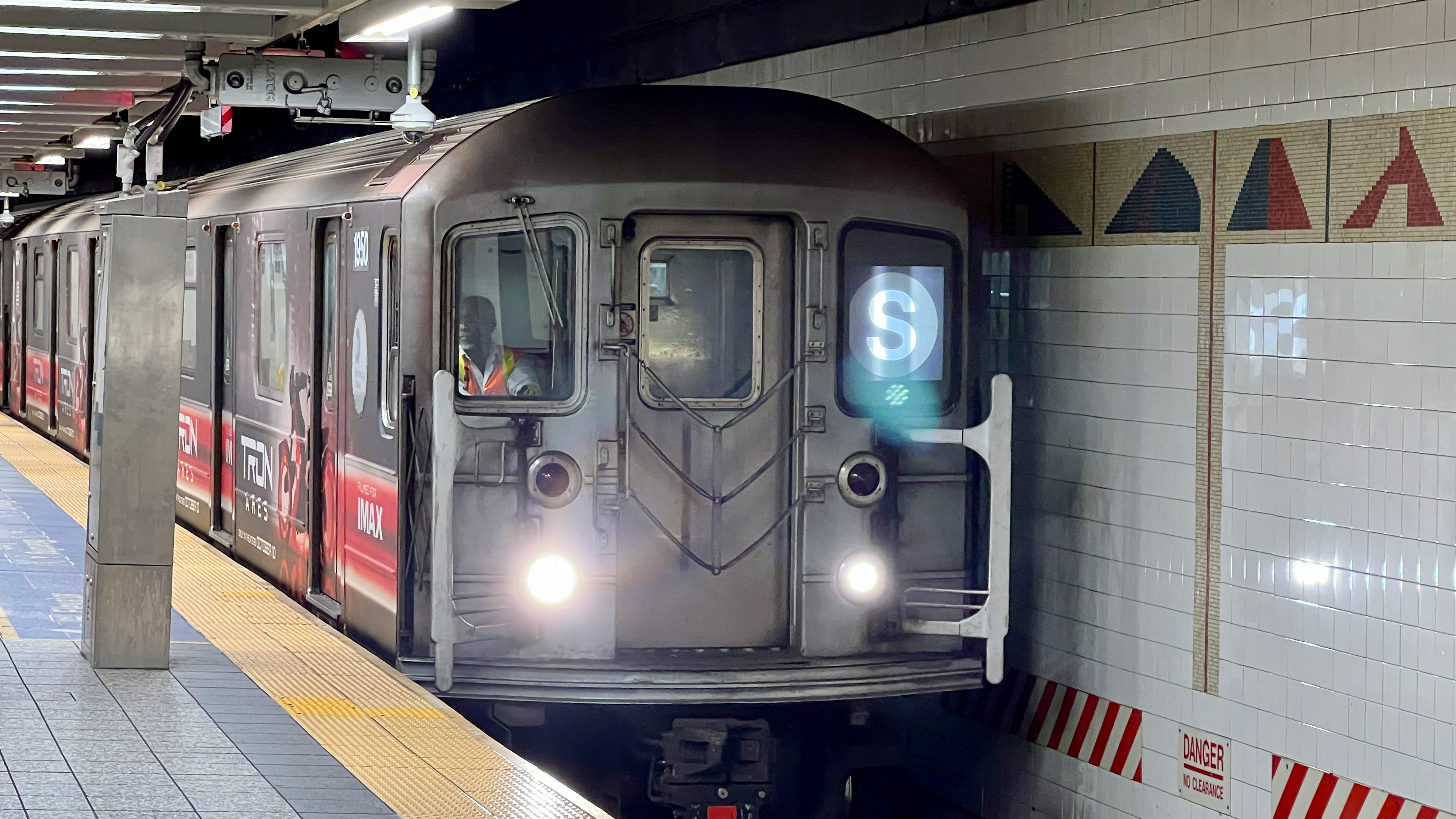
On the subway map, the S train looks almost like a joke. Two stations. A ridiculously short ride. A whole “line” that exists just to connect Grand Central to Times Square.
But after using it for a very real, very normal New York trip, I get it now.
What the S train actually is
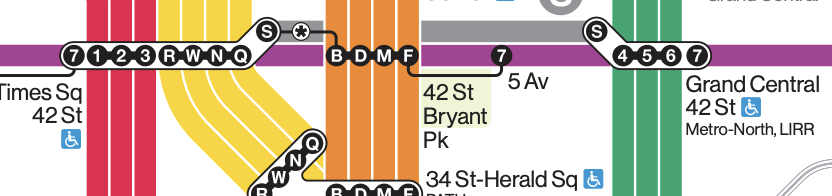
The 42nd Street Shuttle (S train on the subway map) runs under 42nd Street between Grand Central–42 St and Times Sq–42 St.
That’s it. No branching. No “one stop is express, the other is local.” Just a constant back-and-forth link between two of the busiest stations in the system.
Why it exists
The shuttle is basically a leftover piece of New York’s earliest subway design.
When the first subway opened in 1904, this 42nd Street segment was part of the original route connecting the West Side to Park Avenue. As the system expanded and the main lines were rerouted and reconfigured, this short crosstown segment remained — and it became the dedicated shuttle we still ride today.
(If you want to go down the rabbit hole, the NYCSubway.org history of the shuttle is excellent.)
Where the tracks came from
This isn’t a modern “connector” built later as a convenience.
These are original tracks from the city’s first subway era — repurposed into a shuttle once the rest of the network grew around it. That’s part of why the stations feel different than many others: you’re riding a piece of the earliest IRT infrastructure that just never stopped being useful.
That’s why we used it
The S train makes the most sense when you stop thinking of it as a “trip” and start thinking of it as a transfer tool.
We were at Grand Central and needed to get to Lincoln Center.
So we took the S to Times Square, transferred to the 1 train, and got off at 66 St–Lincoln Center.
On the map, it looks like a pointless two-stop shuttle. In real life, it’s the little link that turns “cross Midtown” into a simple, predictable underground connection — without having to surface and walk or deal with traffic.
How many people ride a two-stop train?
More than you’d think.
Even though it’s short, the shuttle is routinely cited as carrying around 100,000 riders a day under normal conditions — because it connects two massive subway complexes and serves as a bridge between multiple lines and transfers.
So yes, it’s short — but it’s also a workhorse.
Final thought
If you’re already at street level, riding the S train between Grand Central and Times Square can feel unnecessary.
But that’s not what it’s really for.
The shuttle isn’t about traveling two stops. It’s about what those two stops connect.
Want to comment on this post? Great! Read this first to help ensure it gets approved.
Want to sponsor a post, write something for Your Mileage May Vary, or put ads on our site? Click here for more info.
Like this post? Please share it! We have plenty more just like it and would love it if you decided to hang around and sign up to get emailed notifications of when we post.
Whether you’ve read our articles before or this is the first time you’re stopping by, we’re really glad you’re here and hope you come back to visit again!
This post first appeared on Your Mileage May Vary