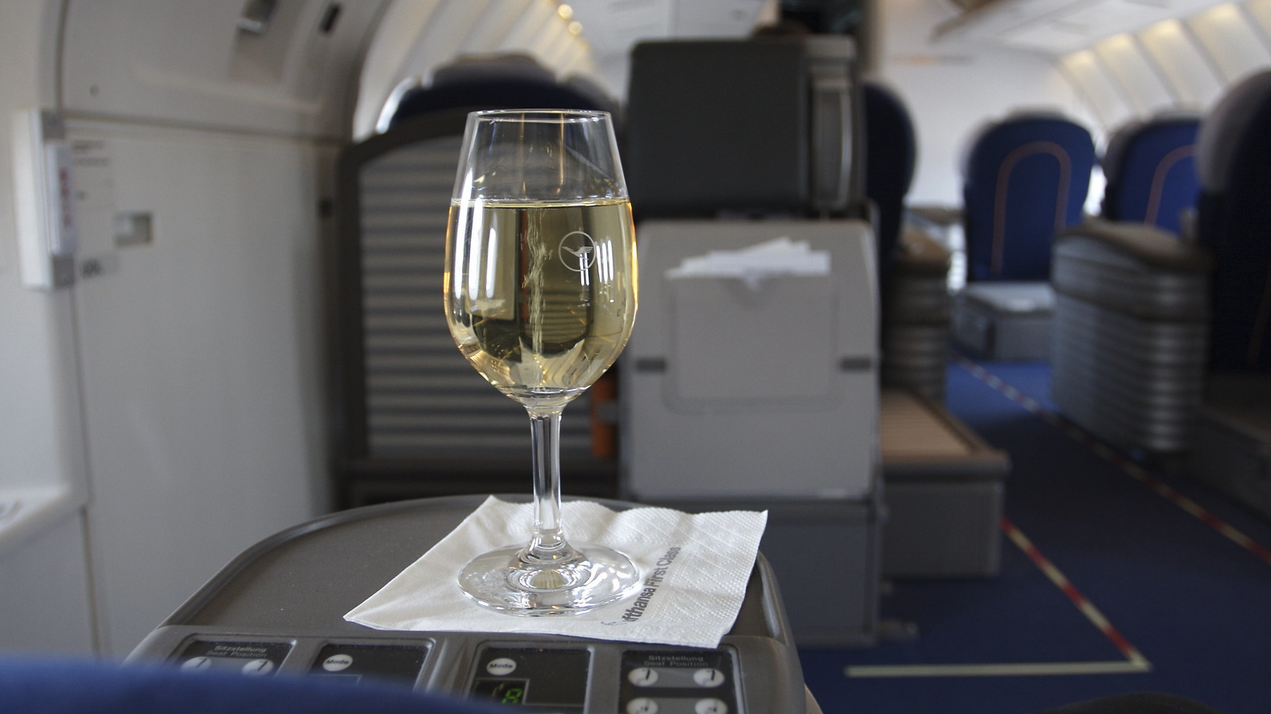
Flying first class comes with real perks, but it doesn’t magically eliminate airport crowds, security lines, or bad weather—and confusing those expectations is where some coverage goes wrong.
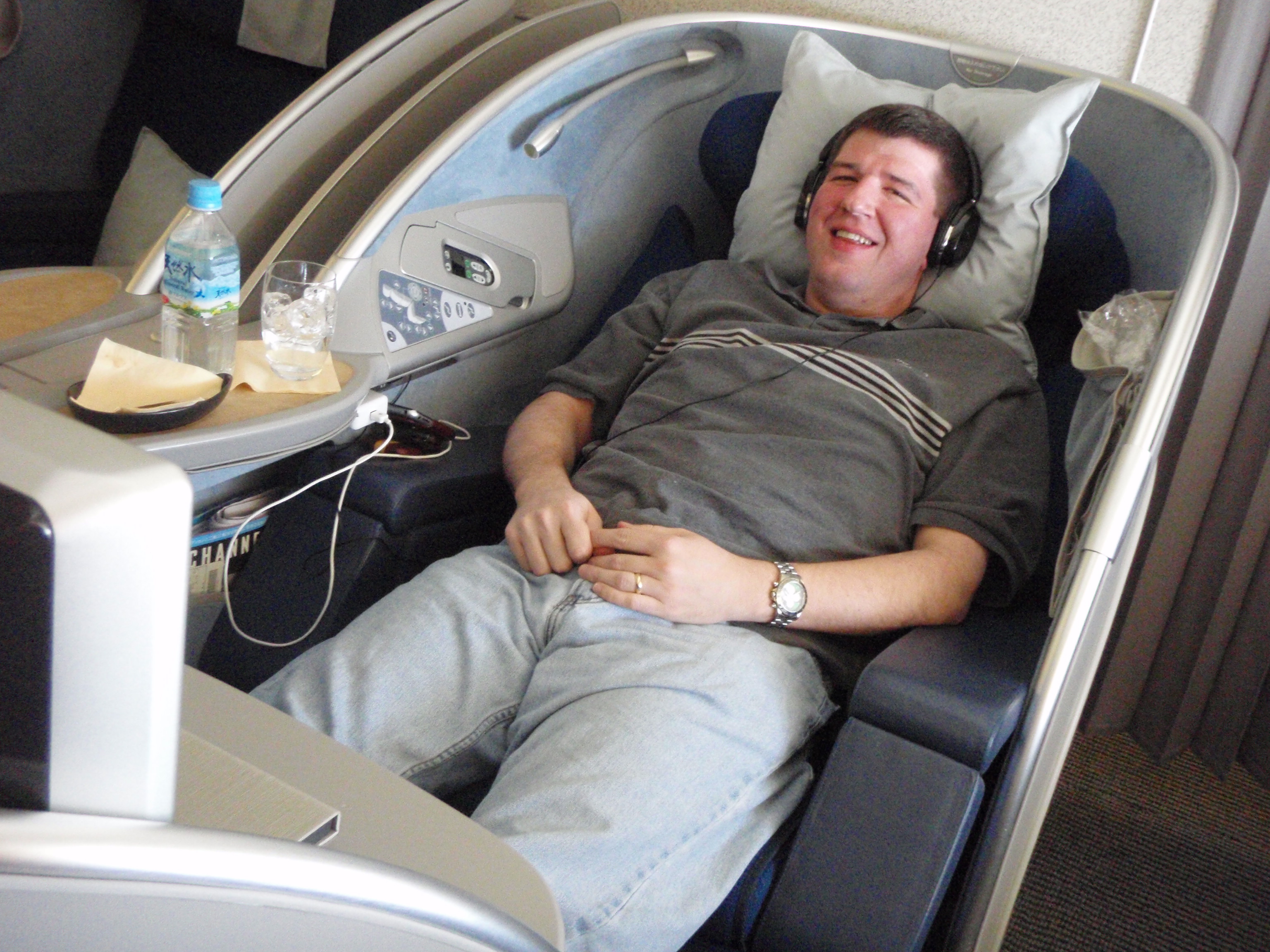
My husband Joe and I have flown first class a few times. It admittedly doesn’t happen often—usually because he’s saved up enough points, and it’s a long enough trip that we’d rather be up front than squeezed into economy seats. We usually save those trips for when we go overseas, although we’ve occasionally used points for a cross-country flight, too. Here’s Joe during one of those times:
The article that inspired this
Anyway, back in 2018, Business Insider posted an article titled:
DISAPPOINTING PHOTOS SHOW WHAT FLYING FIRST CLASS IS REALLY LIKE
The post mainly consisted of several photos and comments about each image. Its synopsis is:
- Despite its reputation, flying first class isn’t always what it’s cracked up to be.
- Advertisements for first-class accommodations—and even our imaginations—can look vastly different from the actual experience.
- Take a look at what the whole experience of flying first-class—from check-in to the exclusive lounges to the seats and meals on the flights themselves—can really look like.
I recently read the whole article and looked at all the pictures, and all I have to say is: even several years after the fact, many of its conclusions still feel misleading.
Here’s the article. Take a look at it so you know what I’m talking about. 😉
Note: The stuff in large bold is my introduction to each section. The stuff in regular-size bold is from the article. The regular print is my descriptions and thoughts.
Check-in
The author first talks about the check-in process:
Well, I don’t know very many people at the check-in desk who smile and treat first-class passengers like royalty. But they do indeed have special access lines for people flying first class (both domestically and internationally), so they don’t have to stand in the queues you might see for those flying economy—or on a Ryanair flight. (Ryanair is an ultra-low-cost airline…it doesn’t even have first class!)
Security
The author then goes into the TSA security checkpoint:
Well, unless you’re a super-duper VIP, how (and where) you go through security has nothing to do with what kind of plane ticket you have. It’s all about whether you have TSA PreCheck. A traveler who has done their homework would know that. There may even be a “preferred” lane for first class and business customers, but that usually just dumps you into the normal security lane after your ID is checked.
Lounge access
Next up – waiting in a lounge:
Just because you have a first-class ticket, it doesn’t automatically mean you have lounge access. You might, but the rules vary from airline to airline. So how crowded the lounge is might be a moot point—you’re not getting in unless you have access.
The author then tries to differentiate waiting in the lounge if you’re flying international first class:
True: not all lounges—even international or first-class lounges—are the same. If you’re in a small airport, for example, they might not bother upgrading the international and/or first-class lounge very often.
That being said, knowing what your lounge will look like before you go is a matter of doing a little homework. All it takes is a search on this website—by this point, just about every lounge out there has probably been reviewed at some point. If you don’t like the lounge you thought you were going to use, see if you can access another one.
Boarding
They then discuss boarding the plane:
I’m not quite sure what the author’s point is here. If you’re loaded onto the plane first because you’re in first class, you miss most of the chaos, right?
And even when/if biometrics become available everywhere for boarding (again, the pic the author used was for the Delta Sky Club—not a boarding gate), it’s still not going to stop gate lice.
Domestic vs. international first class
The author then goes into great detail about the differences between domestic first class and international first class:
(The pictures for each are lovely international options, compared to what you’d typically see in domestic first class.)
This is where the article starts to blur an important difference. No one has ever said domestic first class is anything like international first class. If you’ve been on even one domestic flight on a legacy airline, you’ve walked past the first-class cabin—you’ve seen what it’s like.
And that’s OK! The seats are bigger and cushier, and you may get more than a Stroopwafel and a cup of soda. But those leather seats don’t suddenly turn into pods (like a Transformer) when the curtain is closed. That framing sets up expectations that just don’t match how airline cabins actually work.
After you land
The rest of the article delves into after you’ve left the plane:
I really think the author’s framing suggests that first class should influence every part of the journey—even where airlines have no control. Why push an unrealistic idea and then take it away in the same breath?
Sure, if you’ve flown first class, your bags might come out among the first. But what does traffic out of the airport have to do with flying first class? Or the weather? Airline service affects the flight itself, but most parts of the travel experience—security, boarding areas, and ground transportation—operate independently of ticket class.
Final thought
If you’re just a regular person—not a bajillionaire who pays cash for first-class tickets, and not someone with so many miles they don’t know what to do with them—and you somehow get a first-class seat, just sit back and ENJOY IT.
Don’t expect first-class treatment for every aspect of your travel besides the things the airline actually controls. TSA, taxis, and the weather don’t care if you have a first-class ticket or not. 😉
If you want to know what to expect before your flight, do your homework and learn what you’ll get in terms of seating, meals, and service. But don’t be disappointed because you had unrealistic expectations of your experience—that’s on you, not the airline.
As for the author and the constant “You might expect this, but don’t” outlook: it feels like they’re pushing unrealistic expectations and then taking them away almost in the same sentence, which weakens the overall argument.
Feature Image (cropped): TravelingOtter / flickr / CC by SA 2.0
Want to comment on this post? Great! Read this first to help ensure it gets approved.
Want to sponsor a post, write something for Your Mileage May Vary, or put ads on our site? Click here for more info.
Like this post? Please share it! We have plenty more just like it and would love it if you decided to hang around and sign up to get emailed notifications of when we post.
Whether you’ve read our articles before or this is the first time you’re stopping by, we’re really glad you’re here and hope you come back to visit again!
This post first appeared on Your Mileage May Vary