A declined card in Italy turned into a feel-good Olympic moment — but it also highlights a common travel problem most people aren’t prepared for.
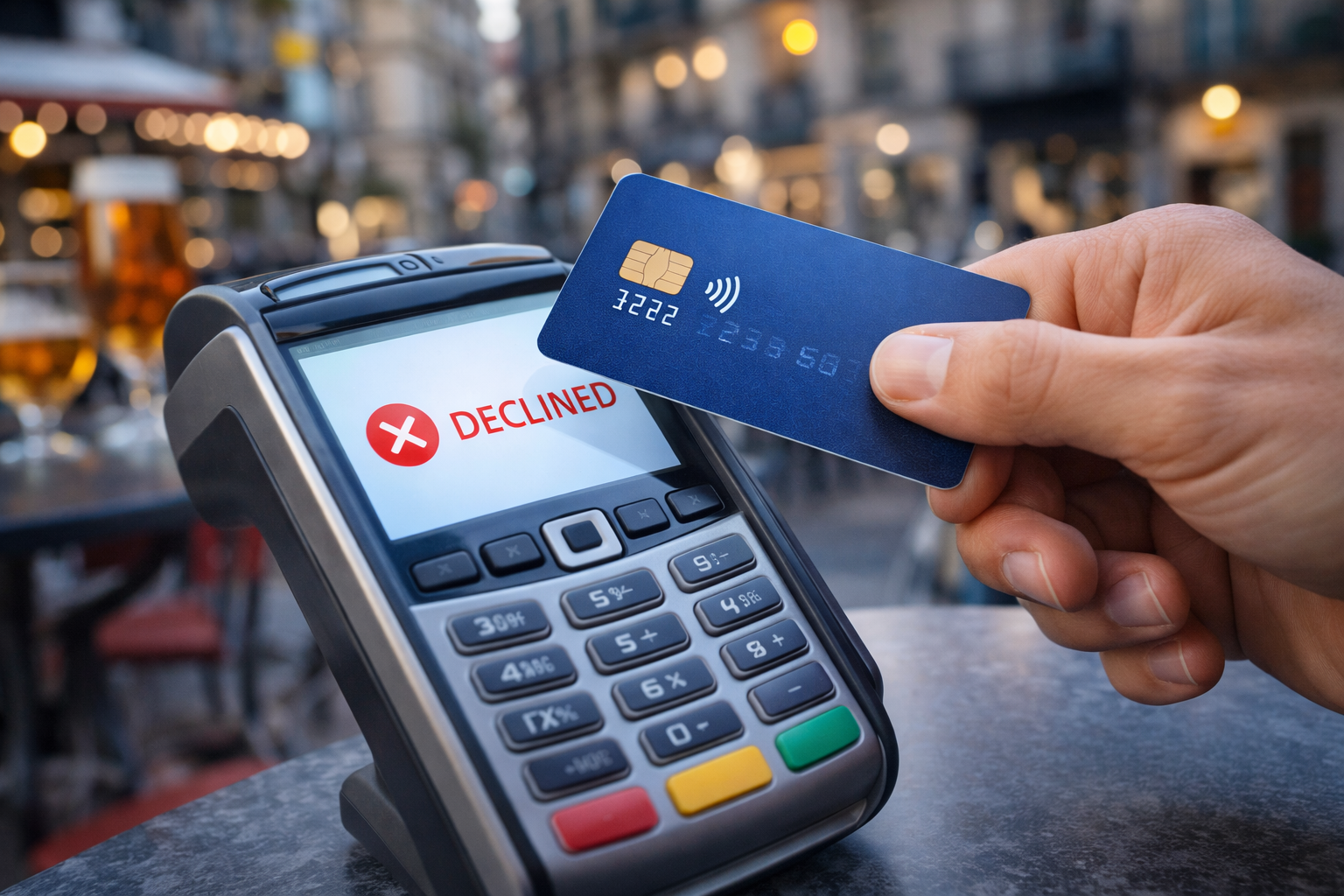
Having a credit card declined while traveling is frustrating — and sometimes embarrassing — even when you know you have plenty of available credit. Most of the time it’s just a minor inconvenience, but it can quickly derail a moment if you’re unprepared. That’s exactly what makes a recent story involving Snoop Dogg so relatable: if it can happen to him while ordering a cheeseburger overseas, it can happen to anyone.
We ran into this ourselves during a trip to Amsterdam. A friend’s Visa card was declined at a bar, even though they had more than enough credit line to cover the tab and had informed their bank of their travel dates and destinations. Luckily, I had no trouble using my Chase Sapphire Preferred and picked up the bill.
It was annoying, but not exactly shocking. If you travel enough, eventually you’ll get a random decline that has nothing to do with money.
What I didn’t have on my 2026 bingo card was seeing that same thing happen to Snoop Dogg.
Wait… Snoop Dogg is an Olympic commentator now?
For anyone who grew up in the ’90s, the idea of Snoop Dogg covering the Olympics still feels a little surreal. A lot of us GenXers remember him from a very different era — long before he became a surprisingly wholesome TV personality, youth football coach, and now… Olympic correspondent.
Yet here we are.
During the Winter Olympics, Snoop has been everywhere — interviewing athletes, popping up in unexpected places, and even hanging out with the Jamaican bobsled team in a moment that felt like a full-circle throwback to Cool Runnings.
 Video via NBC Olympics — tap the image to watch the full clip on Instagram.
The whole thing is equal parts entertaining and slightly unbelievable — which might explain why his next travel moment feels so relatable to anyone who’s ever had a card declined abroad.
Snoop Dogg stopped at a small restaurant in Livigno, Italy, to order a cheeseburger and fries. His credit card wouldn’t go through — despite the fact that he was, well… Snoop Dogg. According to People magazine’s report, the family running the restaurant decided to comp the meal rather than make a big deal out of it.
Not a bad outcome when you’re standing at the counter with a declined card. And in true Snoop fashion, the story didn’t end there — he later surprised them with tickets to one of the Olympic finals as a thank-you.
It’s a great story. It’s also a reminder that sometimes a payment hiccup can turn into a memorable moment… if you happen to be a globally recognizable celebrity.
Of course, most of us probably aren’t going to get comped burgers — let alone hand out Olympic tickets afterward — when our credit card decides to stop working mid-trip.
But that doesn’t make the situation any less real. And if you’ve traveled internationally long enough, chances are you’ve either experienced a decline yourself or watched it happen to someone you’re with.
Why credit cards get declined overseas (even when you have plenty of money)
Most travelers assume a decline means insufficient funds. In reality, international transactions can fail for several completely different reasons:
- Fraud detection systems flag purchases that look unusual based on your spending history.
- Merchant terminal issues, especially in smaller towns or independent restaurants.
- Network routing problems between the merchant and your card issuer.
- Tap-to-pay or chip compatibility quirks that cause the authorization to fail.
- Temporary connection problems prevent the payment from being processed in real time.
None of those means you don’t have the money. They just mean the payment ecosystem decided to be complicated that day.
Telling your bank you’re traveling helps, but it’s not a guaranteed fix
One of the most common pieces of travel advice is to notify your bank before you leave the country. And yes — it’s still worth doing. I’ve written before about letting your credit card company know you’re traveling, which can reduce the risk of a fraud alert.
But here’s the part many people don’t realize: it’s not a guarantee.
Many banks rely more on automated fraud monitoring than manual travel notices. Their systems look at your location, spending patterns, merchant type, and dozens of other signals in real time. Even if you’ve told the bank exactly where you’ll be, a purchase can still be declined if the algorithm flags something as suspicious.
That’s likely what happened to our friend in Amsterdam — and maybe even to Snoop in Italy.
The real travel payment rule: always have a backup plan
If there’s one lesson from both stories, it’s this: never rely on just one way to pay when you’re traveling internationally.
A few simple habits can save you from an awkward situation:
- Carry at least two credit cards on different networks (for example, Visa and American Express or Mastercard).
- Keep a backup card separate from your main wallet.
- Have access to your bank’s mobile app or text alerts in case you need to approve a transaction.
- Bring a small amount of local cash.
In our case, having another card ready meant the night went smoothly. And in Snoop’s case… well, being Snoop probably helped too.
Final Thought
Getting your credit card declined abroad doesn’t mean you did anything wrong — and it definitely doesn’t mean you don’t have the money. It just means international payments can be unpredictable, even for experienced travelers.
If it can happen to someone ordering a cheeseburger during the Olympics, it can happen to any of us. The key isn’t trying to prevent every possible decline. It’s making sure you’re prepared when one inevitably happens.
Want to comment on this post? Great! Read this first to help ensure it gets approved.
Want to sponsor a post, write something for Your Mileage May Vary, or put ads on our site? Click here for more info.
Like this post? Please share it! We have plenty more just like it and would love it if you decided to hang around and sign up to get emailed notifications of when we post.
Whether you’ve read our articles before or this is the first time you’re stopping by, we’re really glad you’re here and hope you come back to visit again!
This post first appeared on Your Mileage May Vary

2 comments
I carry multiple cards of different types (Visa, MC and Amex). One note – the last few times I have tried to notify Amex, Chase or Citi of international travel they said not required and didn’t even record it. They do suggest having the app and an international dialing plan so you can respond to any prompt. This trip (Japan and Korea) I didn’t even bother to call them and try to let them know. In Osaka now and after 8 days in Japan no problem using any of my cards.
I noted that in my post about alerting banks. But it only helps if you used a card to book your trip. For example unless you paid for airfare or hotel with a certain card, the bank isn’t going to know where you’re traveling.