It’s common to see posts about which credit cards are in someone’s wallet, offering a snapshot of their strategy and why they use each card. Some cards might serve niche purposes, like meeting a sign-up spending requirement, taking advantage of targeted bonuses (such as those Chase sends out quarterly), providing lounge access while traveling, or earning rewards from rotating categories like Discover or Chase Freedom Flex. Others might stick around thanks to retention offers.
While these posts are great for understanding credit card strategies, I prefer a broader view. In addition to checking what’s in my wallet right now, I review my yearly spending to see which cards I’ve used most. This helps me evaluate whether my spending aligns with my year-end goals (you do have goals, right?).
And honestly, it also helps explain the “real life” part of credit card strategy: sometimes the best card isn’t the one with the highest multiplier — it’s the one that’s easiest to use consistently, the one that’s already in the right person’s wallet, or the one you’re actively feeding because there’s a specific payoff at the end.
With that in mind, here are the cards I’ve used most in 2025, organized into three categories: Yearly Spending Thresholds, Sign-Up Bonuses, and Everything Else.
I’m also including what I’d do differently next year — because the cards you actually use tell a more honest story than the ones you meant to use.
Yearly Spending Thresholds
In 2025, I deliberately funneled spending to cards that pay you back for hitting an annual threshold—usually in the form of a free night or a statement credit. These are the cards that got the most spending because I was working toward a specific milestone.
AMEX Hilton Surpass
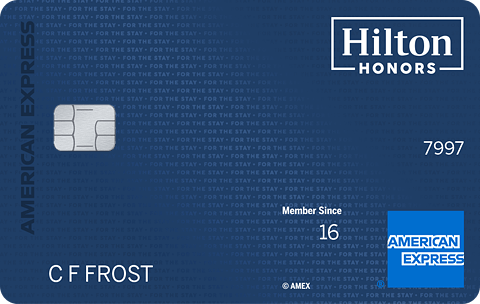
The Hilton Surpass remains our “workhorse” threshold card. The whole goal is simple: spend $15,000 in a calendar year and earn a Free Night Reward that’s usable at almost any Hilton.
In 2025, this card easily cleared the line (we put about $16.5K on it), and the strategy stayed the same as last year: Sharon carries it for everyday errands and groceries, and we let the spending take care of itself. It’s not glamorous…but it’s effective.
Delta SkyMiles Gold Business AMEX
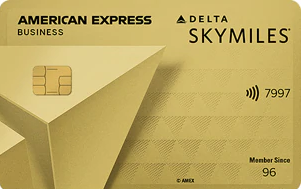
This was the “precision spending” card for 2025.
I wasn’t trying to make this my everyday earner. I was trying to hit a specific yearly threshold…then move on.
The target was $10,000 in spending, and I ended the year at about $10.2K — just enough to trigger the benefit I was aiming for: a $200 Delta Flight Credit. That’s essentially an extra 2% back on top of the points I earned along the way, and once the threshold was hit, this card went right back to “occasional use.”
World of Hyatt Card
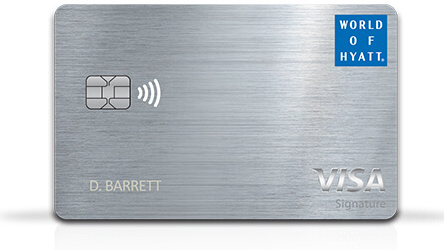
The Hyatt card was my other major threshold focus in 2025.
Like the Surpass, this is another “spend to earn a free night” setup — but with a very different tradeoff. Hyatt’s extra free night is more limited than Hilton’s, so I treat it as a second priority after the Surpass.
Still, I did go for it in 2025, and we finished the year at about $15.9K in spend on the card — enough to earn the extra free night and (hopefully) set us up for a convenient two-night stay when we pair it with the card’s anniversary night.
Sign-Up Bonuses
2025 was a more active year for new cards than 2024, and these were the ones that rose to the top because we were focused on meeting minimum spending requirements.
AMEX Gold
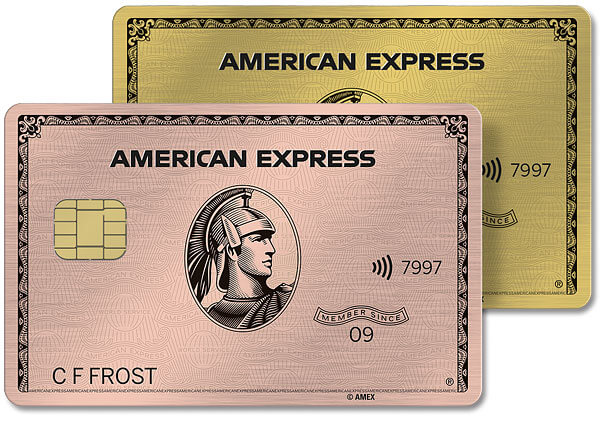
This one was all about building a new “everyday” points engine in Sharon’s name, and then feeding it enough spend to lock in the welcome bonus.
It ended up being one of our most-used cards of the year (about $7.2K in spend), partly because it’s easy to justify using it regularly once you’re in the habit. And “real life” helped here too — it’s a lot easier to hit a spend requirement on a card that naturally fits into weekly routines.
Chase Sapphire Preferred
The Sapphire Preferred was the “reset” button card for me in 2025. I picked this up after cancelling my Sapphire Reserve when they were offering a 100K sign-up bonus.
Between the sign-up bonus requirements and using it for travel/dining when it made sense, it ended up with about $6.5K in yearly spend. It also fits better with our current setup than some higher-fee premium cards, especially since I already get overlap from other places in the wallet.
JetBlue Business Card
This was a straightforward “earn the bonus points” play.
Once it arrived, we routed enough spending to it to get the welcome bonus done, and that’s why it shows up higher on the list than some long-term keeper cards. Total spend landed around $4.0K, which was enough to earn the 60,000-point sign-up bonus. We also have a year to spend an additional $4,000 to earn an additional 20,000 points, so this one may pop up again in next year’s recap.
Southwest Plus (Sharon)
Same story here: this card shows up near the top because it was new, and we needed to feed it spending.
Sharon’s Southwest Plus ended up with about $4.9K in spend for the year, mostly driven by hitting the minimum spend requirement to earn a “Companion Pass lite.” After that, it saw little use, which is pretty typical once the bonus goal is achieved and the card no longer has a reason to stay in heavy rotation.
Everything Else
This category is still the most revealing. Once you strip out the “threshold chasing” and “welcome bonus feeding,” these are the cards that got used because they’re the ones we naturally reach for.
Ritz-Carlton Card

Even in a year where so much spending got diverted to threshold cards, the Ritz-Carlton card still pulled a surprising amount of weight (about $5.4K).
Almost all of those charges fell into two categories: Airfare and Hotels (specifically, Marriott Bonvoy hotels). The 6X on Marriott hotels is easy to explain, but only earning 3X Marriott Bonvoy points on airfare might be a head-scratcher.
But I’m not using it for the points — I’m using it for the coverage. Any points earned are just a bonus. And when airfare extras pop up (seat assignments, baggage fees, Wi-Fi, etc.), some of those costs are reimbursed via the card’s airline fee credit.
Capital One Venture X
The Venture X didn’t dominate 2025 the way it has in some past years, mostly because the threshold cards soaked up so much spend.
But it still ended up as a reliable fallback when I didn’t feel like overthinking a purchase (about $3.9K in spend). When I just want a clean “good enough” return without juggling categories, it still does the job. And it’s also the card I use to pay for our cell phone bill because of the insurance it provides.
Discover / Citi Double Cash / Fidelity Rewards+
These didn’t have “main character” roles in 2025, but they were quietly present.
Discover gets used when the rotating categories align with real-world spending. The 2% cash-back style cards (like Double Cash or Fidelity’s card) fill in the gaps when I’m not chasing points, not chasing thresholds, and not trying to optimize anything beyond “don’t earn 1X.”
Final Thoughts
If I were doing 2025 over again, here are three things I’d do differently:
- Stop spending “past the finish line.” Once a threshold is hit, move that spend to the next best goal immediately.
- Be faster about reassigning everyday spend. The card that’s easiest to use consistently will always beat the “perfect” card that stays at home.
- Have a plan for post-bonus life. If a card doesn’t have a role after the welcome bonus, it shouldn’t stay in heavy rotation.
In 2025, we had three clear threshold goals (Hilton Surpass, Delta AMEX Business, and the World of Hyatt card), and we actually followed through on all three. On top of that, the new cards we opened (Amex Gold, Sapphire Preferred, JetBlue Business and Southwest Plus) naturally climbed the list because meeting welcome bonuses requires attention.
But just as importantly, this list shows the “real life” reasons cards get used: the card someone already has on them, the one tied to a clear milestone, and the one that’s easiest to use consistently without turning every purchase into a spreadsheet exercise.
And that’s really the point of doing this review: not to prove you’re “maximizing,” but to make sure your spending is being directed toward the rewards you actually care about.
Want to comment on this post? Great! Read this first to help ensure it gets approved.
Want to sponsor a post, write something for Your Mileage May Vary, or put ads on our site? Click here for more info.
Like this post? Please share it! We have plenty more just like it and would love it if you decided to hang around and sign up to get emailed notifications of when we post.
Whether you’ve read our articles before or this is the first time you’re stopping by, we’re really glad you’re here and hope you come back to visit again!
This post first appeared on Your Mileage May Vary


1 comment
Enjoyed reading about how you use your cards to maximize the benefits of rewards accumulated then move on to another card. How does this effect your credit score with so many cards and balances. Do you pay off each card monthly, or do you carry a balance to show your using the card?