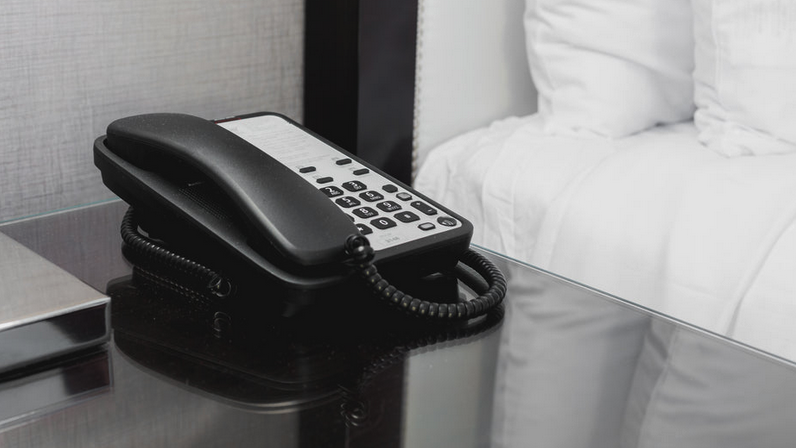
With mobile apps handling everything from check-in to room keys, in-room phones feel outdated—but U.S. hotels keep them for safety, legal, and operational reasons.
It’s the 21st century and people’s use of technology in hotels is just amazeballs.
- You make your reservations online
- You pay for your room electronically
- You may be able to check in electronically
- You may have the option to use your phone as your door key
- If you want food while staying in your room, you can use an app to order it and have it delivered
- Don’t like anything on the television? You can stream movies
- Want to do laundry during your stay? Some hotels have washers and dryers that use apps for payment and to tell you when your laundry’s done
- And, of course, you can still use your phone, tablet or laptop for whatever you want…games, movies, phone calls, to look stuff up, as a flashlight if you wake up in the middle of the night, as your alarm clock, you name it.
So, with all of this technology at our fingertips, it brings to light a question:
Why do U.S. hotels still offer phones in their guests’ rooms?
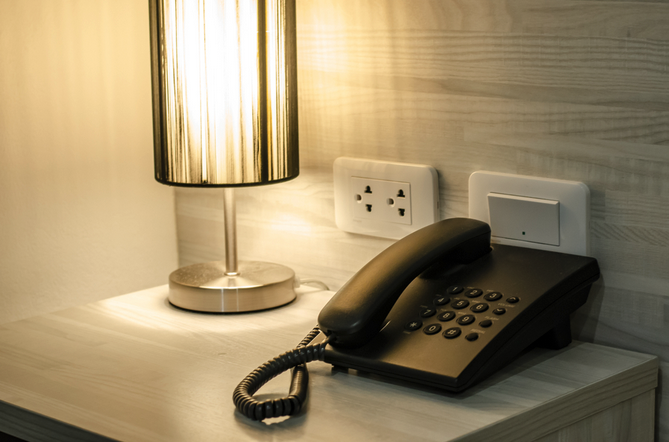
It’s definitely one of those amenities that modern-day hotel guests don’t really want. And if you go to Europe, there’s a good chance your hotel room won’t have a phone. In fact, Travelodge, a UK-brand low-budget hotel, has over 600 hotels, and none of them have telephones in their guests’ rooms anymore.
But in the U.S.? Chances are excellent that your hotel room, whether it’s a low-budget Motel 6 or the highest-end 5-star resort you can think of, will have phones in the guest rooms.
What’s up with that?
Mainly, it’s for safety
If you have an emergency in your room, your cell phone’s GPS may not be able to tell the 911 operator exactly where you are (your location accuracy can vary, especially indoors or when location services aren’t available). That’s especially true if you’re not connected to the hotel’s Wi-Fi. You may also not know your hotel’s address, which the 911 operator might need in the absence of a landline.
However, the phone in your hotel will always be able to give a precise location of where you’re calling from.
What about the “dial 9 to make an outside call” thing? Won’t that impede a call to 911?
Not anymore. But there’s a tragic reason why that’s the case.
Back in 2013, the estranged husband of a woman named Kari Hunt bludgeoned her in her Baymont Hotel room in Marshall, Texas. Her daughter tried to call 911 four times, but the calls never went through because the motel’s phone system required dialing “9” before any call to secure an outbound phone line, and the little girl wasn’t aware of that.
You can read the horrible story here.

Kari Hunt & her young children
Because of that tragedy, a statute called Kari’s Law went into effect in early 2020. It requires hotels with MLTS (multi-line telephone systems) to support direct dialing 911. The system must also notify a central location on- or off-site, such as a front desk or security kiosk. The notification will provide an alert that a 911 call was placed and include a callback number and information about the caller’s location. And under federal law and emergency services requirements, hotels must ensure that guests can reach 911 with precise location data.
Other reasons
There are other reasons that hotels continue with their in-room telephone service:
- They’re easier for older clients to use
- Not everyone has a cell phone (according to Pew Research, 98% of Americans own one, which still leaves millions who don’t). Believe it or not, one of my best friends has never owned one.
- Hotels can say that “free phone calls” are part of their “resort fee.”
So yeah…landline phones in U.S. hotel rooms are, and will continue to be, a thing.
Want to comment on this post? Great! Read this first to help ensure it gets approved.
Want to sponsor a post, write something for Your Mileage May Vary, or put ads on our site? Click here for more info.
Like this post? Please share it! We have plenty more just like it and would love it if you decided to hang around and sign up to get emailed notifications of when we post.
Whether you’ve read our articles before or this is the first time you’re stopping by, we’re really glad you’re here and hope you come back to visit again!
This post first appeared on Your Mileage May Vary