If you’ve been paying attention to Hyatt over the past few years, one thing has become pretty clear: they’ve been leaning hard into the luxury and lifestyle side of the hotel world.
I began to notice the shift in 2024, when I wrote about Hyatt’s strategy for selective expansion. Instead of trying to match Marriott or Hilton in sheer size, Hyatt seemed more focused on building a curated portfolio of higher-end brands.
But after watching this recent Fortune interview with Hyatt executives, one thing really stood out to me: I didn’t realize just how much of Hyatt’s portfolio now sits at the luxury or upper-upscale end — and how different that makes them from their competitors.
The stat that changes how you look at Hyatt
One of the most eye-opening parts of the discussion was the breakdown of Hyatt’s portfolio compared with that of other hotel giants.
Roughly 70% of Hyatt’s rooms are now considered luxury or upper-upscale. Compare that to Marriott, where the number sits closer to about half, and Hilton, where it’s closer to a quarter.
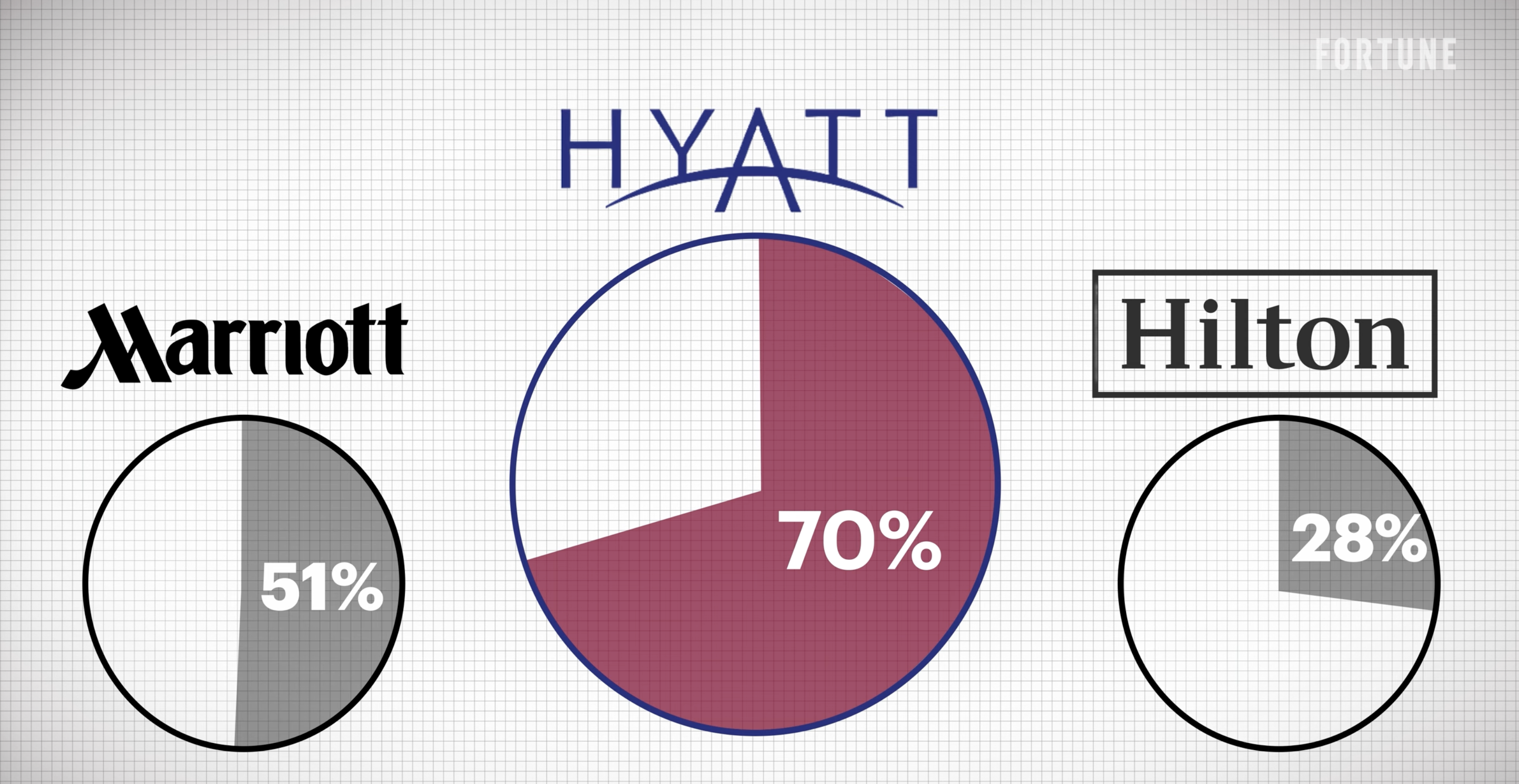
That’s not just a branding exercise — that’s a completely different business model.
Hyatt isn’t trying to be the biggest hotel company in the world. They’re trying to be the company people think about when they want something at the higher end of the spectrum.
Even the interview location tells the story
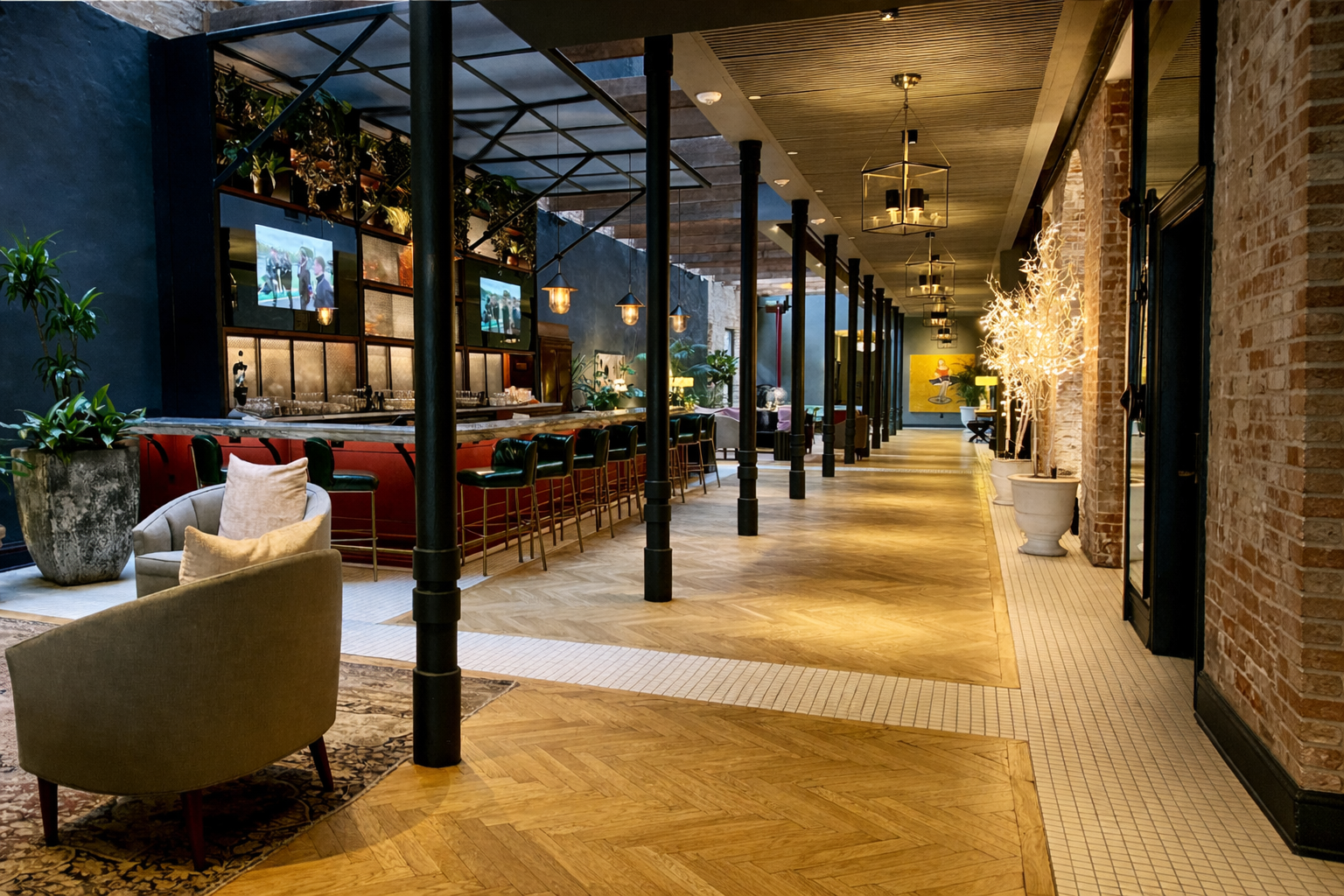
One detail I loved: one of the interview segments is filmed inside the Chicago Athletic Association. That’s not just a cool backdrop — it’s part of Hyatt’s Unbound Collection.
That choice alone says a lot about where Hyatt sees its future. Luxury doesn’t have to mean identical marble lobbies anymore. It can mean historic, quirky, or deeply tied to a destination.
Some of our most memorable Hyatt stays have been those that feel completely different from traditional chains — like Great Scotland Yard in London, the laid-back luxury vibe of Grand Hyatt Kauai, or the personality-filled Eliza Jane in New Orleans.
But that’s not what everyone wants — and Hyatt seems very aware of that.
Luxury isn’t one product anymore
One of the themes that kept coming up in the video is that “luxury” no longer means a single thing.
Some travelers want the quiet, polished experience of a Park Hyatt. Others are drawn to lifestyle-forward brands where the hotel feels more like part of the local scene — places like Dream or The Standard.
They attract very different guests, but they all sit toward the upper end of the hotel spectrum. And Hyatt seems to be building lanes for each type instead of forcing everything into one definition.
That also explains why Hyatt’s recent acquisitions have felt so varied — wellness resorts, all-inclusive brands, nightlife-focused hotels, and design-forward boutiques. On paper, they look unrelated, but under the strategy Hyatt outlined, they all fall under the broader idea of “modern luxury.”
More than just a points program?
Another interesting part of the conversation was Hyatt’s focus on experiential travel — and not just the obvious big-ticket events like the World Cup or major festivals.
Executives talked about smaller, niche experiences becoming part of the ecosystem too. That’s a big shift from thinking of World of Hyatt as just a way to earn free nights.
And honestly, I’m still not sure that’s what most members are looking for.
Many travelers just want a loyalty program that reliably delivers great redemptions, elite benefits, and consistent service. But hearing Hyatt describe it out loud, you can see what they’re aiming for: a platform that influences how you travel, not just where you stay.
Whether that resonates with members in the long term is another question, but it definitely explains the direction they’ve been heading.
Why Hyatt’s smaller footprint might actually be the advantage
Hyatt still has far fewer hotels than Marriott or Hilton. For years, that’s been seen as a weakness.
But if their goal is to dominate the luxury and upper-upscale space instead of the entire market, being smaller may actually help them stay more focused.
Instead of trying to be everything to everyone, Hyatt seems comfortable building a curated portfolio — even if it means fewer locations overall.
Final Thought
Watching the Fortune interview didn’t introduce a completely new strategy — but it made the numbers behind it impossible to ignore.
Hyatt isn’t just adding luxury brands. They’re redefining what luxury means inside their ecosystem — from traditional five-star properties to lifestyle hotels, wellness resorts, and destination-driven experiences.
For travelers like us who enjoy hotels that feel different, that’s exciting. But the bigger question is whether World of Hyatt members see the program the same way Hyatt’s executives do — as something bigger than a points program.
Either way, it’s becoming much clearer why Hyatt’s growth looks so different from the rest of the industry.
Want to comment on this post? Great! Read this first to help ensure it gets approved.
Want to sponsor a post, write something for Your Mileage May Vary, or put ads on our site? Click here for more info.
Like this post? Please share it! We have plenty more just like it and would love it if you decided to hang around and sign up to get emailed notifications of when we post.
Whether you’ve read our articles before or this is the first time you’re stopping by, we’re really glad you’re here and hope you come back to visit again!
This post first appeared on Your Mileage May Vary

3 comments
An interesting take. I’d say that Hyatt has actually been losing focus of late, buying gobs of all-inclusives that are all over the spectrum, coming out with new brands that even a dedicated loyalist like myself can’t tell exactly what the brand is supposed to mean, domestically primarily opening Hyatt Place hotels, ignoring full service hotels that made them a success to begin with, and from a loyalist standpoint having lots of the loosely affiliated hotels not really offer much in elite benefits. Then there’s the asset-light strategy: from a customer standpoint all that does is make for a much more inconsistent experience. The fact that Hyatt has traditionally owned more of their hotels, providing that corporate consistency, has been one of their big advantages over Marriott and Hilton. In sum, what Hyatt is doing does not present a cohesive strategy from the customer standpoint IMO.
As a Globallist, you’d have a better sense of what it’s like on the ground with Hyatt’s expansion.
Great breakdown of Hyatt’s luxury positioning — the 70% figure really is striking when you stack it up against Marriott and Hilton. If Hyatt is serious about owning the luxury and upper-upscale space, though, the on-property experience needs to match the ambition at every touchpoint.
One glaring gap right now is the Regency Club lounges. Several of Hyatt’s larger Grand Hyatt and Hyatt Regency properties have either shuttered their club lounges permanently post-pandemic or quietly converted them into something far less impressive. For a brand that’s betting its identity on elevated experiences, that’s a tough sell — especially when Globalist members are one of the most loyal (and valuable) segments in the program. A beautifully designed lobby and a strong brand story only go so far when elite guests show up expecting a lounge and get pointed to the all-day dining room instead.
If Hyatt truly wants loyalty members to see World of Hyatt as more than just a points program — as they’ve been signaling — reopening or upgrading club lounges at flagship properties would go a long way toward backing that up with substance. The brand narrative is compelling; now the experience just needs to catch up.