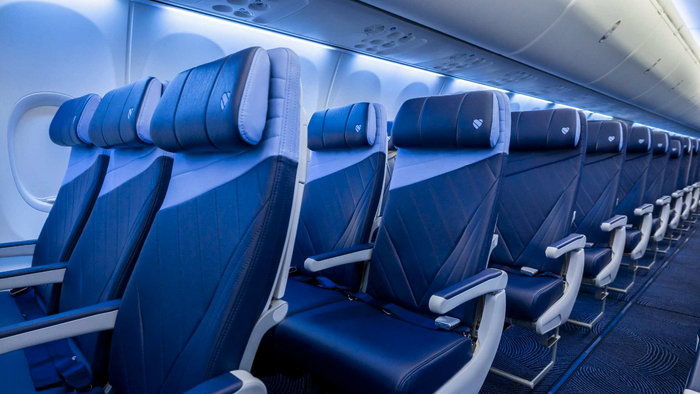
Quick tip: On Southwest’s newly retrofitted 737-800s, the aisle armrest release button is behind the hinge near the seatback, not underneath the arm. Press firmly while lifting.
Southwest’s cabin retrofits were supposed to be all upside: extra legroom seats up front, a more premium feel, and — for a while — a free upgrade for anyone lucky enough to snag one. But as assigned seating rolled out and those extra-legroom seats became paid upgrades, some passengers on retrofitted 737 MAX 8 aircraft noticed something unexpectedly frustrating: the aisle armrests suddenly became nearly impossible to raise.
The problem with the MAX 8s
Meanwhile, the MAX 8 aircraft have developed a small but annoying issue: on many retrofitted planes, the aisle-seat armrests are extremely difficult — and sometimes seemingly impossible — to raise.
How to raise a typical armrest
Raising an aisle armrest is one of those you-don’t-know-until-you-know things. Most people only learn it’s possible after watching someone else do it. Once you spot the release button or latch, it’s a permanent “ohhh” moment you’ll never forget.
Lifehacker explains the standard mechanism in this post.
Why passengers are suddenly struggling with aisle armrests
Meanwhile, several people on social media have complained they couldn’t get the aisle arm up on those new MAX 8s. Either they couldn’t find the button/lever, or they could find it and it didn’t work.
Apparently, there are two reasons why this is happening:
— The mechanism has changed
On the old system, the button/latch was on the underside of the armrest. That’s now changed.
This is a photo from Recaro, the manufacturer of the retrofitted seats, and you can see where the button is to unlock the mechanism; it’s just below the armrest.
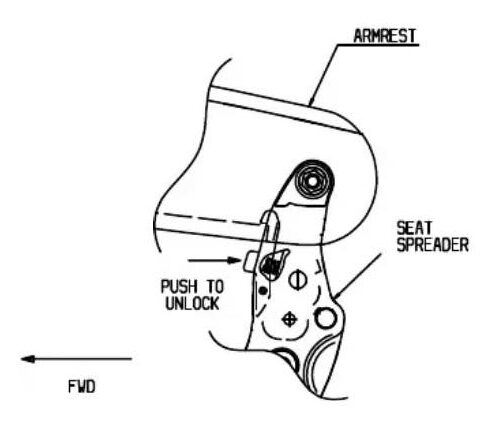
You will now find the little button more towards the back of the seat, just under the hinge of the armrest, rather than on the actual armrest. Press it with one hand and lift the arm with the other.
— The mechanism isn’t broken in yet
This is overwhelmingly anecdotal, but the problem with the new seats seems to be simply because the buttons on those new MAX 8s are new. They haven’t had thousands of people push on them yet, so they’re still not broken in. So you may have to have very strong fingers, at this point, to get the mechanism to work.
I’ve been on one Southwest flight with the new configuration so far and can confirm that although I found the button easily enough, my hands and fingers, which are not super strong, weren’t able to press the button hard enough to get the mechanism to release and be able to lift the armrest.
Fun facts about manually raising aisle armrests:
Meanwhile, while we’re waiting for all those swinging armrests to become a little looser, here are some interesting tidbits about them:
- Armrests must remain down during takeoff and landing, just like seatbelts and tray tables.
- Not all aisle armrests are required to move. FAA rules only mandate movable armrests on certain aisle seats for accessibility.
- Exit rows are different for safety reasons. FAA testing found raised armrests could obstruct evacuation paths. Or as they said, could “present an obstacle between seat passageways.” That’s why the arms in the exit row don’t have the mechanism so they can be raised (or the mechanism has been disabled).
Looking towards the future
Some passengers have managed to unlock the new mechanism, which suggests this may simply be a break-in issue rather than a permanent design flaw. Over time — after thousands of flights and thousands of button presses — the armrests will likely loosen up. Until then, passengers on Southwest’s retrofitted MAX 8 aircraft may need a little extra finger strength… or a bit of patience.
Want to comment on this post? Great! Read this first to help ensure it gets approved.
Want to sponsor a post, write something for Your Mileage May Vary, or put ads on our site? Click here for more info
Like this post? Please share it! We have plenty more just like it and would love it if you decided to hang around and sign up to get emailed notifications of when we post.
Whether you’ve read our articles before or this is the first time you’re stopping by, we’re really glad you’re here and hope you come back to visit again!
This post first appeared on Your Mileage May Vary