One of the “perks” of an expensive car repair is that it’s a pretty easy way to generate a big chunk of credit card spend.
I don’t mean I want a $1,000+ service bill — I’m not that deep into points and miles — but if I’m already paying it, I’m happy to put it on a card and get something back. Minimum spend, annual thresholds, whatever I’m working on.
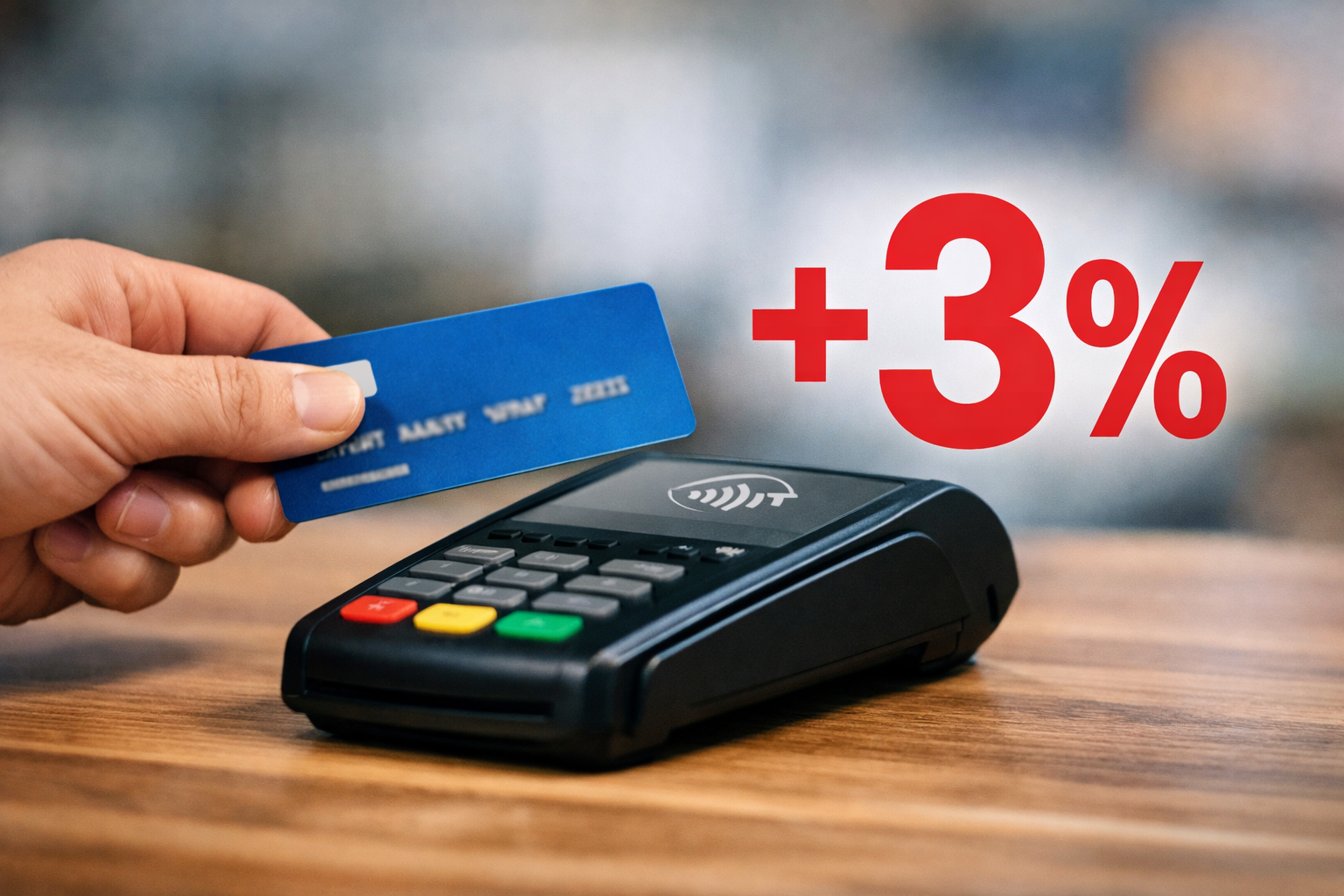
So I was surprised to see a new policy at my service shop: credit card payments now include a 3% fee, while cash and debit don’t.
And honestly, that part wasn’t even the most interesting thing that happened — because the shop didn’t seem thrilled about it either.
The credit card fee wasn’t the surprising part
We’ve all seen surcharges added to bills to cover processing costs. Plumbers, pool services, landscapers — it’s become pretty common, especially for businesses that used to operate mostly in cash.
If I’m chasing a welcome bonus or trying to meet an annual spending threshold, I’ll usually still pay with a card. Sometimes the math works out. Sometimes it doesn’t. But at least I understand what’s happening.
What caught me off guard this time was what the service advisor said next.
Instead of running my card through their terminal, they offered to text me a payment link — one that didn’t include the 3% fee.
Same bill amount.
Using the same credit card.
Just a different way of paying the bill.
I didn’t even realize there was a difference
Until that moment, I never thought much about how a payment was processed.
Tap, chip, swipe, online invoice — from the customer side, it all feels the same. You enter your card details, the charge goes through, and you earn the points you’re credited.
But apparently, the payment path matters a lot to businesses.
Their main processor automatically adds a surcharge to credit card payments. The alternative link routes payments through a different system that costs them less—not necessarily free, but cheap enough that they don’t feel the need to pass the fee along.
And suddenly, what looked like a simple “3% credit card fee” felt more like a behind-the-scenes tug-of-war between payment processors.
Why some businesses are changing how they take cards
This isn’t about businesses suddenly hating credit cards.
It’s about costs — especially when repair bills can climb into the thousands. A few percent on a large invoice adds up quickly, and many small businesses are looking for ways to reduce that hit without turning customers away.
Instead of refusing cards altogether, some shops are getting smarter about which rails they use to process payments.
Debit payments might go through a single system with a small flat fee.
Traditional card terminals might trigger higher costs.
Online payment links or alternate processors can sometimes fall somewhere in between.
From the customer’s perspective, nothing really changes — except maybe receiving a text with a payment link instead of tapping a card at the counter.
From the business side, the difference can be significant.
What this means for people who earn points and miles
Most services like auto repair, plumbing, or lawn care don’t fall into bonus categories anyway. Whether it codes as auto repair or something slightly different usually doesn’t change the earning rate.
But the ability to use a credit card at all — especially without a surcharge — matters.
Big, unexpected expenses are often the easiest way to:
- hit a minimum-spend requirement
- Finish a yearly threshold bonus
- generate organic spend without changing everyday habits
If more businesses start steering customers toward alternative payment methods, it doesn’t necessarily mean the end of earning points on these purchases.
It just means the process might look a little different — and it’s worth paying attention to how charges show up on your statement.
A small change that feels like a win for everyone
What stood out to me most wasn’t the 3% fee. It was the fact that the shop actively tried to help customers avoid it.
They still get paid.
I still get to use a credit card.
And neither of us feels punished by processing costs.
That feels like a rare win/win in a world where payment rules seem to change constantly.
Final Thoughts
I don’t think businesses are moving away from credit cards — at least not entirely.
But they are becoming more intentional about how those payments are processed behind the scenes. And if you pay attention to points, miles, or credit card strategy, that’s probably the real trend to watch.
Because the future of earning rewards may not depend on whether a business accepts cards — but on which payment path they choose to run them through.
Want to comment on this post? Great! Read this first to help ensure it gets approved.
Want to sponsor a post, write something for Your Mileage May Vary, or put ads on our site? Click here for more info
Like this post? Please share it! We have plenty more just like it and would love it if you decided to hang around and sign up to get emailed notifications of when we post.
Whether you’ve read our articles before or this is the first time you’re stopping by, we’re really glad you’re here and hope you come back to visit again!
This post first appeared on Your Mileage May Vary