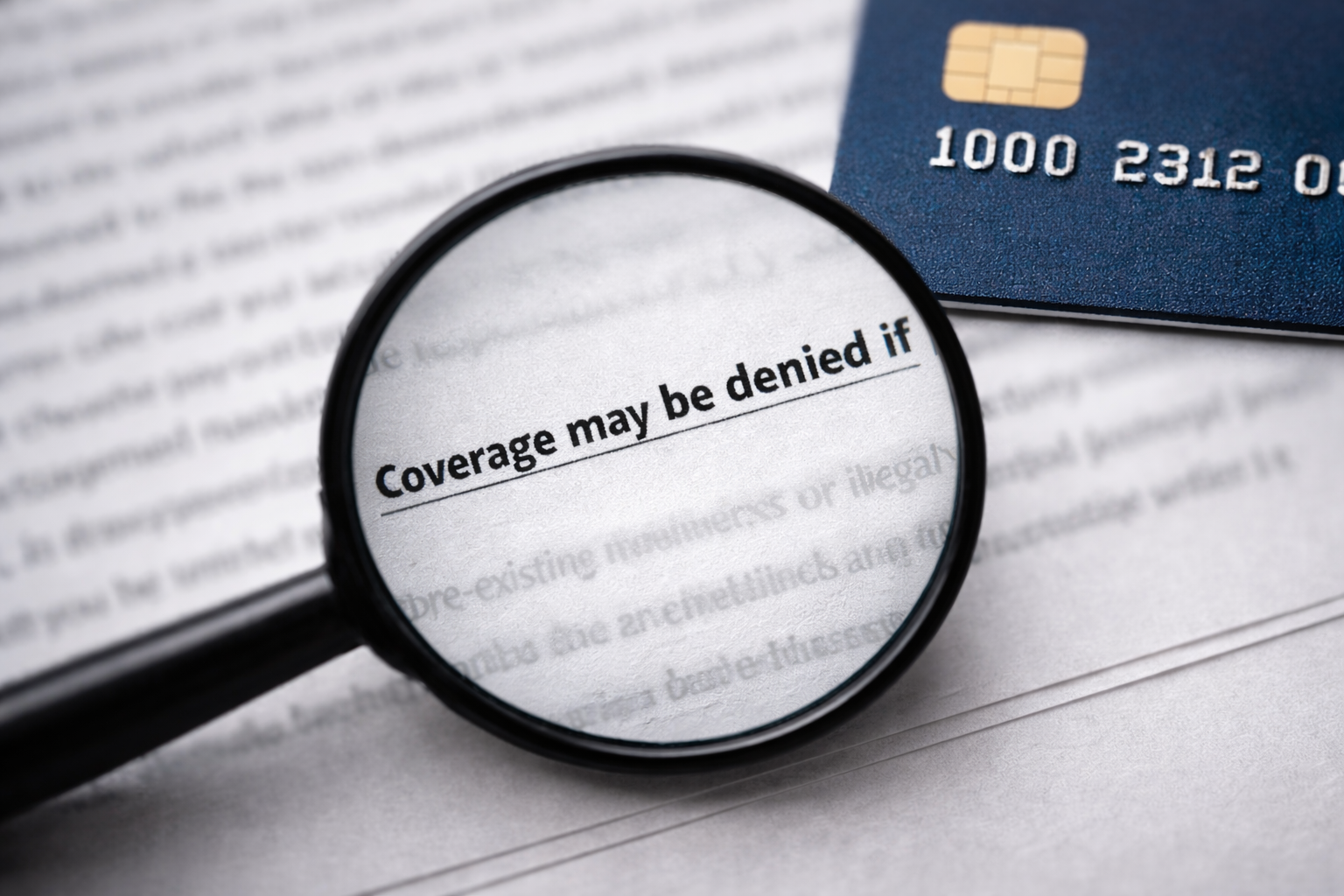
Credit card travel protections look straightforward on the surface. You pay for a trip with the right card, something goes wrong, and the coverage kicks in.
But the benefits page doesn’t tell the whole story. In most cases, the “insurance” isn’t coming directly from Chase, American Express, Citi, or Capital One. It’s administered by a third-party insurer, and the policy language is what drives the outcome when you file a claim (for example, see the Chase Sapphire Reserve Guide to Benefits and American Express’ Trip Cancellation & Interruption Insurance policy).
That’s where things start to get messy. Some policies read like coverage is tied mainly to how you paid (an eligible charge). Others include eligibility language that can make it seem as if the account still needs to be active and in good standing when the claim is filed (Mastercard even spells this concept out with its “Valid Account” definition in benefit terms, like this Mastercard benefits page). And that difference is why this question doesn’t have a clean, universal answer.
Why does canceling a card change the math
If you’re someone who opens and closes cards to manage annual fees, upgrade/downgrade within a card family, or keep your wallet lean, this isn’t just a technical detail.
The issue isn’t whether you “did the right thing” when you booked the trip. The issue is what happens months later if you actually need to file a claim — after the card is closed, product changed, or no longer in the same status as when the trip was purchased.
In the best-case scenario, nothing changes: you paid for the trip correctly, you submit the paperwork, and you get reimbursed. In the worst-case scenario, you get pushed into a documentation fight where you’re proving eligibility instead of just documenting the loss.
Why you won’t get a clean yes/no
This is usually the part of a post where I’d love to give you one simple rule. Unfortunately, credit card travel insurance doesn’t work that way.
Benefit guides vary by issuer, by network, and sometimes even by version of the same card over time. On top of that, claims are handled case-by-case by an insurer following the policy language that applies to your account and your purchase. That means two travelers can have similar trips and still get different outcomes depending on the benefit guide in effect and how eligibility is interpreted.
So instead of treating this as a “what’s the official answer?” question, it’s better to treat it as a risk question: how much uncertainty are you willing to accept if you actually need to use the coverage?
The safest play if coverage matters
If you’re planning a trip where you’re counting on your credit card’s protections, the simplest strategy is also the least exciting: keep the card open until the trip is over.
That doesn’t mean you can never close or downgrade a card — plenty of us rotate cards to manage annual fees or adjust our lineup. But if the trip involves non-refundable flights, prepaid hotels, or anything that would be painful to replace out of pocket, introducing uncertainty into the coverage probably isn’t worth it.
Think of it less as a hard rule and more as a risk calculation. Could you still be covered after canceling? Possibly. Do you want to find that out in the middle of a claim process? Probably not. Keeping the card active removes one variable from an already complicated situation.
When credit card coverage isn’t enough
Credit card travel protections are great as a built-in safety net, but they’re not a replacement for full travel insurance — especially on trips where the financial stakes are higher.
If you’re booking a complex international itinerary, a cruise, a premium cabin redemption with significant taxes and fees, or anything where a last-minute change would be expensive, it’s worth thinking beyond the card benefits. Dedicated travel insurance policies are designed to be the primary coverage, not a secondary perk tied to how you paid.
For shorter domestic trips or reservations you can rebook; relying on credit card protections might make sense. But when the potential loss starts creeping into “this would really hurt” territory, buying standalone coverage can reduce much of the uncertainty that comes with relying solely on card benefits.
If you decide this is a trip where standalone coverage makes sense, I’ve also written a walkthrough of how I shop for travel insurance and what I look for in a policy. It’s not complicated, but it’s easy to miss the one detail that matters most for your trip.
Final Thought
Credit card travel insurance can be incredibly useful — but it’s not as simple as “pay with the card and forget about it.” Once you understand that coverage depends on policy language and eligibility rules, the strategy becomes clearer.
If the protections matter to you, the safest move is to keep the account open until the trip is over. That alone removes one of the biggest unknowns from the equation. And if you’re booking a trip where a cancellation or disruption would be expensive or stressful to fix on your own, relying solely on credit card coverage might not be enough.
In the end, credit card protections are best treated as a safety net — not a guarantee. They work well when everything lines up, but when the stakes are high, adding dedicated travel insurance can give you clarity that a benefits guide simply can’t.
Want to comment on this post? Great! Read this first to help ensure it gets approved.
Want to sponsor a post, write something for Your Mileage May Vary, or put ads on our site? Click here for more info.
Like this post? Please share it! We have plenty more just like it and would love it if you decided to hang around and sign up to get emailed notifications of when we post.
Whether you’ve read our articles before or this is the first time you’re stopping by, we’re really glad you’re here and hope you come back to visit again!
This post first appeared on Your Mileage May Vary