Some travelers have discovered a new way to score airport perks — and it’s already causing controversy.
Remember when one of the biggest complaints about Southwest Airlines, back when it had unassigned seating, was that some people would get wheelchairs and board early, but once the plane landed, they didn’t seem to need a wheelchair anymore?
Looks like some people are saying “hold my beer.”
Apparently, some people who say they have ADHD, autism, and even dyslexia are being allowed to skip airport queues, get priority boarding, pick their seats for free and even get fast-tracked lounge access – even without proving that they have any condition.
It’s happening in the U.K., and some influencers are “coaching” followers on how they can get the most perks.
Case in point, over on Reddit, a thread came up several months ago. Called “Helpful tip – Tell your airline you have ADHD!,” the author goes into detail that a Jet2 representative told this poster that:
…in most UK airports, and definitely with Jet2 flights, ADHD is covered as a “hidden disability” and comes with a bunch of extra accommodations for free! We got our seats pre-selected, sat together. Priority boarding & disembarking. Free access to a lounge and free meals on board for both of us (not for all flights, but ours was long enough to get this). She also said some airlines/airports will give you an extra bag too (we didn’t need this but she told me to ask in future).
How can they do that?
Sunflower lanyards.
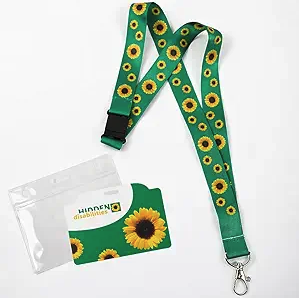
How the sunflower lanyard program works
The Hidden Disabilities Sunflower, an initiative that began in the UK in 2016, is a globally-recognized symbol for non-visible disabilities, also known as hidden disabilities or invisible disabilities. That could include just about any disability people can’t necessarily see, including Autism, PTSD, Alzheimer’s Disease, epilepsy, Crohn’s Disease, hearing loss, etc.
The purpose of these lanyards, which are currently used in about 340 airports and 31 airlines worldwide, is to indicate that the wearer may need extra help.
From HDSunflower:
The Hidden Disabilities Sunflower is a simple tool for you to voluntarily share that you have a disability or condition that may not be immediately apparent – and that you may need a helping hand, understanding, or more time in shops, at work, on transport, or in public spaces.
The growing concern
The problem happening at airports is twofold:
- Some people with hidden disabilities don’t necessarily need the type of special assistance the sunflower lanyard is intended for, but they’re using it anyway.
For example, there are indeed some people who, because of their hidden disability, may not have the tolerance to stand in the security queue. But there are also plenty of folks who have a hidden disability who are still perfectly capable of standing in the queue, but because they have a sunflower lanyard, are allowed to skip it. - Anyone can purchase one of these lanyards, regardless of whether they have a bona fide invisible disability.
Just like service dog harnesses (except the sunflower lanyards on Amazon are legit and “official” and from the Hidden Disabilities company), you can buy sunflower lanyards on Amazon. So there’s nothing to stop unscrupulous people from easily getting and using them.
The concern, as reported in The Telegraph in the UK, is “… that such schemes are being exploited, with critics saying ‘systems designed for people with genuine disability are increasingly treated as lifestyle perks or convenience tools.'”
The Jet2 example above shows how some people are using (and even being encouraged by the Jet2 representative!) the lanyards, even if they may not need that level of assistance.
Is that happening in the U.S.?
The examples in The Telegraph (which were repeated in The Daily Mail) were specific to the UK. The program began and is much more established in the UK. Plus, of course, most of Europe’s airports and airlines appear to be more in touch with “making things fair and right” for passengers (granted, their respective governments have a large part in that happening), and this would extend to those with disabilities, both visible and hidden. So the thought of priority boarding and disembarkation, free lounge access, free meals onboard and pre-selected seats guaranteed to be next to your family member isn’t so far-fetched…there.
The TSA
It doesn’t appear that the TSA acknowledges sunflower lanyards, but they have their TSA Cares program in place, which, although different from sunflower lanyards, does claim to offer help to, “…passengers with disabilities, medical conditions and individuals needing additional assistance to better prepare for the security screening process.”
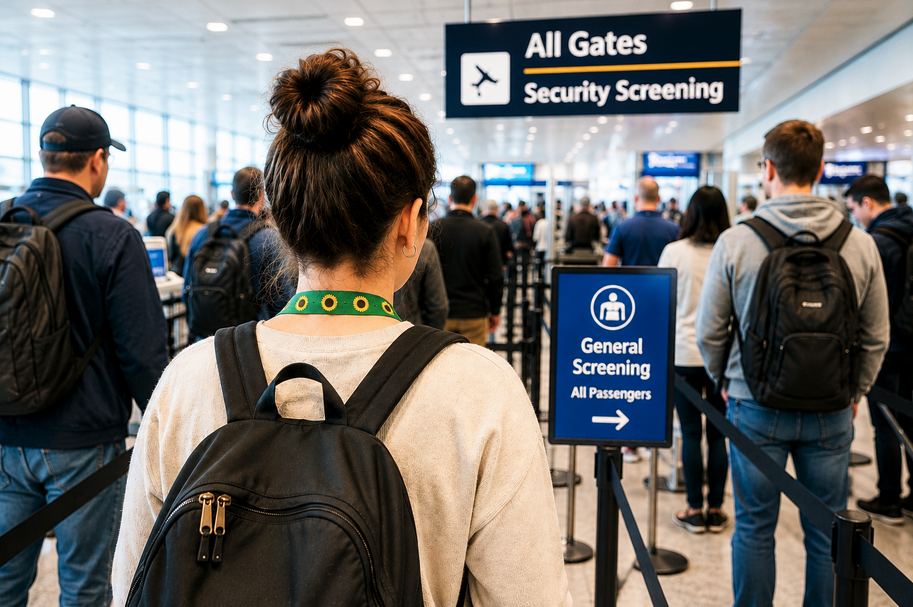
The TSA is in charge of the security queues, so it’s doubtful a sunflower lanyard would help anyone skip the entire queue.
Airports
Sunflower lanyards are recognized at dozens of U.S. airports, and are “soon to be” recognized at dozens of others.
Airports might be able to give passengers extra support, such as, for example, locating a quiet place to decompress if overwhelmed, or giving them extra time to express themselves. But most airports specify that wearing a lanyard doesn’t guarantee fast tracking through security or any preferential treatment.
Airlines
The only U.S. airline that recognizes sunflower lanyards at this time is United.
Save for early boarding, there is not one U.S.-based airline that’s going to give anybody any sort of preferential treatment, regardless of disability, invisible or not. They’re 100% “pay to play” LOL.
Our take
Programs like the sunflower lanyard system were created to help travelers with legitimate hidden disabilities navigate what can already be an overwhelming airport experience.
But as with almost any system that relies heavily on trust, there will always be concerns about people trying to take advantage of it.
For now, at least in the U.S., the chances of travelers using sunflower lanyards to score widespread airport perks still appear fairly limited.
Still…you know people are going to try. Because apparently no airport accommodation program can exist for more than five minutes before somebody on TikTok tries turning it into a “travel hack.” 😏
Want to comment on this post? Great! Read this first to help ensure it gets approved.
Want to sponsor a post, write something for Your Mileage May Vary, or put ads on our site? Click here for more info.
Like this post? Please share it! We have plenty more just like it and would love it if you decided to hang around and sign up to get emailed notifications of when we post.
Whether you’ve read our articles before or this is the first time you’re stopping by, we’re really glad you’re here and hope you come back to visit again!
This post first appeared on Your Mileage May Vary

5 comments
If you add all the people with ADD, Bipolar disorder, PTSD, Epilepsy, Dyslexia, Alzheimer’s, hearing loss, or are on the Autism spectrum you’ve just included half or more of the country. Heck, I’m on the spectrum. What’s needed is some sort of grading system to make it so that only people who have more serious degrees of these diagnoses will be able to skip the line. Otherwise you have the whole “Service Dog” sham writ large.
Sure it happens. We all hear about people with unnecessary wheelchairs, dubious ‘service’ dogs.
But I urge you and readers to use the benefit of the doubt.
It does not serve anyone well to cast doubt or ‘side eye.’
I’m disabled but not everyone would notice. Hidden disability programmes mean that I get to travel on my own, subtly asking for help without shame.
Gripes about ’emotional support’ anything, misuse of disability programmes… there is a venom in that. I wait in queues like everyone else, exercise courtesy and patience. I don’t deserve a better seat or caviar for being disabled. I know that. So do most disabled people I know.
And I shouldn’t have to share the intimacies of my medical history to prove anything.
Let this one go. It’s not worth demeaning disabled people who you do not know. That service dog could be saving someone’s life. The wheelchair might be absolutely necessary. And the daisy lanyard is a clever, quiet way of saying, ‘Exercise a bit of patience.’
in your next post, perhaps you would like to discuss how these programmes actually help support independence.
Hi! Fun fact – I was an occupational therapist for over 2 decades. I also had a relative who used a wheelchair and occasionally crutches for mobility for most of their adult life. So (A) I’m well aware and (B) deeply appreciate programs that assist people with disabilities.
However you do realize that you’re taking one small part of my post and focusing only on that, yes? Talking about “emotional support” animals and “Jetway Jesus” (a huge problem on Southwest Airlines) was just an introduction. The gist was that people who either qualify for the lanyards but don’t need them, or who are buying them on Amazon “just because they can” are an issue in the UK. I also focused on why/how it might not because an issue here in the U.S. (the vast majority of our readers are in the U.S.).
If having a sunflower lanyard works for you and makes your experience at airports better, I think that’s great – you’re the type of person it’s intended for. Your next-door neighbor who has no hidden disabilities but bought one on Amazon specifically so they can cut the line? Or the person who has epilepsy that’s been controlled for 3 decades and lives a so-called normal life and has absolutely no need to cut the line but does anyway, “just because they can?” Not so much.
Also, thank-you for the suggestion of writing about how these programs help support independence, but others have already done it. I suggest you check out the stories on BlindGlobetrotters.com, disabled-world.com, worldpdcongress.com, etc.
More {REDACTED} and {REDACTED}. They have {REDACTED} to {REDACTED}. Sick of it.
{Comment redacted by YMMV to remove portions that were against YMMV’s requirements for approval.
In this case, practically all of it. Womp womp. ¯\_(ツ)_/¯}
This is so sad for me. I am high-functioning but do have a significant invisible disability. Finding the Sunflower program and airport accessibility services was a total game-changer. In fact, during my entire first flight with my Sunflower lanyard, I cried with a mix of relief, remorse, and sadness that I hadn’t known to access these services sooner—the impact was that profound. I am crying right now when I think of the peace of mind this program gives to me.
Unfortunately, people always seem to find a way to game the system. Despite that, I remain hopeful for the good in humanity and the continued understanding that life is better when everyone is supported to live their lives to the fullest.