Hotels have found ways to let us check in on an app, unlock our room with a phone and message the front desk without speaking to anyone. Yet when it comes to tipping housekeeping, many properties still expect guests to arrive with a stack of small bills.
That increasingly feels out of step with how people travel.
I’m not someone who never carries cash, but I rarely use it during everyday life. Before a trip, I have to make a point of finding small bills for the shuttle driver, bell staff, valet and housekeeping. Even when I think I’ve brought enough, it can disappear surprisingly quickly.
That happened to us during a trip to Hawaii. I had packed cash for the airport shuttle, valet and bellman, but after a few days, my supply of small bills was running low. Then we took a sunset boat ride along the Na Pali Coast and a helicopter tour, both of which created another opportunity to tip.
Fortunately, those companies accepted digital payments through services such as Venmo, Zelle and PayPal. I could still thank the people who had taken care of us without having to search for an ATM or ask someone to break a larger bill.
That left me wondering why the same option still isn’t commonplace at hotels.
Digital Hotel Tipping Already Exists
Some hotels have already moved beyond the traditional envelope left on the desk.
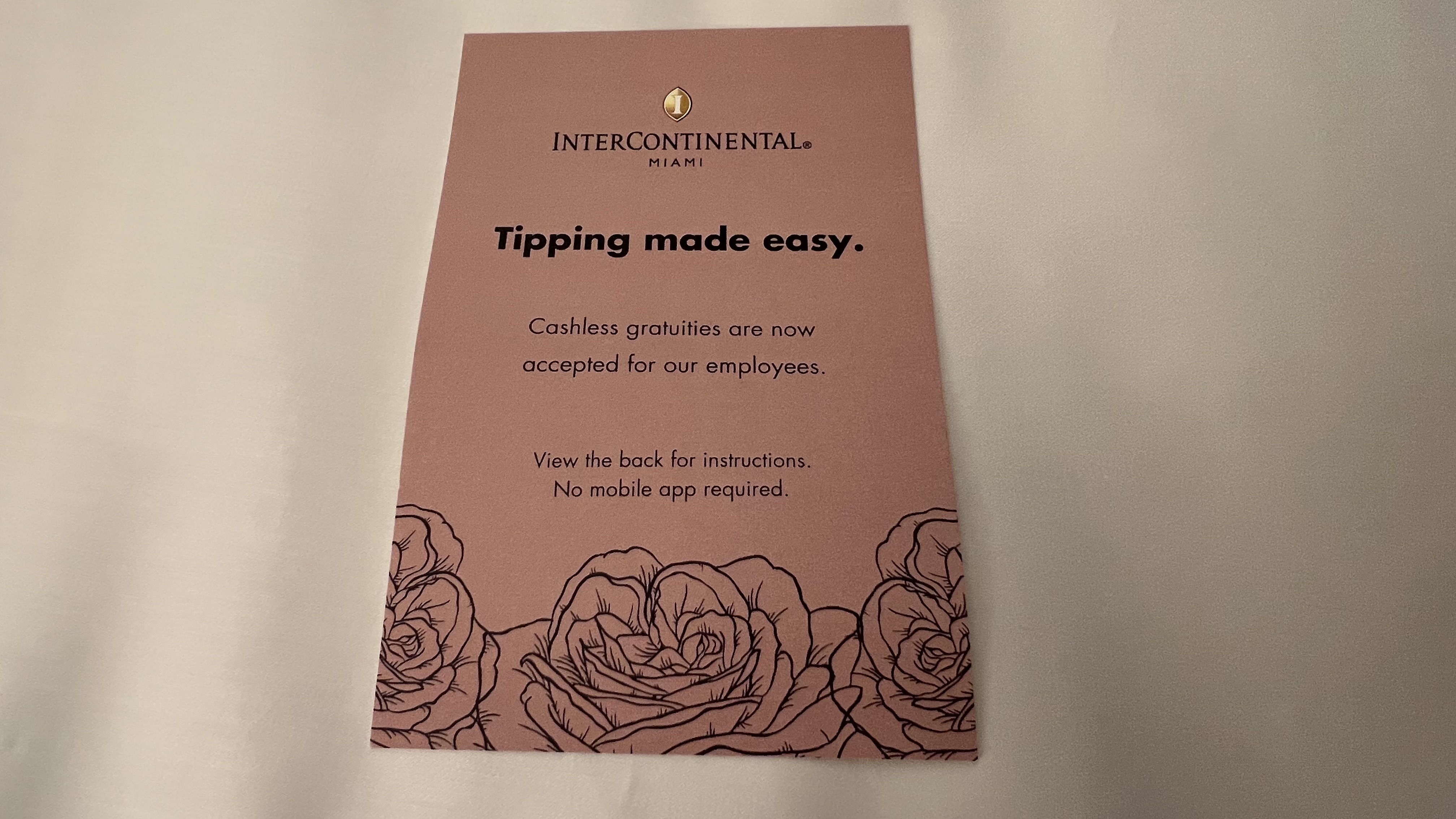
We’ve encountered digital tipping at properties including the InterContinental Miami and the Don CeSar in St. Pete Beach. Depending on the system, guests may scan a QR code, follow a link sent by text message or select the employee or department they want to recognize.
Several hotel companies have also made digital-tipping platforms available to their properties.
In 2022, Wyndham announced a mobile tipping system that U.S. and Canadian franchisees could choose to adopt. That distinction matters: it didn’t mean every Wyndham hotel suddenly offered digital tipping. However, Wyndham later said that hotels using its digital guest platform were receiving average tips of more than $10.
IHG has also approved a digital tipping platform for participating hotels, while similar systems are used at properties affiliated with Marriott, Best Western and other brands. Because many hotels are independently owned or franchised, adoption can vary even within the same chain.
In other words, the technology is no longer experimental. It simply hasn’t become a dependable hotel standard.
Why Digital Tipping Makes Sense For Housekeeping
Housekeeping presents a different tipping problem than most other hotel services.
You usually see the valet, bellperson or shuttle driver who helped you. You can hand that person a few dollars immediately. Housekeepers often work while guests are away, and the employee who cleans a room one day may not be the person assigned to it the next.
That makes the traditional advice to leave a tip each day sensible. The American Hotel & Lodging Association’s commonly cited recommendation is $1 to $5 per day, although the appropriate amount depends on the hotel, the size of the room and how much work was required.
The problem is that daily tipping requires guests to have the right cash every morning. If you only have a $20 bill, you’re probably not leaving it behind and hoping someone at the front desk can give you change later.
A digital system removes that obstacle. Guests who want to tip can do so immediately, and hotels can identify which employee serviced the room instead of leaving the guest to guess.
An industry survey conducted by hotel technology company Canary found that more than 70% of guests who didn’t tip during their most recent hotel stay said they would have done so if a digital option had been available. Canary sells digital-tipping software, so the result should be viewed in that context. Still, the finding makes intuitive sense. The easier hotels make tipping, the more likely guests are to follow through.
It Needs To Be More Than A Random QR Code
I understand why some travelers hesitate before scanning a QR code left in a hotel room.
Anyone can print a code and place a sticker over the legitimate one. A guest could then be redirected to a fraudulent payment page unrelated to the hotel or its employees.
Hotels shouldn’t train guests to scan an unfamiliar code and enter payment information without thinking. A legitimate system should clearly identify the hotel, use a recognizable or verifiable web address and explain who operates the payment platform.
Hotels also need to be transparent about where the money goes.
Does the employee receive the full tip? Is a processing fee deducted? Does the payment go directly to one person, into a departmental pool or through the hotel’s payroll system? How does the platform determine which housekeeper cleaned a particular room?
Those answers shouldn’t be hidden behind a vague “support our team” message.
Digital tipping will only work if guests trust that their payment is secure and that the intended employee will receive it.
Hotels Could Make The System Much Better
A QR code beside the bed is a start, but hotels could build digital tipping directly into the rest of the guest experience.
Many hotel apps already know when I’m staying, which room I occupy and when I check out. Hotels send text messages asking whether the room is satisfactory and emails inviting me to complete a survey. Adding a secure tipping option shouldn’t require a completely separate process.
The best version would let a guest leave one payment covering the entire stay. The hotel’s system could then distribute it among the employees who serviced the room on the appropriate days.
Guests who prefer to tip daily could still do that. Guests who received help from a bellperson, valet or front-desk employee could select that individual or department separately.
Most importantly, the confirmation should explain exactly how the payment was allocated. That would be far more reassuring than sending money through an unfamiliar page and hoping it reaches the right person.
Digital Tipping Should Be An Option, Not Another Demand
There’s an obvious downside to putting another tipping prompt in front of travelers.
People are already tired of being asked to tip at counters, kiosks and self-service businesses where tipping was never previously expected. Hotels shouldn’t turn digital housekeeping tips into another aggressive payment screen with oversized suggested amounts and a difficult-to-find skip button.
The goal should be convenience, not guilt.
Cash should remain an option for guests who prefer it. Digital tipping should simply give everyone else a secure way to recognize an employee when they don’t have the right bills.
I also don’t think the availability of digital tipping excuses hotels from paying competitive wages. A QR code should not become a substitute for proper compensation. It is only a modern way for guests who already intended to leave something extra to do so.
Hotels Have The Technology. They Need To Use It Better.
More than a decade ago, Marriott drew attention for placing housekeeping tip envelopes in hotel rooms. The envelopes were controversial, but they attempted to solve a real problem: housekeepers often work behind the scenes and are easily overlooked.
Today, hotels have a better tool available.
They can provide a secure digital payment option, identify which employees worked on a room and distribute a guest’s tip appropriately. They can also explain whether fees are deducted and confirm where the money went.
Some properties are already doing this, but travelers still can’t assume the option will be available wherever they stay.
Hotels have spent years moving check-in, room keys, restaurant menus and guest requests onto our phones. It’s time for them to give housekeeping tips the same treatment.
Just don’t hand me an unexplained QR code and expect me to trust it.
Want to comment on this post? Great! Read this first to help ensure it gets approved.
Want to sponsor a post, write something for Your Mileage May Vary, or put ads on our site? Click here for more info.
Like this post? Please share it! We have plenty more just like it and would love it if you decided to hang around and sign up to get emailed notifications of when we post.
Whether you’ve read our articles before or this is the first time you’re stopping by, we’re really glad you’re here and hope you come back to visit again!
This post first appeared on Your Mileage May Vary


2 comments
Dodging for the moment the discussion as to housekeeping becoming a tipped position … it seems to me this should be a function of the apps all the big brands want everyone using all the time, anyway. What if “staff gratuities” was a button on the current-stay page in the Hilton app, for example, instead of a QR code in the room or a cash tip jar at a breakfast buffet? Breakfast-room staff (e.g., at a Hampton Inn or Homewood Suites), housekeeping, bell services if they have it … the app already has payment information, and the hotel has already validated that form of payment once check-in happens. Removes the question as to whether this payment platform is valid (or is trying just to steal my card info), and the hotel could add gratuities to a paycheck just like bar staff already are paid tips on credit-card transactions. Plus, it might draw people to open the app more than just once or twice a stay (if they aren’t using a digital key), pushing up “engagement” metrics.
Or just pay staff a decent wage and stop trying to export American tipping culture to the rest of the world. We don’t need it, don’t want it and really kinda resent you for it.