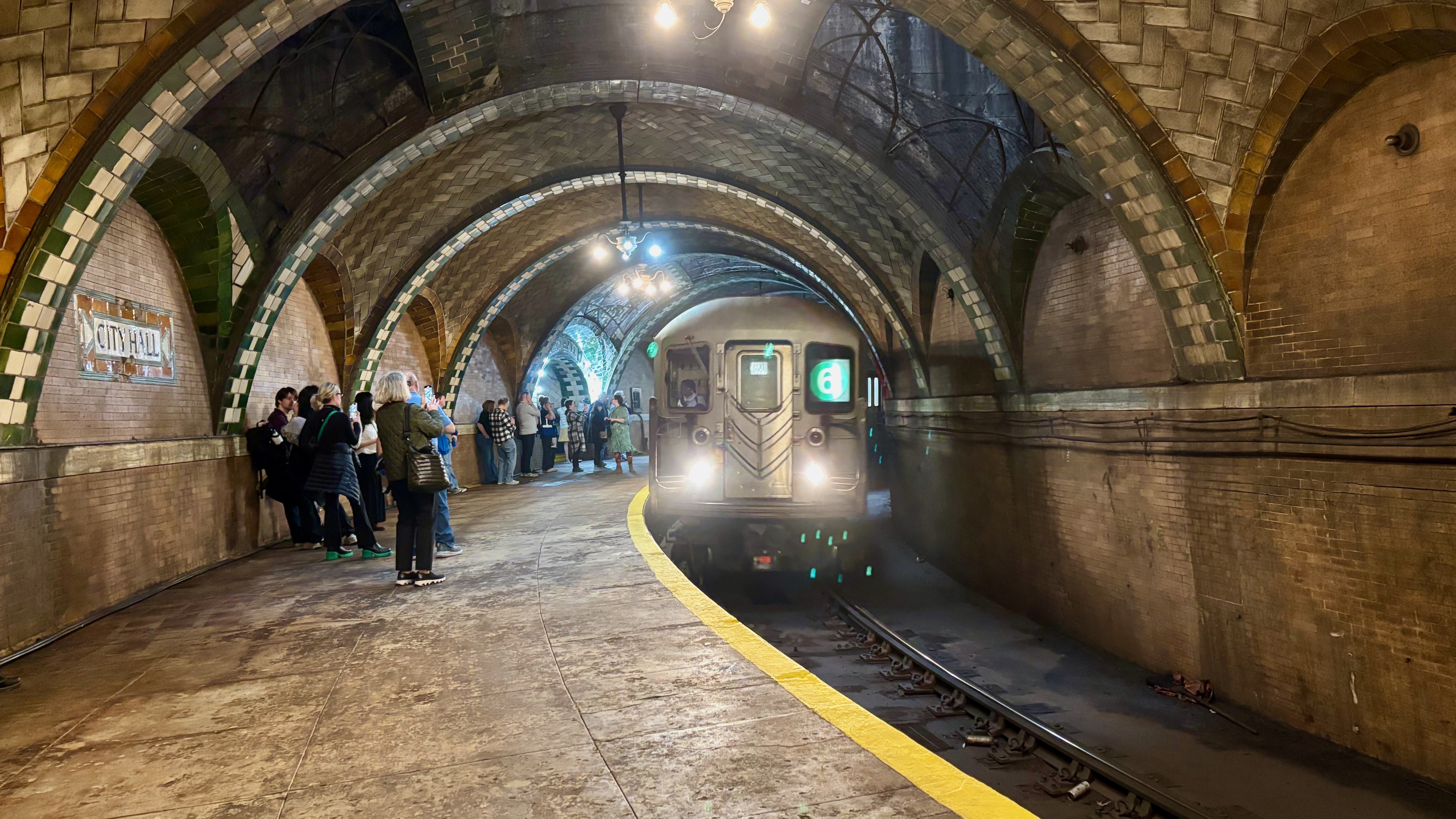
Opened in 1904 as the original southern terminus of New York City’s first subway line, the Old City Hall station was designed as a showpiece—not just a place to catch a train. In the early days of the subway, officials were trying to win over a public that wasn’t exactly thrilled about traveling underground. So some of the first stations were built to feel safe, permanent, and civic-minded—more like grand public spaces than utilitarian infrastructure.
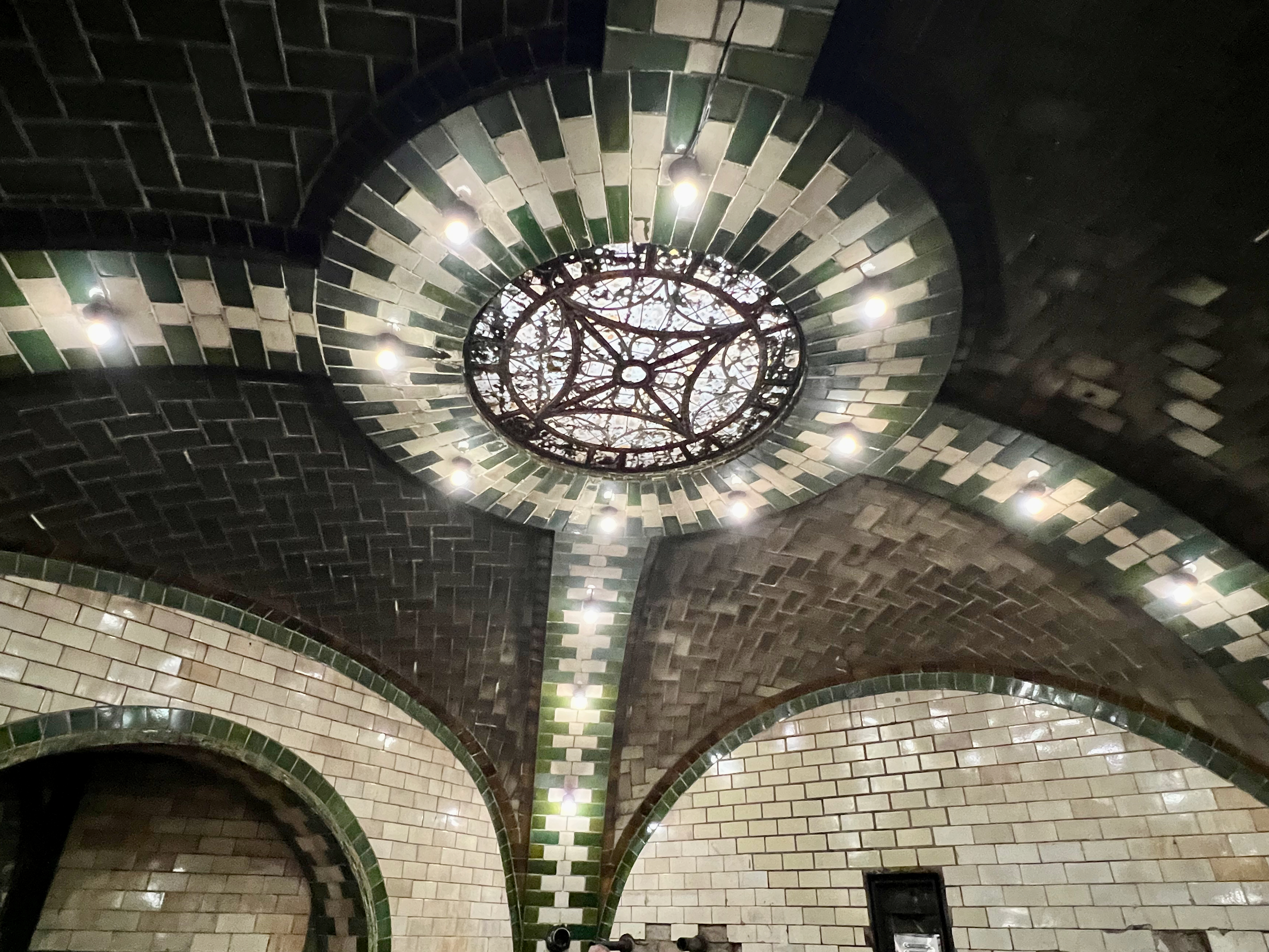
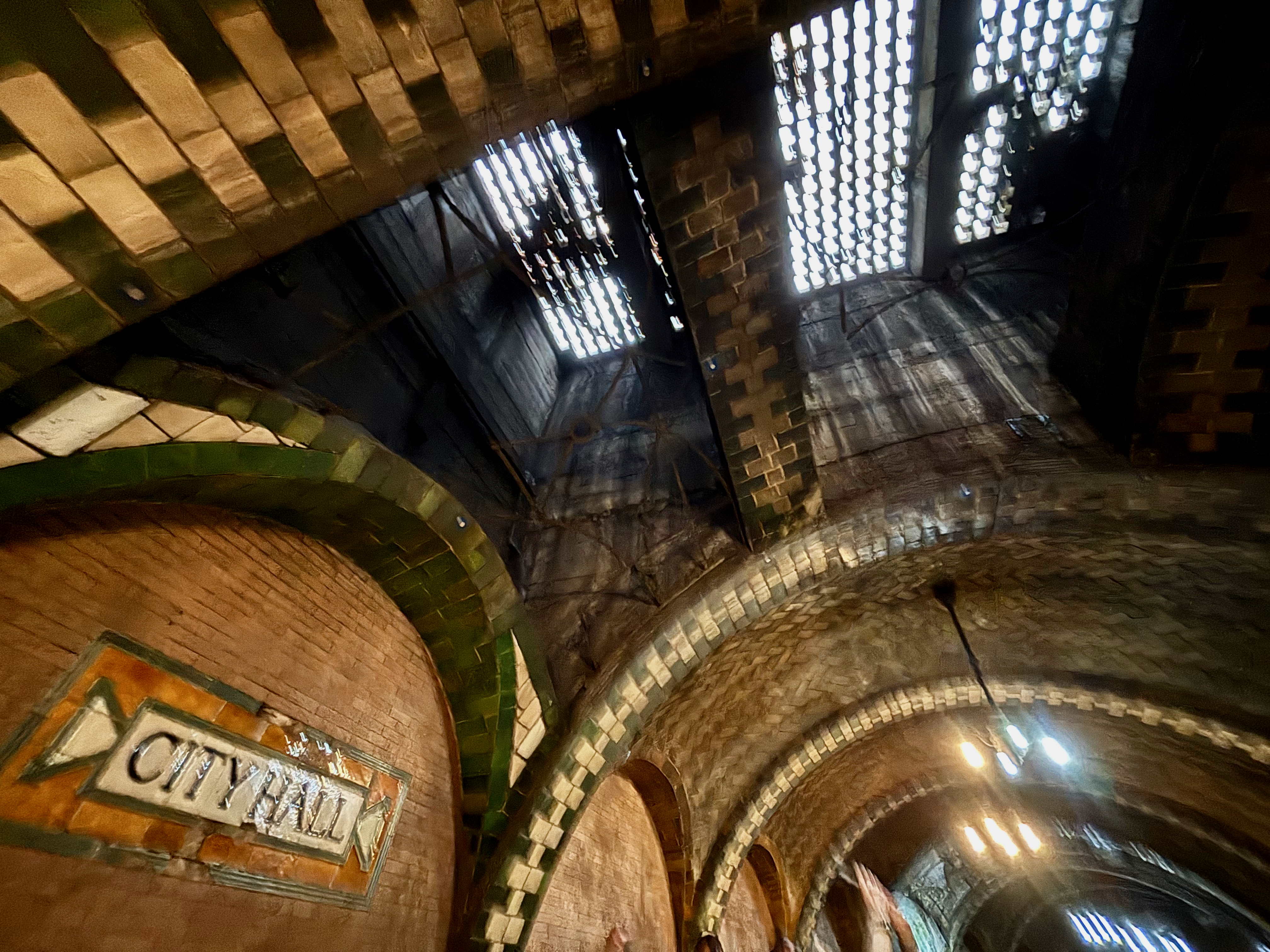
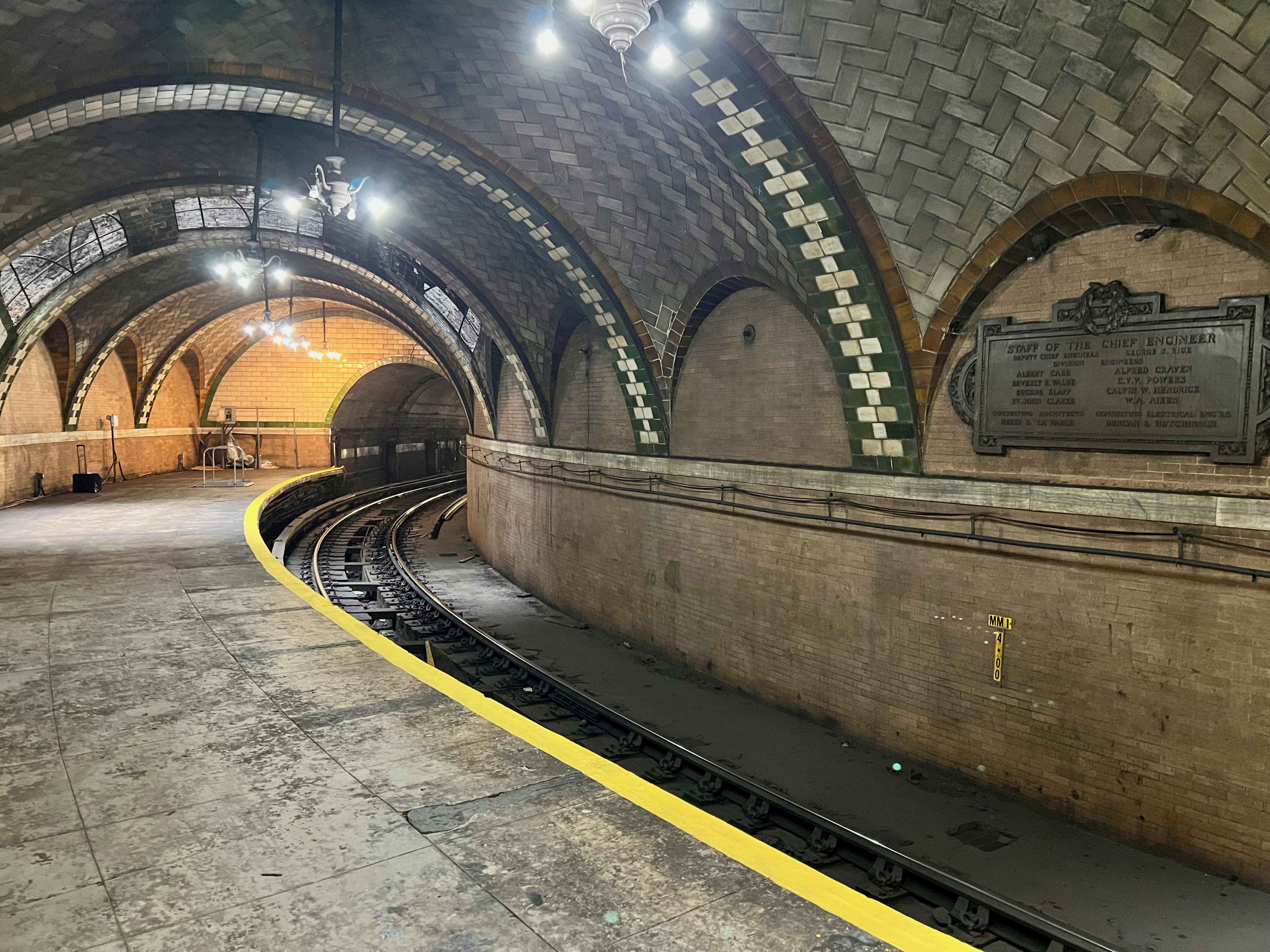
City Hall was the most dramatic example: vaulted ceilings of Guastavino tile, elegant arches, and skylights that brought daylight down into the station.
Why It Closed
Over time, the station became impractical. The platform is short and sharply curved—beautiful to look at, but difficult to use as trains got longer and operations modernized. With the nearby Brooklyn Bridge–City Hall station able to handle higher volume more efficiently, City Hall closed to regular passenger service in 1945.
How It’s Still Used Today
Even though trains don’t stop here anymore, the station is still part of the live subway system. The 6 train uses the old station and its loop track to turn around and head back uptown. And yes—you can still see it. If you stay on the downtown 6 train after Brooklyn Bridge–City Hall, the train loops through the old station, and you can catch a brief glimpse of the platform and arches as it curves around.
How You Can Visit
The only way to step onto the platform is through the New York Transit Museum’s Old City Hall Station tour, which is offered exclusively to museum members (and tickets are limited). The museum also has a helpful page on membership if you’re looking to join specifically for access to tours like this.
Why It Still Feels “Iconic New York”
City Hall station is one of those places that still defines what many people picture when they imagine early 20th-century New York—optimistic, ornate, and built to last. That look has influenced pop culture, too. Location guides note that the subway setting in Fantastic Beasts and Where to Find Them (2016) was modeled on the Old City Hall station’s style: see the location reference here.
And it’s not just a relic. The station popped back into the modern spotlight when NYC’s newest mayor, Zohran Mamdani, chose the abandoned City Hall station for a symbolic midnight swearing-in on January 1, 2026 (coverage here).
Finally Getting Inside City Hall Station
We’ve wanted to visit the Old City Hall station for a long time. It’s one of those places that’s part of the subway system but still feels just out of reach—there, but not really available.
The New York Transit Museum only offers tours a few times a year, spots are limited to members, and they disappear fast. So when we finally managed to snag places on a tour, we didn’t treat it like a casual add-on. We planned a whole trip around it.
There’s also no way to walk in from the street anymore. The only way into City Hall is by train. We met up with the group at Brooklyn Bridge–City Hall, boarded a downtown 6 train, and rode it past the last public stop—something every rider can do, but almost nobody does.
Then the train rolled into the abandoned station and stopped. The doors opened…and only our group got off.
Because the platform curves so sharply, today’s subway cars don’t line up cleanly with it. (That mismatch is one of the reasons the station couldn’t keep functioning once trains got longer.) Transit Museum staff brought portable ramps to bridge the gap, which made the whole thing feel even more surreal—like stepping from a modern subway into a different century.
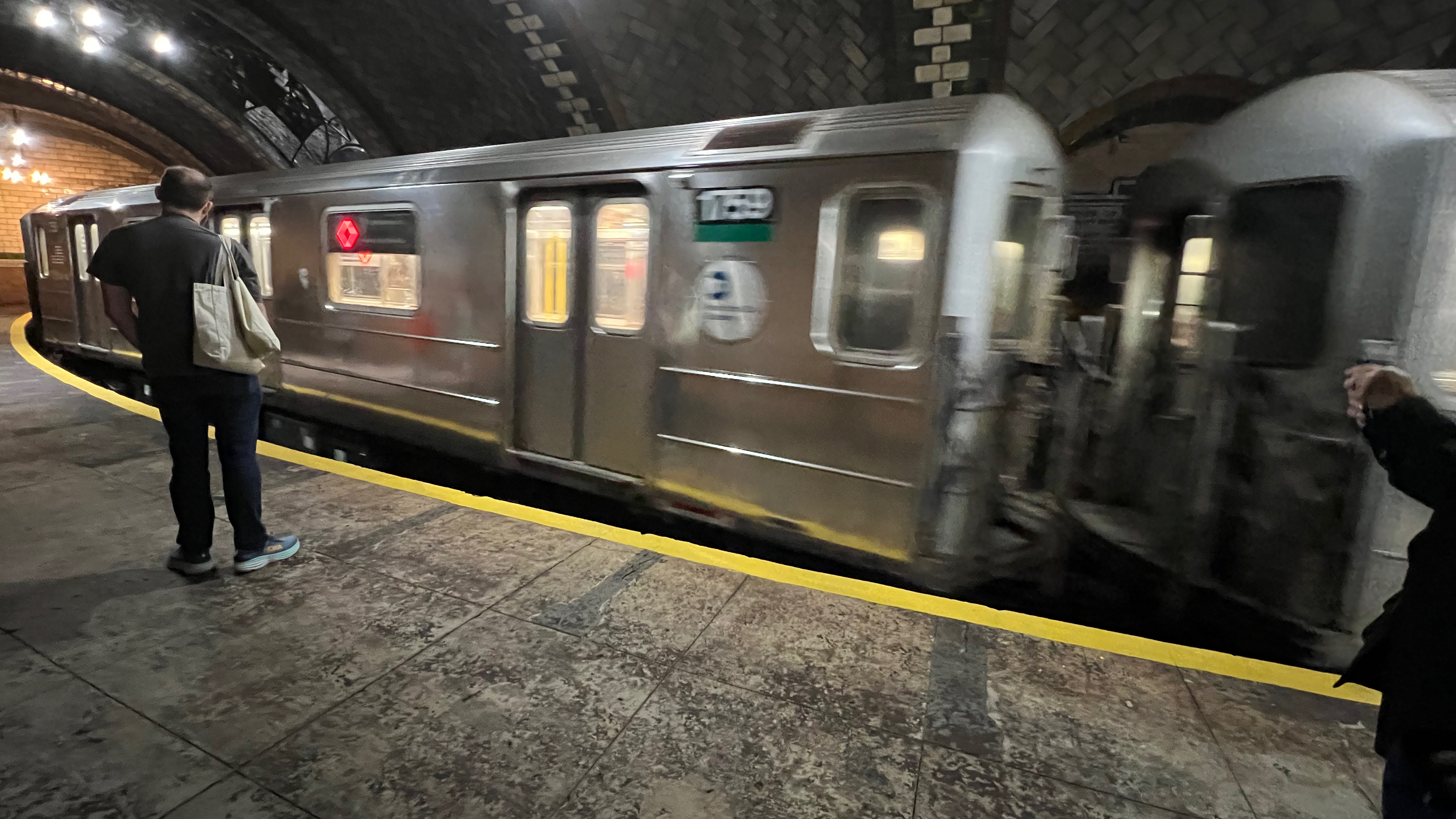
After a quick orientation and a little history, we were turned loose to explore the station on our own.
The Platform & The Loop
Once we were inside, the first thing that hits you is the curve. It’s gorgeous, it’s dramatic…and it’s exactly why this station couldn’t survive modern subway operations. The tracks wrap through the station as part of the 6 train’s loop, which is still used today for turning trains around. Standing there, you can feel how the station is both “closed” and still very much part of the working subway.
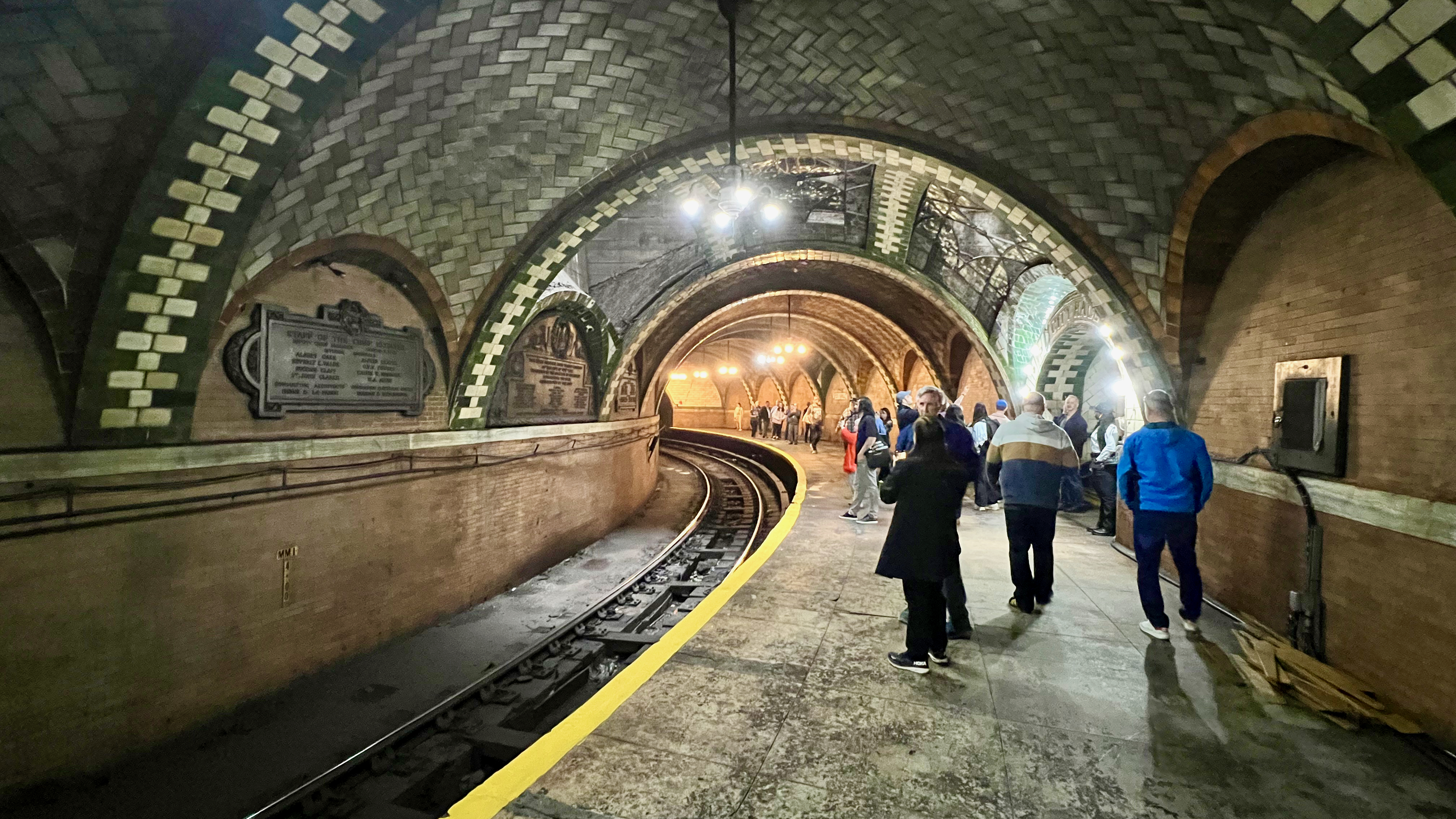
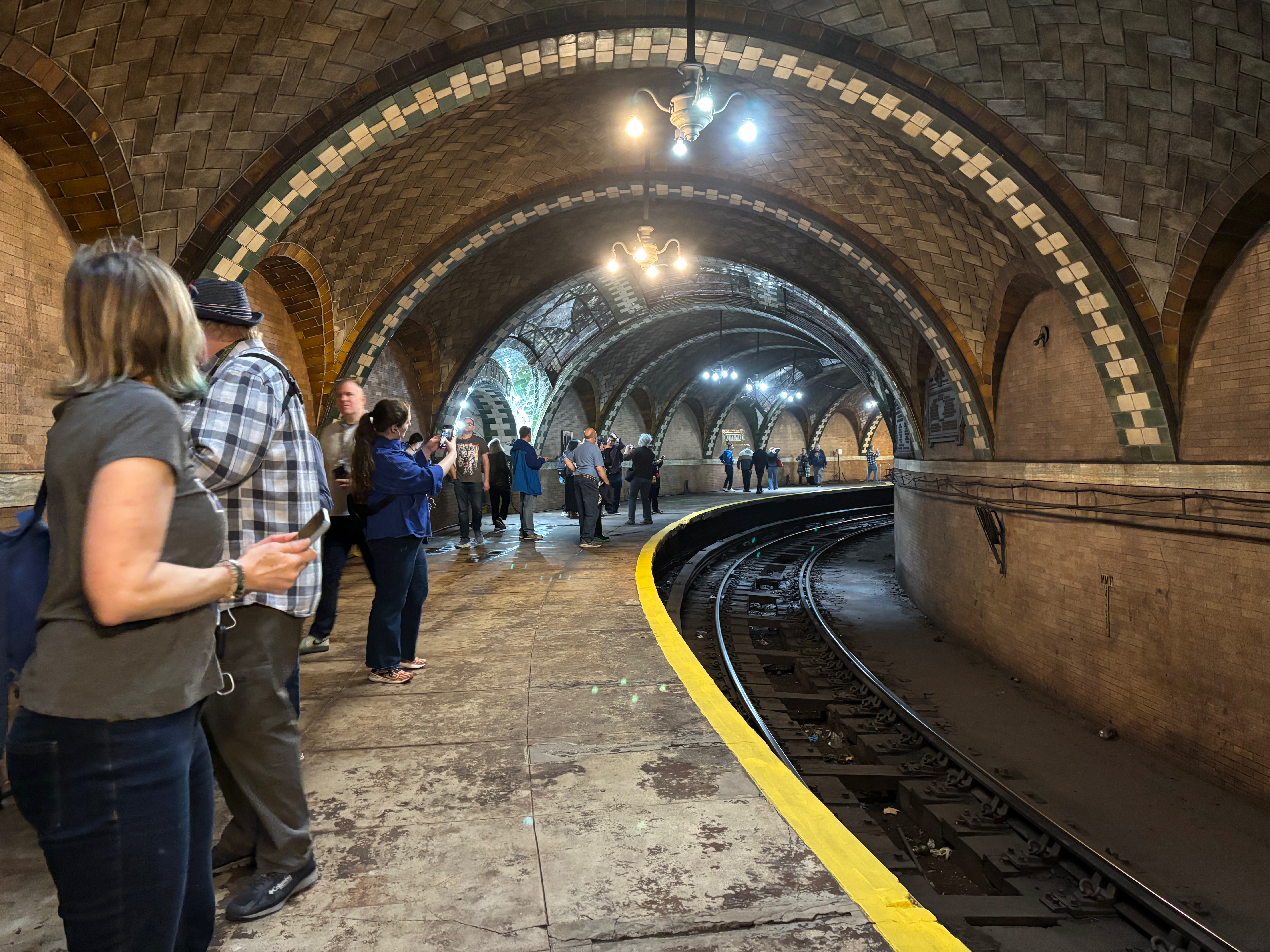
If we needed any reminder that this is still an active part of the system, we got it: trains rolled through regularly. A few had passengers staying onboard to catch their own quick glimpse of the station—and I’m sure some of them were wondering why there were suddenly people standing on a platform that “doesn’t exist.”
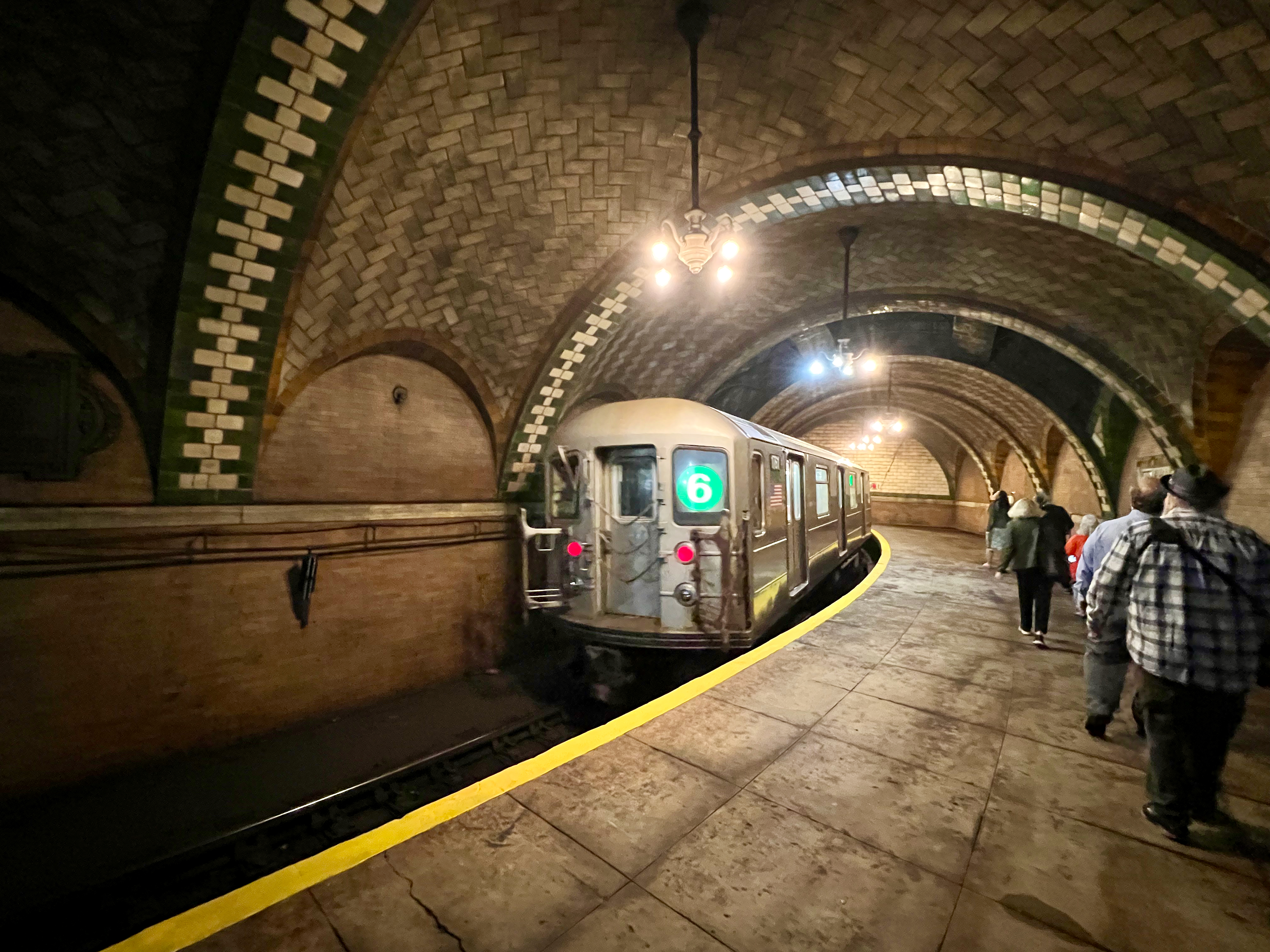
Can we take a second to appreciate the design? It’s hard to believe this was built in the early 1900s—and that it’s been sitting down here, out of regular use, since the 1940s.
The Details That Made It a Showpiece
After you take in the platform, your eyes naturally go up. The skylight, the tilework, the arches—everything was designed to make the subway feel like a civic monument. These are the kinds of details that explain why City Hall still gets described as the system’s crown jewel, and why it’s become shorthand for “old New York” in people’s imaginations.
Proof We Were Actually There
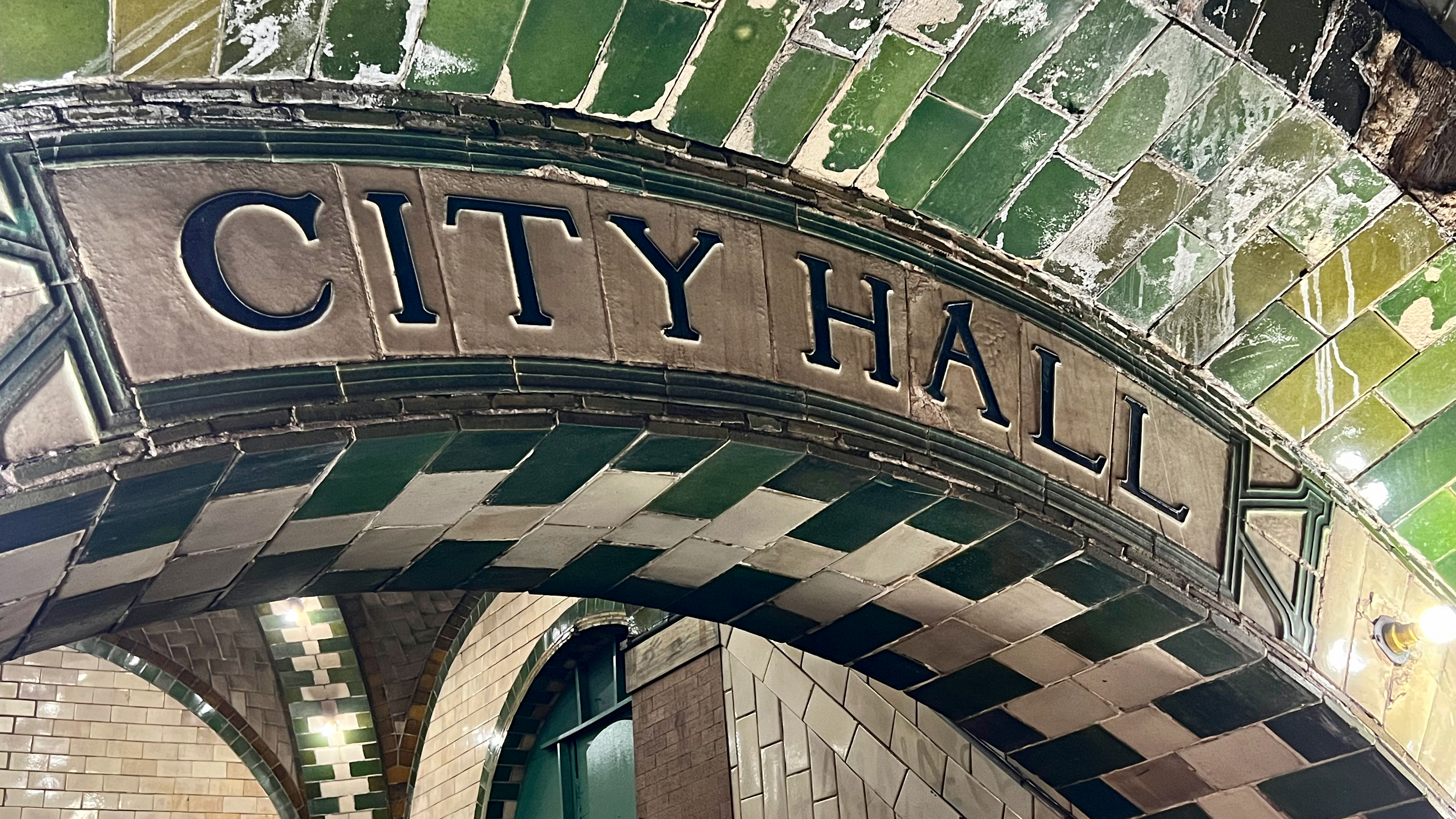
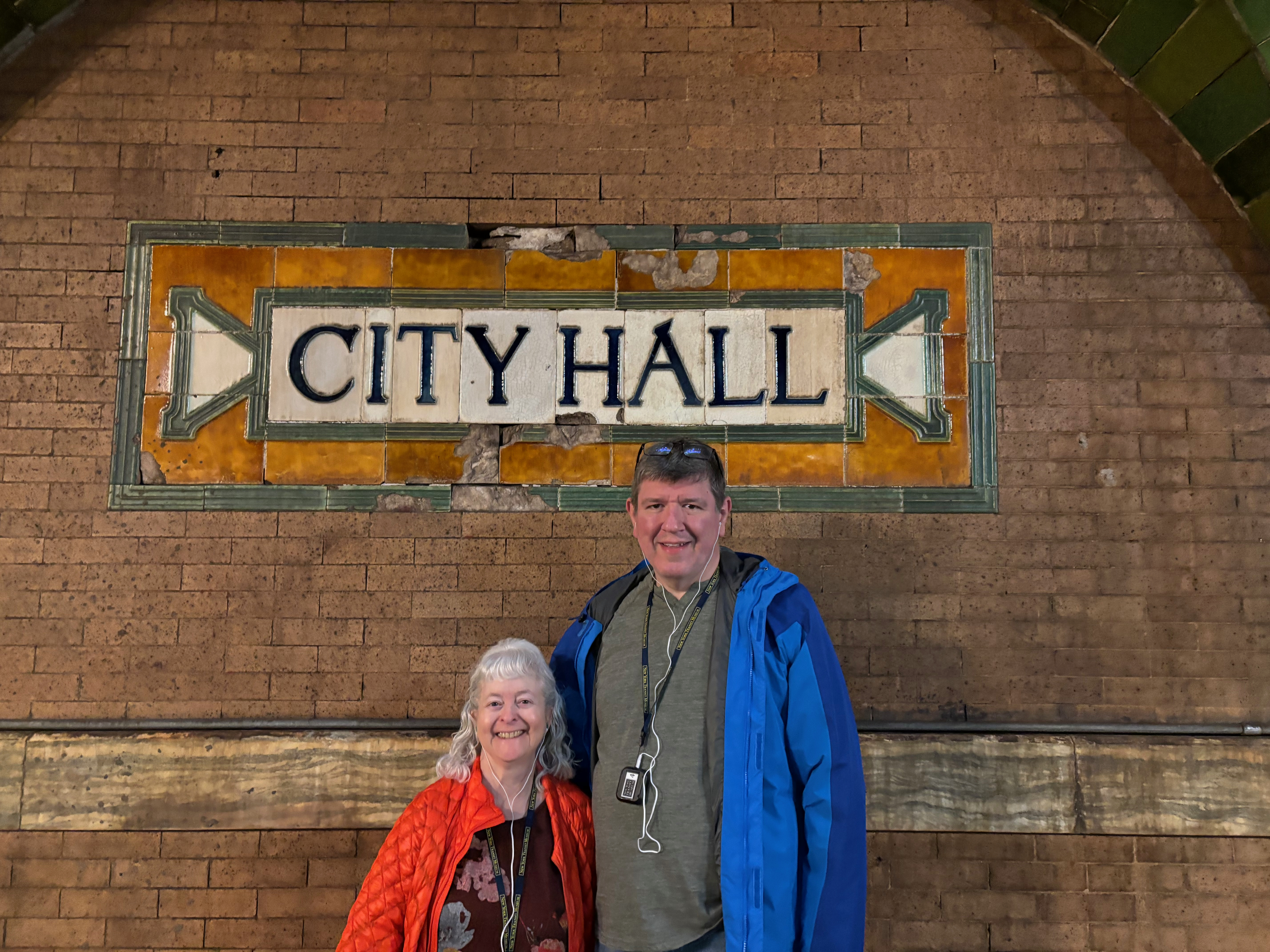
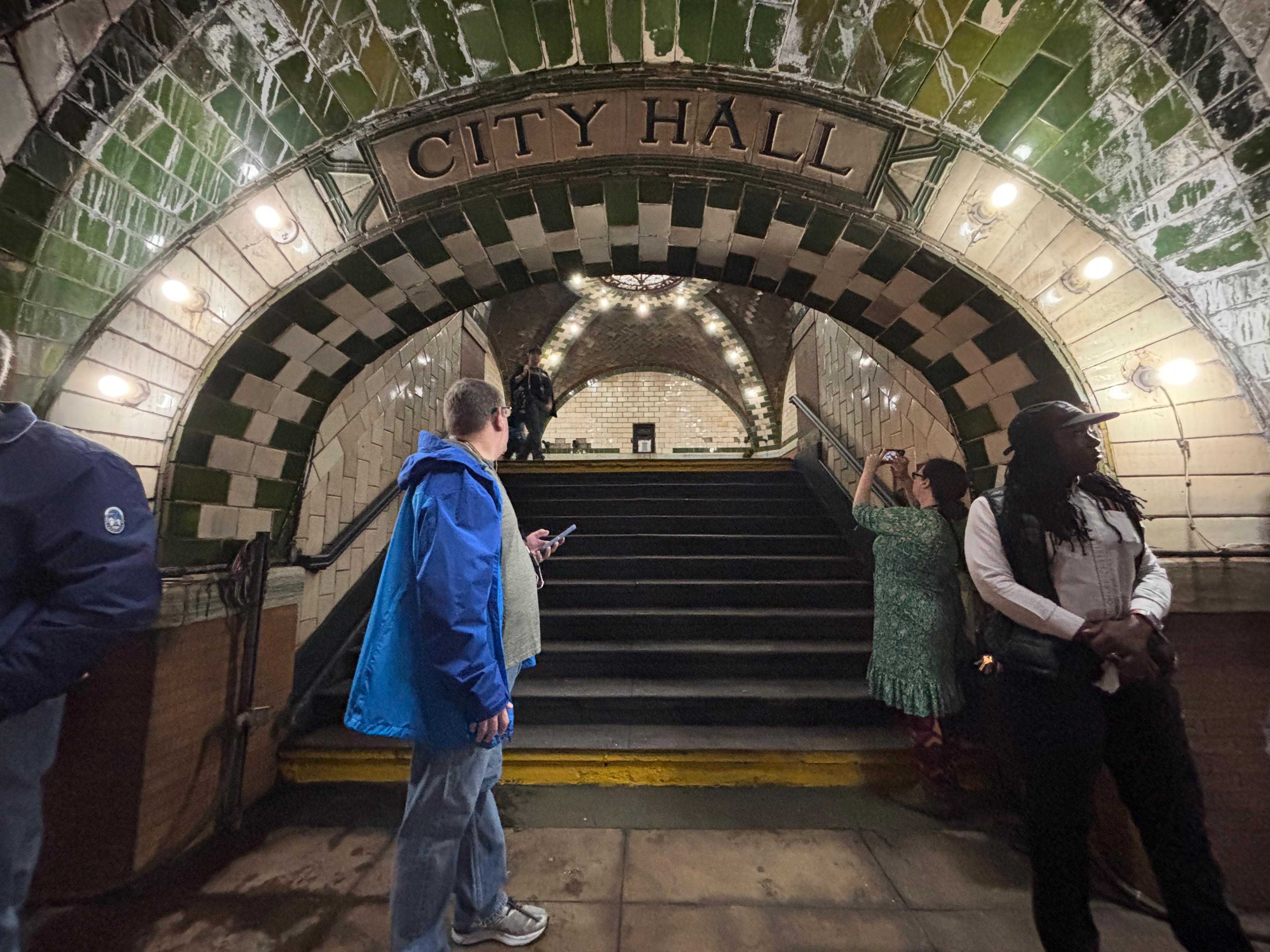
And of course, we had to take the classic shots. The station sign photo is basically required; the staircase area feels like stepping into a different century, and my wife Sharon… well, Sharon made sure we left with at least one picture that didn’t take itself too seriously.
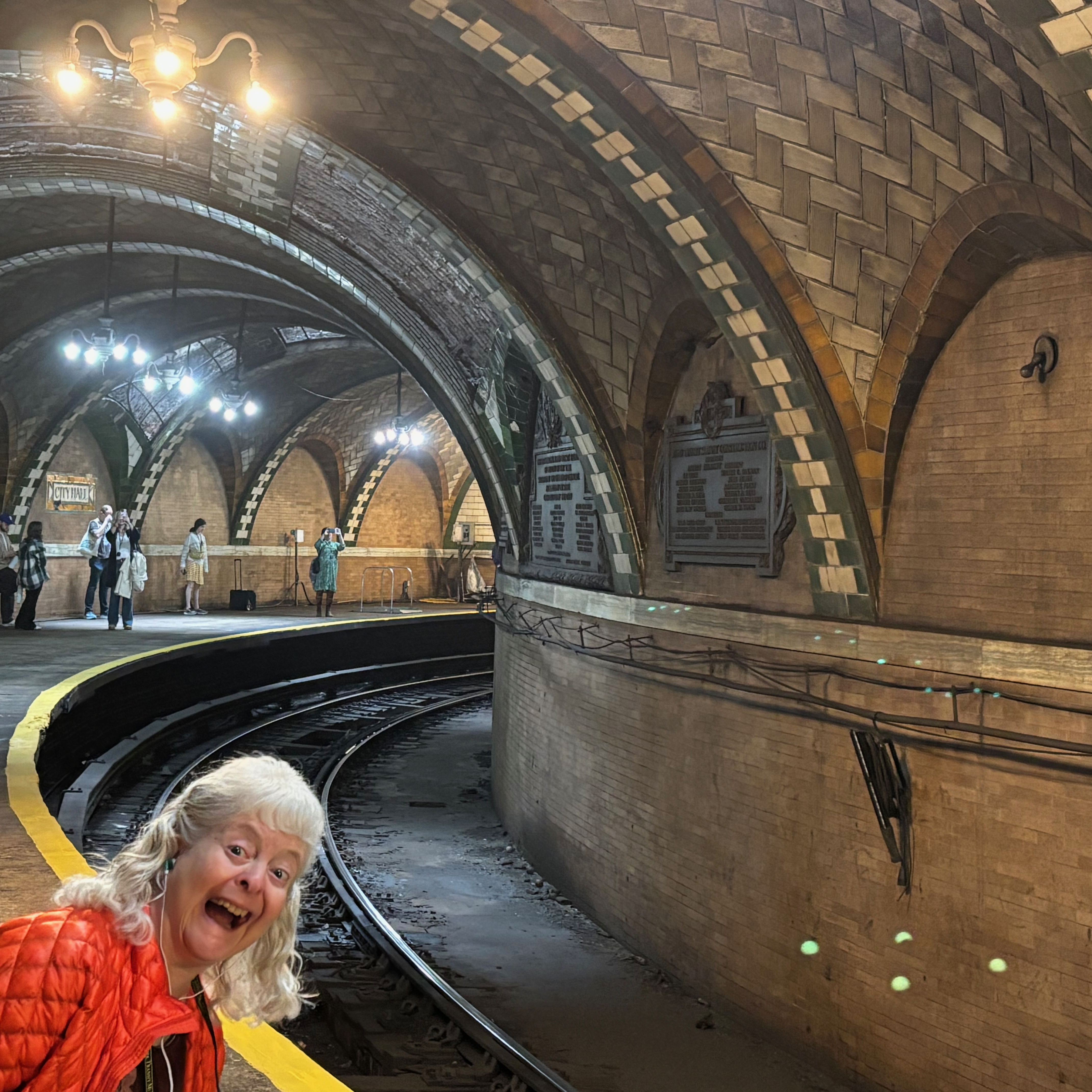
And of course, we couldn’t leave without Sharon getting one more picture to add to her collection of photobombs of iconic locations.
Final Thoughts
City Hall Station is one of those rare New York experiences that lives up to the hype. It’s not just “a cool abandoned place”—it’s a reminder that the city once built everyday infrastructure with the same pride and ambition it put into monuments.
And what makes it even better is that while the station feels frozen in time, it’s still part of the subway’s daily rhythm. Trains loop through it as they turn back uptown, giving anyone who knows how to look a quick glimpse from a moving car. But standing on the platform—even for a short tour—felt like going back in time. It was surreal to step into a piece of history that photos can’t fully capture.
If you ever see the Transit Museum release tour dates and you’re able to grab tickets, it’s absolutely worth planning around.
And if you want to go deeper into NYC subway history (without needing to win the City Hall tour ticket lottery), we also visited the New York Transit Museum—and it’s an easy way to learn more about how the system grew into what it is today.
Want to comment on this post? Great! Read this first to help ensure it gets approved.
Want to sponsor a post, write something for Your Mileage May Vary, or put ads on our site? Click here for more info.
Like this post? Please share it! We have plenty more just like it and would love it if you decided to hang around and sign up to get emailed notifications of when we post.
Whether you’ve read our articles before or this is the first time you’re stopping by, we’re really glad you’re here and hope you come back to visit again!
This post first appeared on Your Mileage May Vary