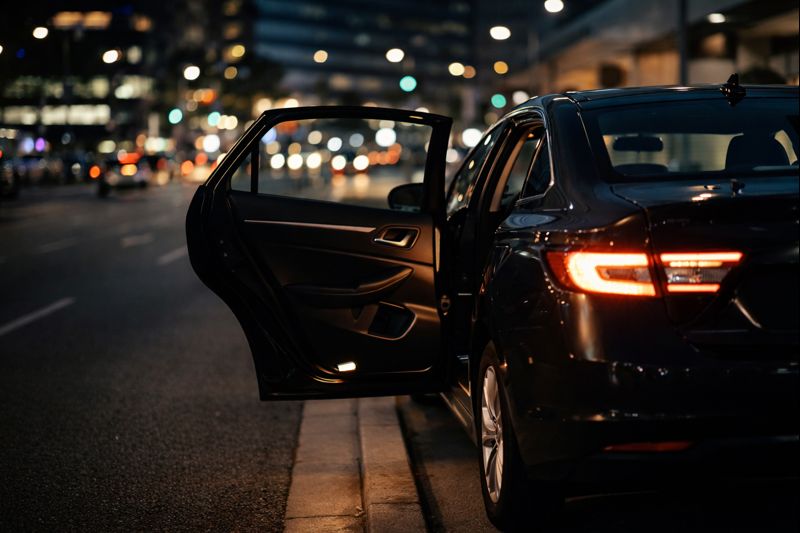
Uber didn’t just change how we get a ride.
It changed how the ride ended.
Before rideshare apps, the most unpredictable part of getting around a city often wasn’t the traffic — it was the last 30 seconds. You’d pull up to your destination, reach for your wallet, and hope the driver took a credit card… and that the credit card machine “worked today.”
Back then, taxis were only starting to accept credit cards with any consistency, and even in cities where card readers were available, the experience could feel sketchy. Sometimes the machine was “broken.” Sometimes there was a surprise fee. Sometimes it was cash-only, period. In New York City, for example, credit card payments became a larger share of taxi fares over time, but the transition was messy — and driver groups had already been disputing card-payment systems and fees in the mid-2000s.
Then Uber showed up with a simple promise: no cash, no swiping, no awkward moment at the curb. You requested a ride, arrived at your destination, and the app handled payment and receipt automatically. And once tipping eventually moved into the app, Uber took another formerly cash-based moment and turned it into a couple of taps on a screen.
Which is why Uber’s latest change feels like it came out of left field… even if it makes perfect sense when you look at the big picture.
Uber Isn’t New to “Innovations” That Mostly Help Uber
Uber is no stranger to getting negative press for changes they frame as major improvements, but often look like new ways to make more money. The foreign transaction “scam” is only the most recent example.
But this time, the message I got from Uber wasn’t about pricing. It was about something far more old-school:
Yes, Uber Is Letting People Pay With Cash
Yes. Uber — whose biggest draw when it launched was being fully cashless — is now allowing customers to pay drivers in cash in select markets.
But it’s not as simple as “hailing an Uber” and handing over a few bills at the end. Uber is adding guardrails to keep this from turning into chaos.
How Cash Payments Work (And Why It’s Not As Simple As It Sounds)
Here’s what matters:
- You still have to request the ride through the app and select Cash as the payment method.
- Only verified riders can use cash.
- Drivers must opt in to accept cash trips — and can opt out if they don’t want to deal with it.
- Drivers don’t have to carry change. If you pay more than the fare, the “change” can be credited to you as Uber Cash rather than returned in cash.
- You can split payments in some cases — paying part in cash and the rest on the card you already have on file.
In other words, this is “cash,” but with a lot of app-based scaffolding built around it.
Uber’s Spin: “We’re Helping the Unbanked”
Uber is spinning this as a way to help those who are unbanked or underbanked.
Getting where you need to go should be accessible to everyone. That’s why we’re making it easier for anyone to ride—by accepting cash.
While I admire the compassion… I don’t buy that this is solely philanthropic.
The Real Reason: Cashless Is a Market-Share Problem
Let’s be honest: Uber isn’t the only company that lets you pay through an app anymore.
Whether someone uses Lyft, a taxi app like Curb, or one of the many local competitors, paying with a credit card in an app isn’t a differentiator in 2026 — it’s the baseline.
But there’s one thing taxis (and plenty of other services) can still do that Uber historically couldn’t:
They can take cash.
And for most people who already use rideshare with a card on file, this won’t change anything. I can’t imagine a bunch of riders suddenly saying, “I love the convenience of paying in-app, but what I really want to do is make sure I’ve got enough cash on hand for my ride to the airport.”
This isn’t about converting existing Uber users into cash users.
It’s about expanding the market — without losing trips from people who prefer (or have no choice but to) pay cash.
Final Thought
We’ve come full circle.
Uber was among the first transportation services to go fully cashless, targeting riders who were tired of dealing with cash-only rides, unreliable card readers, and end-of-trip payment issues. That friction was part of what made Uber feel like a genuine upgrade.
But now that you can pay with a card nearly everywhere, the cash-only customer is one of the last untouched pockets of demand. So Uber found a way to accept cash—even if it’s not the most straightforward process—because it’s a calculated move to expand the addressable market.
Everything old is new again.
It just looks different this time: identity verification, opt-in drivers, no change, and your “extra” money being converted to Uber Cash instead of being handed back to you at the curb.
Want to comment on this post? Great! Read this first to help ensure it gets approved.
Want to sponsor a post, write something for Your Mileage May Vary, or put ads on our site? Click here for more info.
Like this post? Please share it! We have plenty more just like it and would love it if you decided to hang around and sign up to get emailed notifications of when we post.
Whether you’ve read our articles before or this is the first time you’re stopping by, we’re really glad you’re here and hope you come back to visit again!
This post first appeared on Your Mileage May Vary