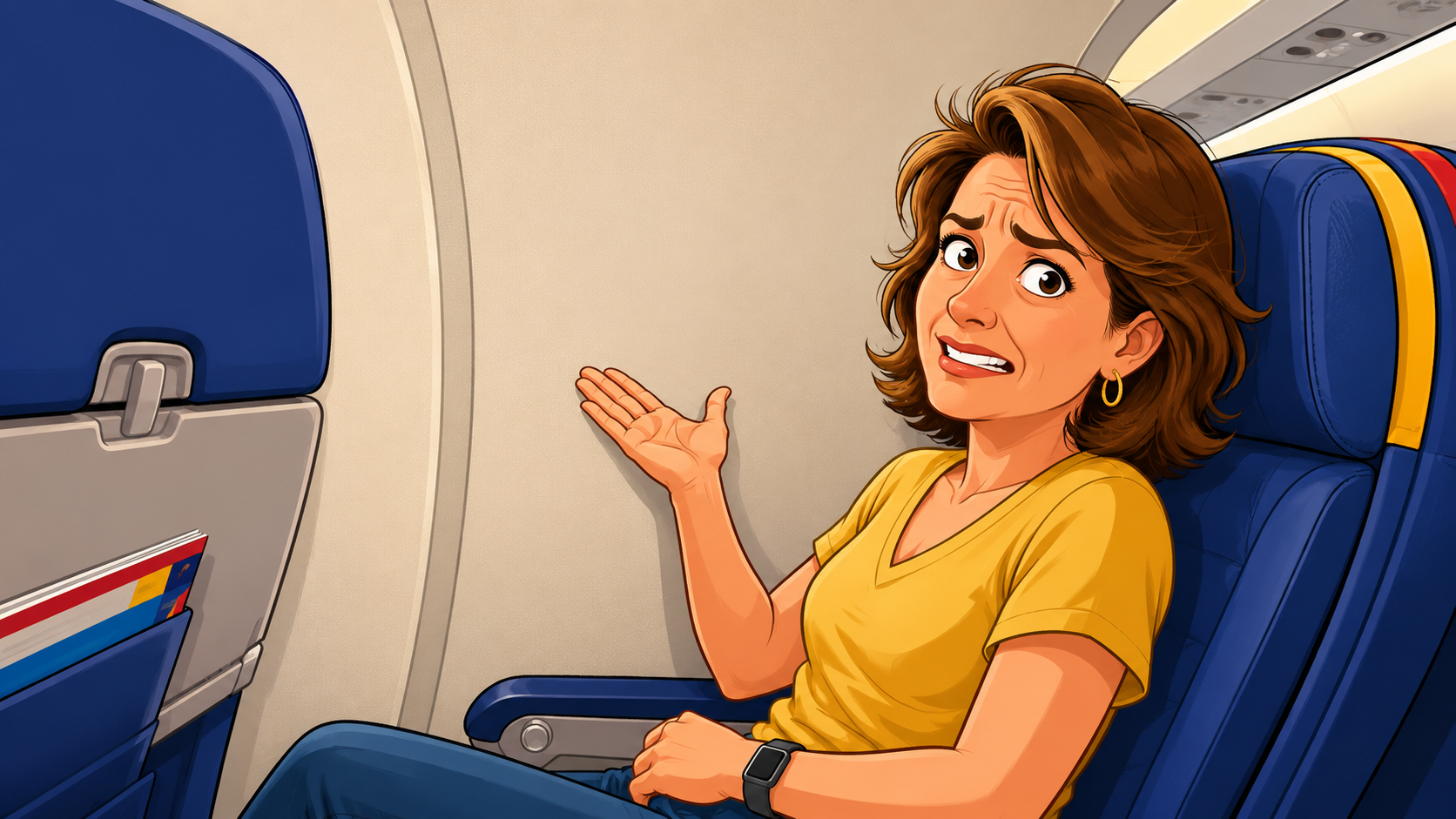
When Southwest moved to assigned seating, one problem was almost guaranteed to show up sooner or later: what happens when a passenger pays extra for a “window” seat…and there isn’t actually a window?
Under Southwest’s old open seating system, this was annoying, but it was also part of the game. If you boarded early, you picked whatever mattered most to you. Maybe that meant an aisle seat. Maybe it meant sitting together as a family. Maybe it meant grabbing a window seat, sitting close to the front, or heading toward the back because that’s what you prefer.
And if you were in Boarding Group C, you took what was left. Sometimes that meant a middle seat. Sometimes, if you were lucky, it meant a window seat. And sometimes that “window” seat was really a seat next to a wall.
That’s not new. Airplanes have always had some rows where the seat doesn’t line up cleanly with the window. The difference now is that Southwest is charging passengers for certain seat assignments, including Preferred seats near the front and Extra Legroom seats. Once money is involved, expectations change.
The New Assigned Seating Problem
Southwest now sells several seat types. Extra Legroom seats are toward the front of the plane and near the exit rows, while Preferred seats are standard-legroom seats located closer to the front of the cabin. Standard seats are everything else. Southwest says Extra Legroom seats offer three to five additional inches of pitch, depending on the aircraft type. Southwest’s own help page explains the difference between the seat categories.
We have a Southwest credit card, so we can select Preferred seats at the time of booking. That’s a nice perk, especially compared to waiting until check-in and hoping for something decent. But it also makes the seat map more important than it used to be.
Because now, someone can pay for a seat that appears to be a window seat, only to board the plane and discover that the view is mostly plastic wall.
And yes, passengers have noticed. Reports have already surfaced from travelers complaining that Southwest charged extra for window seats that didn’t actually have windows. Chron reported on passengers criticizing Southwest over allegedly selling “window” seats that lacked actual windows, noting that this has also been an issue at other airlines.
Southwest Is Now Adding A Warning
Southwest appears to have received enough complaints, bad PR, or both, that it’s now adding a warning to the seat selection page.
On the seat map I saw, there was a “Window seat notice” at the bottom of the page. It listed the aircraft types and the specific seats with limited or no window visibility:
- 737-700 seats 7A and 7F: limited window visibility
- 737-800 seat 10A: no window; seats 11A and 11F: limited window visibility
- 737 MAX 8 seat 10A: no window; seats 11A and 11F: limited window visibility
That’s useful information. It’s also information that really should be much easier to see.
On the seat map, the seats still look like regular selectable seats. Unless you scroll down and read the fine print, it would be easy to miss the warning entirely. And if you’re quickly picking seats on your phone or trying to choose seats for multiple people, that note at the bottom of the screen may not be obvious.
The Warning Helps, But It Could Be Clearer
To Southwest’s credit, adding the notice is better than letting passengers find out after they board. But the warning still feels like a half-step.
If a seat has limited visibility or no window at all, that should be marked directly on the seat map before someone selects it. Airlines already use symbols and labels for exit rows, blocked seats, and other cabin features. A window-position seat without a usable window seems important enough to flag the same way.
The bigger issue is pricing. A seat without a window may still technically be a window-position seat. It’s next to the aircraft wall, and it may still be closer to the front of the plane. But if Southwest is charging extra for that seat, passengers are going to expect the seat map to be clear about what they’re buying.
Final Thought
Southwest’s move to assigned seating was always going to create new friction points, and this is one of them. Under the old system, a bad “window” seat was mostly bad luck. Now that some seats cost extra, disclosure matters more.
The new warning is a step in the right direction. But if Southwest really wants to avoid complaints, the information needs to be easier to see before passengers choose their seats — especially when that seat comes with an added charge.
Want to comment on this post? Great! Read this first to help ensure it gets approved.
Want to sponsor a post, write something for Your Mileage May Vary, or put ads on our site? Click here for more info..
Like this post? Please share it! We have plenty more just like it and would love it if you decided to hang around and sign up to get emailed notifications of when we post.
Whether you’ve read our articles before or this is the first time you’re stopping by, we’re really glad you’re here and hope you come back to visit again!
This post first appeared on Your Mileage May Vary

1 comment
This happened to me and I did some checking and nowhere, when you are selecting your seat, do they actually call it a window seat. They never use that term.