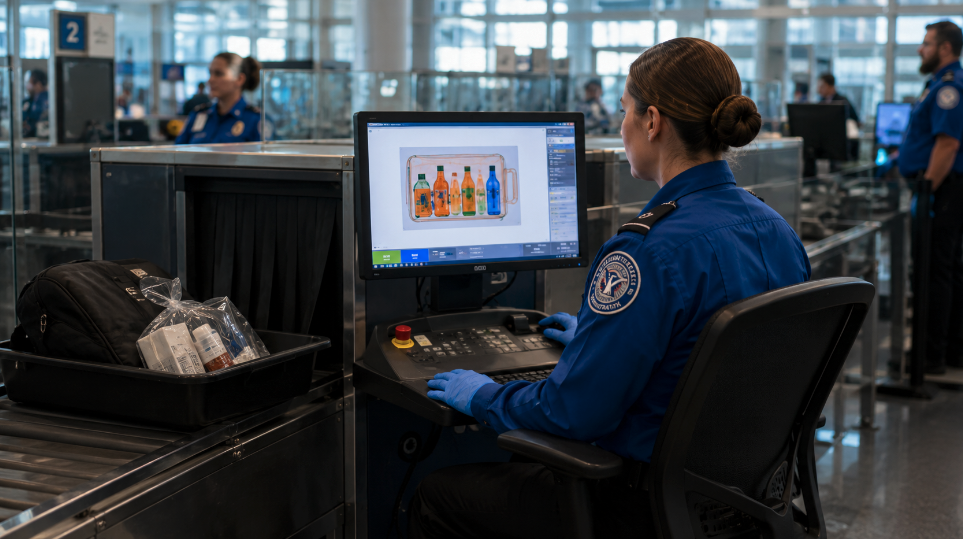
Most travelers know about TSA’s 3-1-1 liquids rule. But there are several exceptions that allow certain liquids, gels, and similar items to be much larger than 3.4 ounces in your carry-on. Here are nine that are perfectly acceptable—as long as you follow the rules.
Ever since TSA introduced its 3-1-1 liquids rule after the 2006 liquid explosives plot, travelers have been limited in how much liquid they can bring through airport security.
Called the 3-1-1 liquids rule, TSA says, “Each passenger may carry liquids, gels and aerosols in travel-size containers that are 3.4 ounces or 100 milliliters. Each passenger is limited to one quart-size bag of liquids, gels and aerosols.”
In the past we’ve written a few posts about this topic:
- How to get around the 3-1-1 liquid rule
- Genius hack to get full sized liquid bottles past security
- I asked TSA when the 3-1-1 liquid rule would end. Here’s what they said
Hacks set aside, passengers can bring a few liquids in their carry-on bag that can be more than 3.4 ounces. I’ll be frank – chances are you probably know some of them. But I’m not so sure you know all of them:
Any liquid that is frozen
According to the TSA, frozen liquid items are allowed through as long as they’re frozen solid when you’re at the security checkpoint (because then they’re a solid, not a liquid). However if the gravy, homemade jelly, etc. is partially melted, slushy or has any liquid, they must meet the 3-1-1 liquid requirements. Otherwise you’ll have to eat/drink them immediately, check them, mail them home, or throw them out.
Live fish (yes, even in water)
Live fish in water and a clear transparent container are allowed after inspection by the TSA officer.
Keep in mind that most, but not all airlines allow live fish in their cabin, as per their respective policies (Southwest, for example, only allows cats and dogs, in carriers. Even after they lost a woman’s pet fish). So check with your carrier before bringing your live fish to the airport.
Breast milk, formula & baby/toddler food/drinks
Formula, breast milk, toddler drinks, and baby/toddler food (to include puree pouches) in quantities greater than 3.4 ounces or 100 milliliters are allowed in carry-on baggage and do not need to fit within a quart-sized bag. These items are considered medically necessary liquids. This also applies to breast milk and formula cooling accessories, such as ice packs, freezer packs, and gel packs (regardless of the presence of breast milk). Your child or infant does not need to be present or traveling with you to bring breast milk, formula and/or related supplies.
You must inform the TSA officer at the beginning of the screening process that you have one or more of these in excess of 3.4 ounces. Remove the items from your carry-on bag to be screened separately from your other belongings. TSA officers may need to test the liquids for explosives or concealed prohibited items.
Although not required, to expedite the screening process, it is recommended that formula and breast milk be transported in clear, translucent bottles, not plastic bags or pouches. Liquids in plastic bags or pouches may not be able to be screened by Bottle Liquid Scanners, and you may be asked to open them (if feasible) for alternate screening, such as Explosive Trace Detection and Vapor Analysis for the presence of liquid explosives. Screening will never include placing anything into the medically necessary liquid.
TSA X-ray machines do not adversely affect food or medicines. However, if you do not want the formula, breast milk, toddler drinks, and baby/toddler food (including puree pouches) to be X-rayed or opened, please inform the TSA officer. Additional steps will be taken to clear the liquid and you or the traveling guardian will undergo additional screening procedures, including Advanced Imaging Technology screening and additional/enhanced screening of other carry-on property.
Ice packs, freezer packs, frozen gel packs and other accessories required to cool formula, breast milk, toddler drinks, and baby/toddler food (to include puree pouches) – regardless of the presence of breast milk – are also allowed in carry-ons along with liquid-filled teethers. If these items are partially frozen or slushy, they are subject to the same screening described above.
Gel ice packs
Medically necessary gel ice packs in reasonable quantities are allowed regardless of their physical state of matter (e.g., melted or slushy) with or without the presence of breast milk. Please notify the TSA officer at the checkpoint for inspection.
Liquid or gel-filled teethers
From TSA: Ice packs, freezer packs, frozen gel packs and other accessories required to cool formula, breast milk, toddler drinks, and baby/toddler food (to include puree pouches) – regardless of the presence of breast milk – are also allowed in carry-ons, along with liquid-filled teethers. If these items are partially frozen or slushy, they are subject to the same screening as described above.
Disinfecting wipes
Although the wipes are infused with liquid, passengers can bring jumbo tubs of disinfecting wipes in their carry-on bags, if they’d like. That’s because the wipes themselves are considered solids, even though they’re saturated with a cleaning solution. Heck, they don’t even have to go in your 3-1-1 bag!
Liquid medication
TSA allows larger amounts of medically necessary liquids, gels, and aerosols in reasonable quantities for your trip.
Inform the TSA officer that you have medically necessary liquids and/or medications and separate them from other belongings before screening begins. Also declare accessories associated with your liquid medication such as freezer packs, IV bags, pumps and syringes. Labeling these items can help facilitate the screening process.
Remove medically necessary items from your carry-on bag. These items will be screened separately from your other belongings. You are not required to place your medically necessary liquid, gel, or aerosol in a plastic zip-top bag. A medically necessary liquid, gel, or aerosol alarm during the screening process may require additional screening and may not be allowed.
The 3-1-1 liquids rule exemption allows certain items to be carried in the cabin of the aircraft when the item is declared and it is:
- Required during your flight and/or at your travel destination;
- Not available at the airport in the sterile area (after the screening checkpoint) and/or;
- Not available at your travel destination.
Common examples of medically necessary liquids, gels, and aerosols include but are not limited to:
- Prescription liquids, creams, and gels;
- Breast milk, infant formula, baby/toddler food (to include puree pouches), and toddler drinks;
- Ice, gel, and freezer packs used to cool breast milk, infant formula, and or other medically necessary items;
- Over-the-counter medical liquids such as saline solution, cough syrup, liquid painkiller, anti-diarrheal, anti-inflammatory and allergy relief medications, etc.
Duty-Free Liquids In Secure, Tamper-Evident Bags (STEB)
STEB stands for “secure, tamper-evident bags.” They’re most often seen at duty-free shops.
You may carry duty-free liquids in secure, tamper-evident bags, more than 3.4 oz or 100 ml in your carry-on bag if:
- The duty-free liquids were purchased internationally, and you are traveling to the United States with a connecting flight.
- The liquids are packed in a transparent, secure, tamper-evident bag by the retailer and do not show signs of tampering when presented to TSA for screening.
- The original receipt for the liquids is present and the purchase was made within 48 hours.
The items inside the secure, tamper-evident bags must be screened and cleared. Any item that alarms or cannot be screened will not be permitted in your carry-on bag.
Worn Gel-Filled Bras
Gel-filled bras or silicone inserts worn on the body are allowed through security, even if the gel amount is larger than 3.4 ounces. If they trigger additional screening, let the TSA officer know what you’re wearing.
For now, the TSA’s 3-1-1 liquids rule is still very much in effect at most U.S. airports. But as newer CT scanners continue to roll out, that could eventually change.
Until then, knowing which liquids qualify for an exception can save you from throwing away perfectly acceptable items—or worse, delaying yourself and everyone behind you at the security checkpoint.
When in doubt, check TSA’s website before you travel. It’s always better to know the rules before you get to the airport than to find out at the X-ray machine.
Want to comment on this post? Great! Read this first to help ensure it gets approved.
Want to sponsor a post, write something for Your Mileage May Vary, or put ads on our site? Click here for more info.
Like this post? Please share it! We have plenty more just like it and would love it if you decided to hang around and sign up to get emailed notifications of when we post.
Whether you’ve read our articles before or this is the first time you’re stopping by, we’re really glad you’re here and hope you come back to visit again!
This post first appeared on Your Mileage May Vary