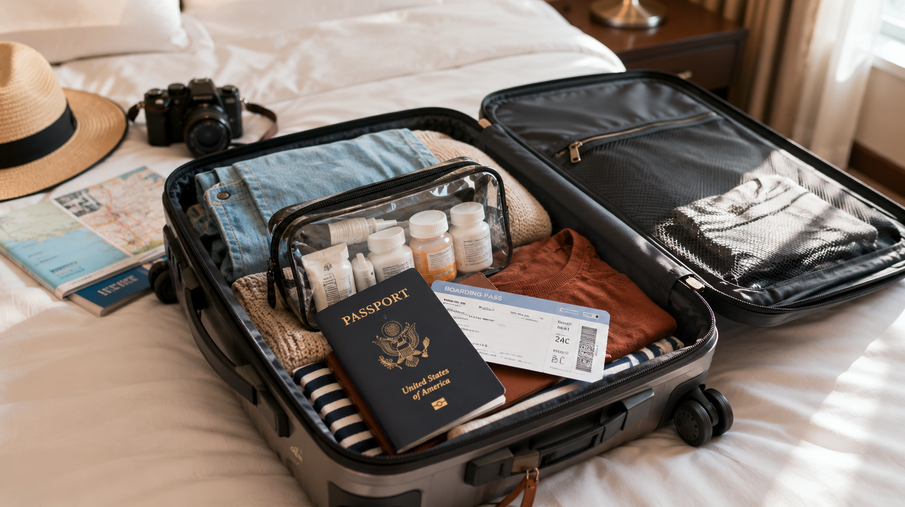
When you’re getting ready for an international trip, you probably have a mental checklist.
Passport? Check.
Phone charger? Check.
Prescription medications? Toss them in your carry-on and call it a day.
Not so fast.
Depending on where you’re traveling, simply having a valid prescription may not be enough. Some countries require additional documentation to bring certain medications across the border. Others require advance permits. And some medications that are perfectly legal in the United States are outright illegal elsewhere.
It’s one of those travel rules that most people never think about…until it’s too late.
As we wrote a while back, many medications that are common in the U.S.—including well-known drugs for allergies, ADHD and anxiety—are considered illegal in some other countries. In others, they may be legal, but you’ll need additional documentation or even a permit before you can bring them into the country.
Sure, you could cross your fingers and hope customs never looks in your bag. But if they do…things could get interesting. If officials inspect your luggage and discover medication that’s prohibited or improperly documented, they may confiscate it. Depending on the country, you could also face fines—or even criminal charges.
At the very least, the CDC recommends doing a few things before you head overseas. These include:
- Keep all medication in its original packaging with a label showing the prescription name, dosage, provider’s name and your full name.
- Bring copies of all written prescriptions, including generic names.
- If any of your medications are controlled substances, or if you carry medications that must be injected, such as an EpiPen, GLP-1 medication or insulin, bring a treatment plan or note from your doctor explaining their use.
Some categories of medication have even stricter rules. Depending on the country, that can include narcotics, psychotropic drugs, hormones (including birth control pills), nutritional supplements, and even common over-the-counter ingredients such as codeine, pseudoephedrine and diphenhydramine.
Every country has different rules
Depending on the places you’re traveling to or through, a valid prescription may not be enough to avoid legal trouble.
Japan is a perfect example. Some medications that are readily available over the counter in the U.S., or commonly prescribed for pain, allergies or mental health conditions, may be restricted or prohibited in Japan. Depending on the medication and quantity, travelers may need to obtain a Yunyu Kakunin-sho, or import certificate from the Ministry of Health, Labour, and Welfare of Japan, before arrival.
Other medications may not be allowed at all, even with a U.S. prescription, so Japan is one place where checking the rules in advance is especially important.
Other countries that require permits for certain medications include, but are not limited to:
- China
- Hong Kong
- Singapore
- South Korea
- Thailand
- United Arab Emirates
Here’s where things get annoying: every country has its own rules. Some may limit the quantity you can travel with (something to think about if you plan on remaining abroad for longer than the maximal amount of meds you can travel with). And some countries may not require you to have a separate permit but are strict about having documentation from your prescribing physician.
And if Europe is on your itinerary, you’re not necessarily off the hook. You might need a Schengen certificate for medication that is covered by the Opium Act. Some painkillers, sleeping pills, medical cannabis, and stimulants, in addition to any country-specific authorizations, may be included.
Not sure where to start? The US embassy website for your destination is usually your best bet. It’ll explain what you can bring, what paperwork you might need and whether you have to apply for a permit before you travel.
If you do need extra paperwork, don’t wait until the week before your trip. Give yourself enough time to work with your doctor and get everything approved before you leave.
And whatever you do, don’t leave that paperwork at home. Keep copies with your medication in your carry-on.
The good news is that avoiding problems is usually just a matter of doing a little homework before you leave home.
A few minutes spent checking your destination’s rules could save you from having medication confiscated—or worse, finding yourself in legal trouble in a country where you don’t speak the language and can’t easily replace a prescription.
International travel already comes with enough surprises. Your medication shouldn’t be one of them.
Want to comment on this post? Great! Read this first to help ensure it gets approved.
Want to sponsor a post, write something for Your Mileage May Vary, or put ads on our site? Click here for more info.
Like this post? Please share it! We have plenty more just like it and would love it if you decided to hang around and sign up to get emailed notifications of when we post.
Whether you’ve read our articles before or this is the first time you’re stopping by, we’re really glad you’re here and hope you come back to visit again!
This post first appeared on Your Mileage May Vary