There’s a good chance the “independent” hotel you booked recently wasn’t really independent at all.
Choosing a hotel used to be pretty simple. There was a clear difference between staying at a chain property and booking an independent hotel. If you wanted consistency, points, and elite perks, you booked a major brand. If you wanted something more unique, you went independent and accepted the lack of benefits as part of the trade-off.
Now, that choice is getting harder to make because the line between the two is starting to disappear.
Over the past few years, hotel giants like Marriott, Hilton, Hyatt, and IHG have been snapping up boutique brands and independent-style properties, either bringing them directly into their portfolios or folding them into loyalty programs through so-called “soft brands.”
At first glance, that sounds like the best of both worlds. But in practice, it’s starting to feel more like a compromise.
These hotels often don’t deliver the perks loyal guests expect, such as suite upgrades, lounges, or even full-service amenities. At the same time, once they become part of a major chain, they can lose some of what made them feel truly independent in the first place.
So who’s really winning here?
Why Hotel Chains Keep Buying Boutique Brands
For years, hotel chains focused on consistency. That was the entire selling point.
If you booked a Courtyard or a Hyatt Regency, you knew exactly what you were getting. The layout might change slightly, but the experience was predictable—and for many travelers, that was the value. But that same consistency also created a limitation.
If you were looking for something smaller, more unique, or a little trendier, those traditional brands weren’t always the answer. You weren’t booking a Hilton or a Marriott convention hotel for a one-of-a-kind stay.
That’s where independent hotels had the advantage. They could take risks, lean into local design, and create experiences that didn’t fit neatly into a brand standard.
Instead of trying to reinvent their core brands, hotel companies took a different approach. They started buying or partnering with those independent-style hotels—the ones already doing something different—and bringing them into their ecosystems. In many cases, these hotels became part of what the chains now call “soft brands.” Collections of properties that keep their individual identity while plugging into a larger loyalty program.
It’s a way for hotel chains to have it both ways—keep their standardized brands intact, while also offering something that looks and feels completely different.
Why Loyal Guests May Feel Shortchanged
On paper, these boutique and soft-brand hotels look like a win for loyal travelers. They’re part of a major program, so you can earn points, redeem free nights, and receive elite credit just like you would at other properties.
But that doesn’t always mean the stay will feel the same.
That’s really why soft brands exist. They give hotel chains a way to bring in properties that don’t fit neatly into another brand box. Maybe it’s a luxury hotel without a restaurant. Maybe it’s a trendy property with very few rooms. Maybe it has plenty of character, but not the amenities guests would normally expect from a full-service hotel.
That flexibility can be a strength, but it also creates a disconnect. Loyal guests may see the chain’s name and expect familiar perks, only to find fewer suites, no club lounge, limited dining options, or no room service at all.
So while these hotels may offer a more interesting stay, they can also deliver fewer of the benefits that made brand loyalty valuable in the first place.
What Travelers Still Gain From These Hotels
Of course, this trend isn’t all downside.
For travelers who want something different, these hotels can be a much better fit than a standard chain property. They may have more personality, a stronger connection to their location, or a design that feels less corporate and more intentional.
They can also be easier to find. We might never have discovered some of our favorite hotels if they hadn’t been part of a major chain’s portfolio. Being included in a loyalty program puts these properties in front of travelers who might otherwise never have come across them.
There’s also a certain level of comfort in booking a hotel through a major brand, especially if it’s a property you’ve never heard of before. Even if the hotel feels more independent, the connection to a larger program can make the booking feel a little less risky.
That’s where these boutique and soft-brand properties can make a lot of sense. They give travelers access to more interesting hotels while still allowing them to earn points, redeem awards, and stay within a loyalty program.
So even if they don’t always work for someone chasing every possible elite benefit, they can still be a win for travelers who care more about the overall experience than checking every box on the amenity list.
How This Plays Out In Real Life
This shift becomes a lot more obvious once you start paying attention to where you’re actually staying.
Some of our favorite hotels over the years have been part of these “independent” collections. They’re places with history, character, or a strong sense of location that feel very different from a typical chain hotel. In those cases, being part of a larger program was a bonus. We got a unique stay while still earning points.
One of our favorite examples is Marriott’s Luxury Collection, which includes the Goldener Hirsch in Salzburg, Austria.

But the trade-offs show up too.
We’ve also stayed at properties where the rooms were extremely compact and the list of amenities was much thinner than what loyal guests might expect. Some didn’t have lounges, room service, or even a restaurant. They may have been unique, but that didn’t automatically make them great hotels. Our stay at The Draper New York, Tapestry Collection by Hilton was a good reminder of that.
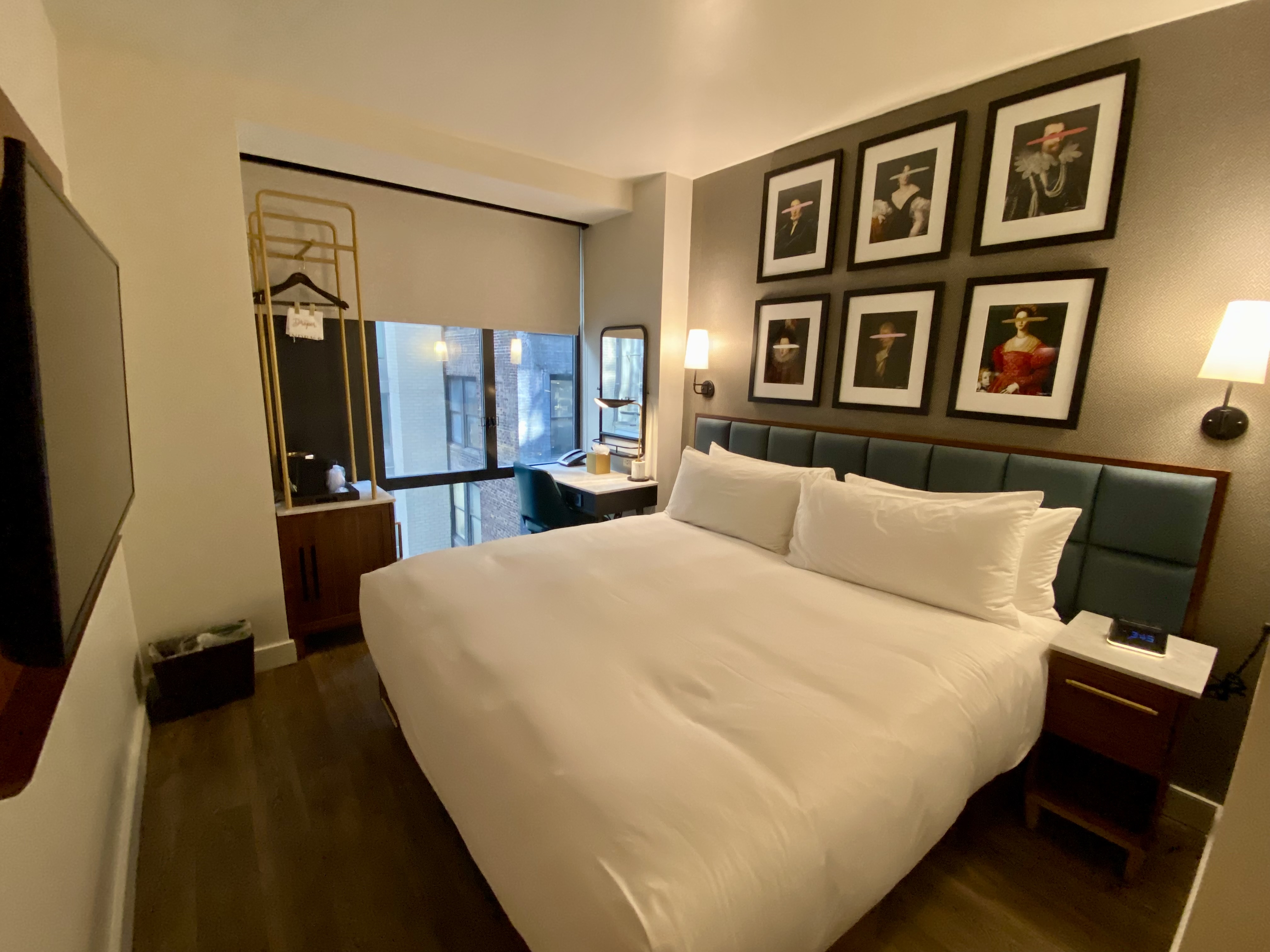
And that’s really what this comes down to.
These properties can absolutely be interesting, memorable places to stay. But they don’t always deliver the same experience you’d get at a traditional full-service brand, even if they appear in the same booking system and carry the same loyalty program branding.
Final Thought
For travelers, this trend can be both a benefit and a compromise.
It’s easier than ever to find unique hotels through major loyalty programs, and some of our favorite stays probably would have never been on our radar otherwise. But just because a hotel is part of Marriott, Hilton, Hyatt, or IHG doesn’t mean it will offer the kind of experience loyal guests may expect from that brand family.
That’s really the trade-off. These properties may be more interesting, but they may also offer fewer amenities and weaker elite benefits than a traditional full-service hotel.
So while hotel chains may be selling this as the best of both worlds, travelers often need to look past the brand name and decide which matters more for that trip: the hotel’s personality or the perks that come with loyalty.
Want to comment on this post? Great! Read this first to help ensure it gets approved.
Want to sponsor a post, write something for Your Mileage May Vary, or put ads on our site? Click here for more info.
Like this post? Please share it! We have plenty more just like it and would love it if you decided to hang around and sign up to get emailed notifications of when we post.
Whether you’ve read our articles before or this is the first time you’re stopping by, we’re really glad you’re here and hope you come back to visit again!
This post first appeared on Your Mileage May Vary

3 comments
Your headline reminded me exactly of my experience at the Draper. I will never stay at a Tapestry property again after staying there. Hotel looks good in photos, but just an awful hotel for me.
“or a design that feels less corporate and more intentional.”
As a traveler with mid-to-high status with all 4 major U.S. based hotel chains, I’m seeing all the new brand additions as earning less points, offering notably less earned elite benefits, or most often both. That degrades the experience for loyal customers, driving them away. Maybe I’m just being obtuse but I fail to see how bringing in a chain that will offer your best customers less is a prudent idea.
Personally I love the trend and am fine with tradeoffs on typical elite amenities. I’ve currently lifetime Titanium w Marriot, Hilton Diamond and Hyatt Globalist. I love the ability to book a boutique SLS hotel in Paris with Hilton, a Mr/Mrs Smith property in Porto or a Marriott Tapestry Collection hotel. I’m familiar enough with the brands to understand it isn’t your typical large hotel with multiple restaurants, a lounge or even suites (let alone any chance at an upgrade). However, the experience is truly unique and nice to have that option