Once you’ve been collecting credit cards long enough, one of them will eventually be discontinued.
The bank stops accepting new applications, the card disappears from the website, and suddenly you’re holding something new customers can’t get anymore.
That sounds more exciting than it usually is.
A discontinued credit card isn’t automatically valuable just because it’s no longer available. Sometimes it’s a hidden gem. Sometimes it’s a card that still has one or two benefits worth keeping. And sometimes it’s just an old piece of plastic sitting in a drawer because canceling it feels too final.
But once a card is no longer open to new applicants, the decision to cancel it takes on a different character. With most credit cards, if you cancel and later change your mind, you can always apply again. With a discontinued card, that door may be closed for good.
So how do you decide whether to keep one?
Why Credit Cards Get Discontinued
Credit cards disappear for several reasons.
Sometimes a bank refreshes a product and relaunches it with a new name, new benefits and, often, a higher annual fee. Other times, a card no longer fits where the bank wants its portfolio to go. And sometimes the reason is contractual, such as when a co-branding relationship ends, and the card simply can’t continue in its old form.
That’s what happened years ago when American Express lost the Costco card relationship, and when Citi’s Hilton agreement ended. We’re seeing a more recent version of this with the Barclays American AAdvantage cards, as Citi is becoming the exclusive issuer of AAdvantage co-branded credit cards in the U.S., and Barclays cardholders are being moved to Citi. In those situations, cardholders usually don’t get to keep the exact same product forever. They’re either moved to a different card from the old bank or to an equivalent product from the new issuer.
But there’s another category: cards that are discontinued for new applicants but continue to live on for existing cardholders.
Those are the ones that create the most interesting decisions.
Some Discontinued Cards People Still Talk About
There have been plenty of cards that fell into this category over the years.
The Ritz-Carlton Credit Card is probably one of the best current examples. You can’t apply for it directly anymore, but it’s still active for existing cardholders. It’s also one of those cards people still talk about because the benefits can be very strong for the right traveler, especially if they know how to use the annual travel credit, Priority Pass access and the annual free night certificate.
The Citi Prestige is another example. For years, it was one of the premier premium travel cards, with benefits that set it apart in a crowded field. Citi eventually stopped accepting applications, leaving existing cardholders with a product that new customers could no longer get.
Then there are cards like the American Express EveryDay and EveryDay Preferred. These were interesting because they provided a lower-cost way to earn and preserve Membership Rewards points. That made them useful for people who didn’t want to keep a higher-fee Amex charge card but still wanted access to the Membership Rewards ecosystem.
The Barclaycard Arrival Plus is another one longtime travel card people remember. Before every bank had a premium travel card and before transferable points became the default answer for everything, Arrival miles were an easy way to erase travel purchases. It was simple, useful and very much of its time.
And then there are cards like the Wells Fargo Propel American Express and the old Chase Fairmont Visa, which show the other side of discontinued cards. Sometimes a bank doesn’t just stop accepting new applications. Eventually, it moves existing cardholders to something else entirely.
That’s why I don’t look at a discontinued card and immediately assume it’s worth keeping. The better question is what it still does for you today.
Why A Discontinued Card Might Be Worth Keeping
The main reason to keep a discontinued card is simple: it may provide benefits you can’t get anymore, at least not in the same way.
Sometimes the old card has a lower annual fee than the replacement card. Sometimes it has a benefit the newer card doesn’t. Sometimes it stacks nicely with a newer version of the card. And sometimes it preserves something useful, like account age, a credit line, or access to a points program.
That doesn’t mean every discontinued card deserves a permanent place in your wallet. It just means the cancellation decision deserves a little more thought.
I have a few of these discontinued cards, or at least access to them through product changes. They’re not all cards I use every day. In some cases, they’re not cards I use much at all. But I still review them every year before deciding whether they stay, go or remain useful as a fallback option.
IHG Rewards Club Select

The IHG Rewards Club Select card is probably the best example from my own wallet.
For years, this was an easy keep. The annual fee was only $49, and the card came with an anniversary free night certificate valid at IHG properties, redeemable for up to 40,000 points per night. It also provided Platinum status and a 10% rebate on redeemed points.
That combination made the card a no-brainer for a long time. Even if I didn’t use it for everyday spending, one well-used free night could more than justify the annual fee.
The card became even more interesting once Chase launched the newer IHG Premier card. That card had a higher annual fee but added the fourth-night-free benefit on award stays. Since we had both cards, the benefits could stack. Book a four-night award stay, get the fourth night free from the newer card, and still receive the 10% rebate from the older Select card.
That’s the kind of discontinued-card benefit that’s hard to replicate.
But the card isn’t quite the slam dunk it used to be. IHG award pricing has changed, and the 40,000-point certificate can be harder to use than it once was. The newer IHG Premier certificate can be topped up with additional points, making it more flexible. The old Select certificate doesn’t work the same way.
So this card has moved from “keep forever without thinking” to “still probably worth keeping, but only because the annual fee is low and the 10% rebate can still provide value.”
That’s a very different calculation than it used to be.
American Express Marriott Bonvoy Card
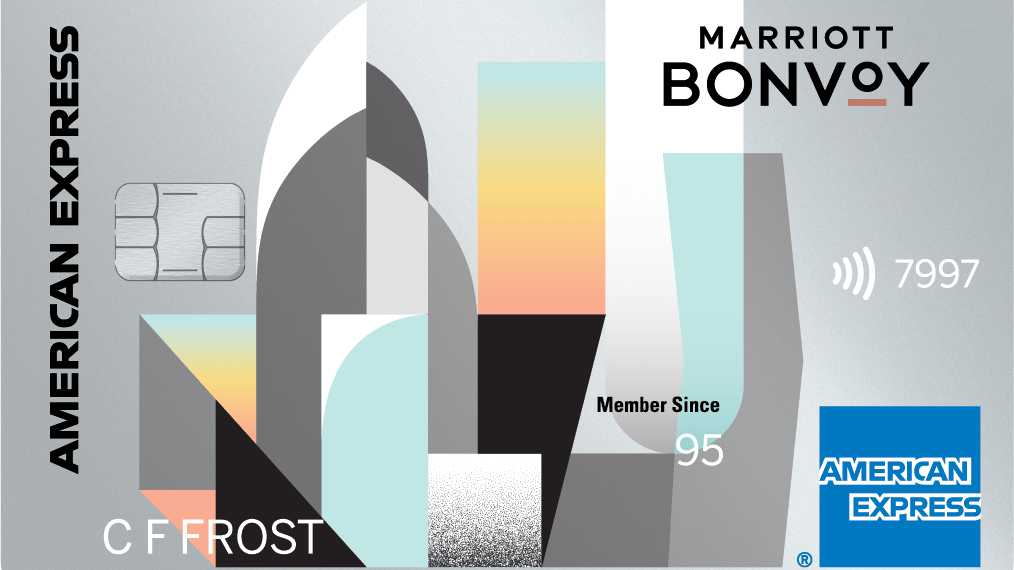
This card is what remains of the old SPG Amex, although it’s not currently the Marriott Amex card I have in my wallet.
I eventually upgraded this card to the Marriott Bonvoy Brilliant American Express Card. That card comes with a much higher annual fee, but it also has a richer set of benefits, including a more valuable annual free night certificate, statement credits and Marriott Platinum Elite status. For now, that card makes sense for us.
But that doesn’t mean I’ve forgotten about the old Marriott Bonvoy Amex.
One reason this discontinued card still matters is that it remains a possible downgrade option if I ever decide the Bonvoy Brilliant’s annual fee is no longer worth paying. That’s one of the overlooked benefits of having access to a legacy card. Even if it’s not the card you currently hold, it may still exist somewhere in the product-change family as a landing spot if the premium version no longer makes sense.
The card itself isn’t flashy. For the annual fee, it provides a free night certificate that can be used at Marriott Bonvoy properties costing up to 35,000 points. That certificate isn’t as powerful as it once was because Marriott’s award pricing has changed, and many properties that used to be easy 35K redemptions now cost more.
But it can still be useful.
A single-night stay at an airport hotel, a suburban property before an early drive, or a hotel where cash rates are inflated can still make the certificate worth more than the annual fee. It’s not exciting, but it doesn’t need to be. It just needs to be useful.
The card also provides 15 elite night credits toward Marriott Bonvoy status. That isn’t unique anymore, but it still matters if you’re trying to reach a certain elite level or stack elite nights from multiple eligible cards.
This is a good example of a discontinued card that may still have value even if it’s not the card you currently carry. Sometimes the value isn’t just in keeping the card forever. It’s in knowing that it remains a lower-cost option if the more expensive version no longer fits your travel plans.
American Express Optima Platinum Card
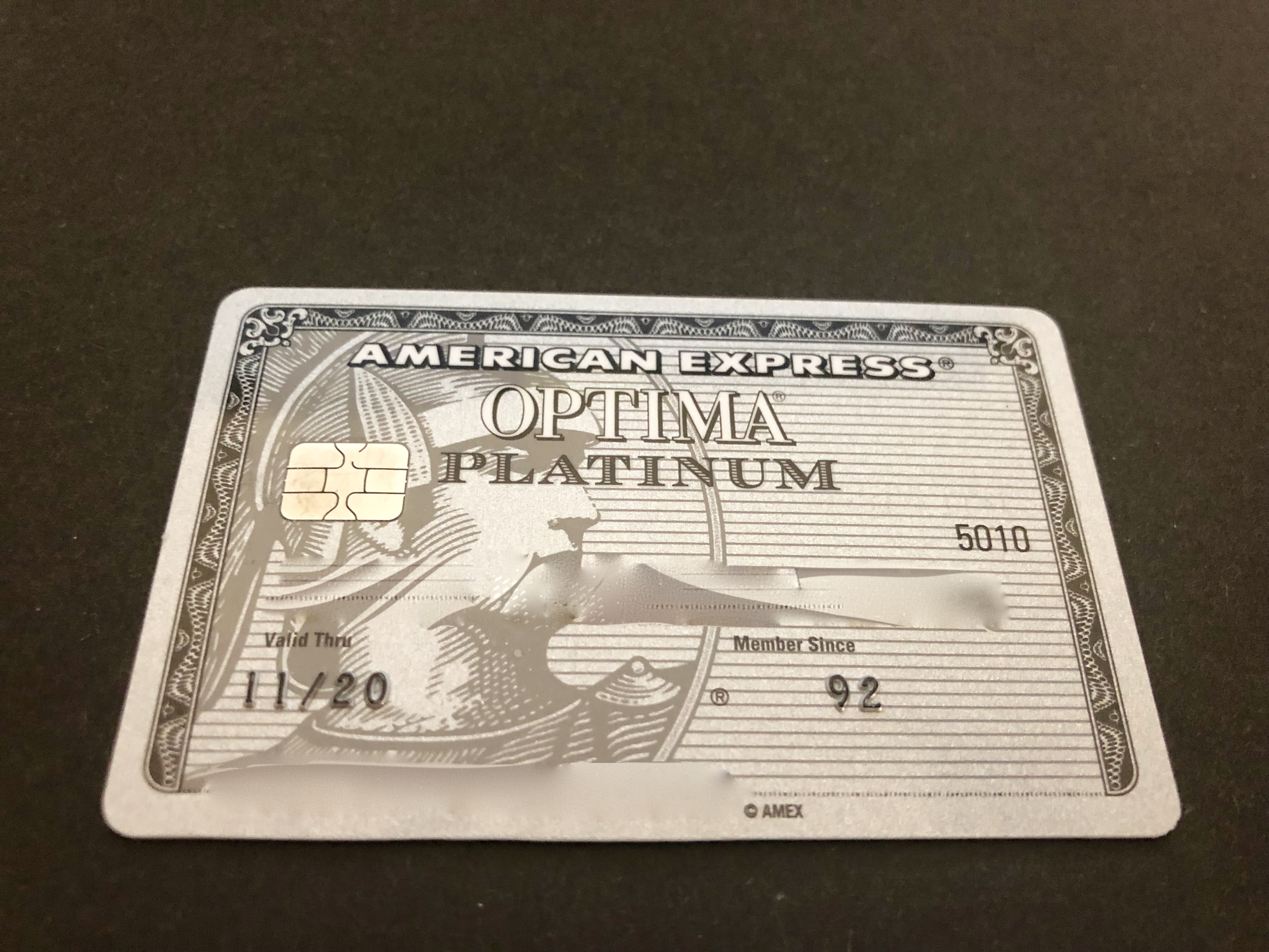
This card is different.
I’m not keeping the American Express Optima Platinum Card because it has incredible travel benefits. It doesn’t. It earns Membership Rewards points at 1 point per dollar, which isn’t exactly compelling in 2026.
But I’ve had this card for a very long time. It goes back to when American Express was still better known for charge cards, and the Optima card was one of its early moves into traditional credit cards.
For a while, it had some extra value because I could load Amex Offers to it. That was more useful before Amex cracked down on adding the same offer to multiple cards. These days, it occasionally receives targeted offers I don’t see elsewhere, but that’s not the main reason I keep it.
The bigger reasons are account history and flexibility. It helps preserve a long-standing account relationship, and it gives me a place to move credit lines if I decide to close another Amex credit card.
There’s also a sentimental factor. I know that’s not a points-and-miles strategy, but it’s real. Not every card decision is strictly mathematical.
Still, sentimental value only goes so far. If this card ever stopped serving any practical purpose, I’d have to rethink it.
When You Should Cancel A Discontinued Card
The fact that a card is discontinued should not scare you into keeping it forever.
If the annual fee is no longer justified, cancel it.
If the benefits have been watered down or made harder to use, cancel it.
If the card takes up a slot with a bank that limits how many cards you can have, cancel it.
If there’s a better product you can switch to, consider switching.
And if you’re only keeping it because “you can’t get it anymore,” that may not be enough.
That’s the trap with discontinued cards. Scarcity can make something feel more valuable than it really is. But a card being unavailable doesn’t automatically mean it’s useful.
The Ritz-Carlton card is a great example of a discontinued card that can still be extremely valuable for the right person. The old IHG Select card can still make sense because the annual fee is low and the 10% rebate can stack with other IHG benefits. But plenty of discontinued cards are just old products that have been surpassed by newer options.
Final Thought
Discontinued credit cards are one of those weird corners of the credit card world where the answer is almost always “it depends.”
Some are worth keeping because they still provide benefits that the replacement card doesn’t. Some are worth keeping because the annual fee is low enough that one well-used perk justifies the cost. Some are worth keeping because they preserve account history or access to a points program.
And some should be canceled.
The key is not to confuse “unavailable” with “valuable.” A card that’s no longer open to new applicants may be special, but it still needs to earn its place in your wallet, your drawer, or wherever you keep the cards you’re not quite ready to give up.
Like all of our other cards, I review these once a year. If the benefits still outweigh the cost, they stay. If not, rarity alone won’t save them.
Want to comment on this post? Great! Read this first to help ensure it gets approved.
Want to sponsor a post, write something for Your Mileage May Vary, or put ads on our site? Click here for more info..
Like this post? Please share it! We have plenty more just like it and would love it if you decided to hang around and sign up to get emailed notifications of when we post.
Whether you’ve read our articles before or this is the first time you’re stopping by, we’re really glad you’re here and hope you come back to visit again!
This post first appeared on Your Mileage May Vary