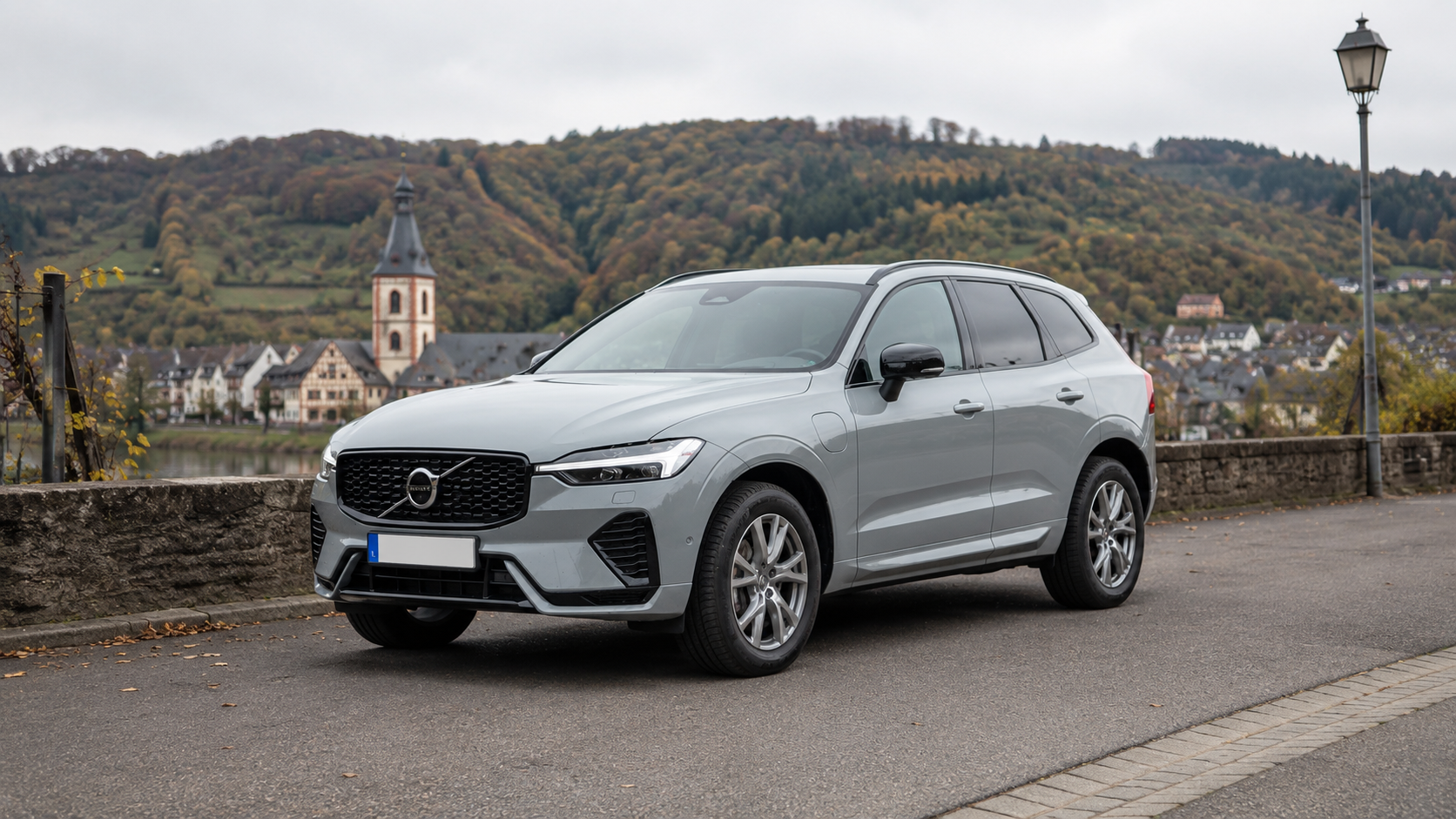
Before our trip, I had a pretty simple idea of what driving in Germany would be like: get on the Autobahn, watch for someone flying up behind me at 130 mph, and try not to panic.
That wasn’t exactly how it went.
We had rented a car for the part of our trip from Rothenburg to Freiburg, with side trips to places like Triberg and Baden-Baden. We’ll save the part where we drove into Switzerland and France for another post, because once you cross borders, the rules and tolls change enough to deserve their own discussion.
But for Germany itself, the experience was not what I expected. The Autobahn was fast, yes. But it wasn’t chaos. In fact, in some ways, it felt more orderly than driving in Florida.
The parts that made me the most nervous were the things I hadn’t thought about as much: traffic lights, roundabouts, narrow roads, old town parking garages and parking spaces that looked like they were designed for cars half the size of ours.
So here are the biggest misconceptions I had about driving in Germany.
Misconception #1: There’s No Speed Limit In Germany
This is the one everyone knows, or at least thinks they know.
Yes, there are sections of the Autobahn with no posted speed limit. But that does not mean all of Germany is one giant high-speed free-for-all.
Plenty of sections have posted speed limits. Some are permanent. Others are temporary or based on conditions. You may be driving along on an unrestricted section and then suddenly see the limit drop to 120, 100, 80 KPH or even lower because of construction, traffic, curves, weather or an approaching city.
That was one of the first things I had to get used to. It wasn’t just “drive fast.” It was “drive the correct speed for this stretch of road, and keep watching because the rule may change again in a few kilometers.”
The signs are clear, but you have to pay attention. Germany does not treat speed limits as casual suggestions. When the limit changes, it changes.
And when you see the white circular sign with black diagonal lines, that generally means the previous restriction has ended. On the Autobahn, that may mean you are back to the general Autobahn rules unless another limit is posted.
Misconception #2: No Speed Limit Means Everyone Drives Like Maniacs
This was probably my biggest surprise.
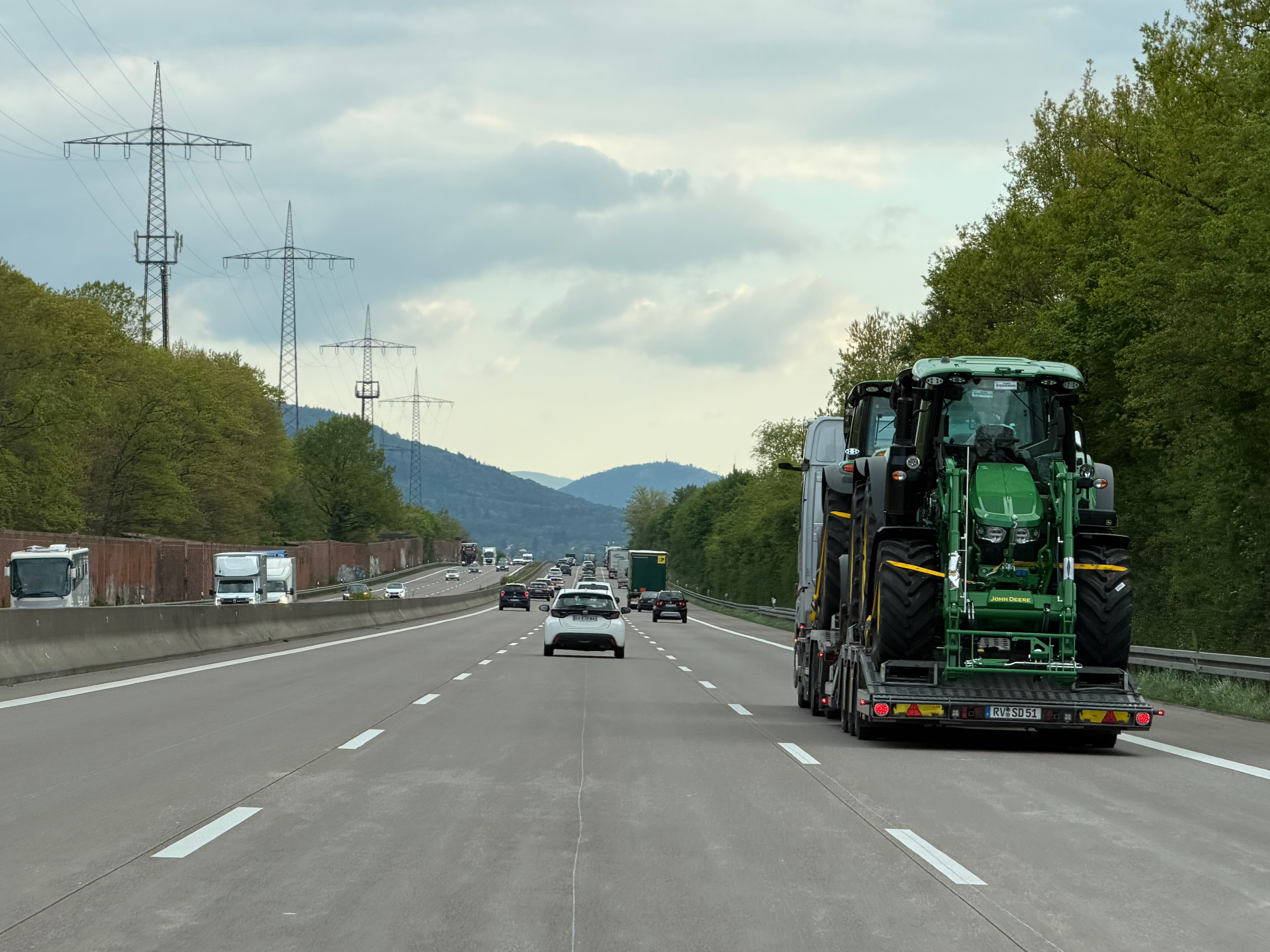
There are absolutely people driving very fast. If you’re in the left lane, someone will eventually appear behind you who wants to go faster than you do. That part is real.
But the reason it works is that people follow the rules.
Trucks stay right. Slower traffic stays right. Passing happens on the left. And once someone finishes passing, they generally move back over.
That makes a huge difference.
In the U.S., the left lane often becomes a place where people settle in and stay. In Germany, it felt much more like an actual passing lane. You use it when you need it, then get out of it.
That took some adjustment, because even when I thought I was driving plenty fast, there was usually someone behind me who disagreed.
Misconception #3: The Autobahn Is The Hard Part
Once I understood the rhythm, the Autobahn wasn’t scary at all. It required attention, but it also made sense. The lanes were well-marked, the signs were clear, and drivers were predictable. The more stressful parts were off the Autobahn.
Driving through smaller towns, following navigation through older streets, figuring out where the lane actually went, and trying to understand intersections while also watching for bikes, pedestrians and local traffic took more concentration.
The Autobahn gets the reputation, but the old town streets and parking garages were what had me gripping the steering wheel.
Misconception #4: Traffic Lights Work Exactly Like They Do At Home
Traffic lights were one of the trickier adjustments.
In the U.S., many traffic lights are positioned across the intersection. In Germany, they may be closer to the stop line. That means if you pull too far forward, you may no longer be able to see the light.
That sounds like a small thing until you’re the first car at the intersection and realize the signal is no longer in your line of sight.
The light sequence is also different. You may see red and yellow together before the light turns green, which is basically your warning to get ready. It makes sense once you know what it means, but the first time you see it, it can catch you off guard.
And then there’s turning right on red. In the U.S., that’s common in many places unless a sign says otherwise. In Germany, don’t assume you can do it. Unless there is a specific green arrow sign or signal allowing it, red means stop.
None of this was impossible. It just required me to stop driving on autopilot.
Misconception #5: Roundabouts Are A Nightmare
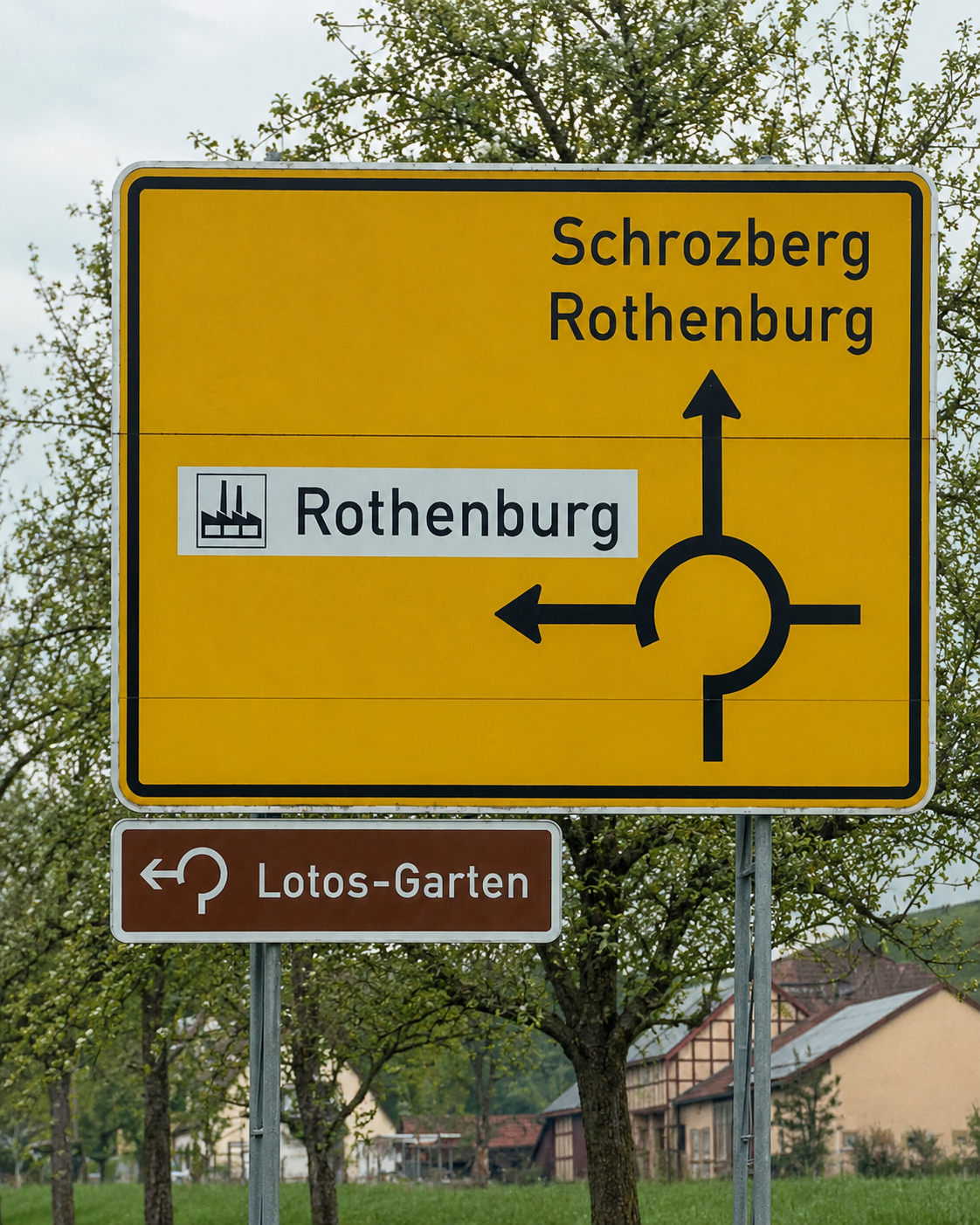
Germany has plenty of roundabouts, especially once you get away from the highways and start driving through smaller towns.
At first, they took more concentration than I expected. I’m used to traffic lights, stop signs and the occasional four-way stop where everyone sort of negotiates who goes next.
Roundabouts are different. But once you understand the flow, they’re not that bad.
What made them easier in Germany was that people knew the rules and followed them. Yield to traffic already in the circle. Enter when it’s clear. Use your turning signal when you’re ready to exit. Take your exit. Keep moving.
The confusing part was not the roundabout itself. It was getting comfortable with the idea that everyone else would follow the same system.
Once that clicked, they were much less intimidating.
Misconception #6: Parking Is Just Parking
This was the part that made me sweat the most.
Parking in Germany was not hard because of signs or payment machines, although those added their own learning curve. It was hard because so many spaces felt narrow.
Very narrow.
We were driving a car that would not be considered enormous in the U.S., but in some German parking lots and garages, it felt huge. The spaces were tight, the lanes were tight, and sometimes getting into the space was only half the challenge. Getting out of the car afterward was the other half.
This is where the rental car’s camera system became one of the most useful features of the trip. I never thought I’d say this, but a 360-degree or assisted parking view went from “nice technology” to “I really do not want to park without this.”
The Autobahn may have the reputation, but trying to squeeze into some of those parking spaces was way more stressful.
Misconception #7: Getting Gas Works The Same Way Everywhere
Fuel stops were another small adjustment.
In much of the U.S., especially for younger travelers, the routine is automatic: insert your card, get approval, pump your gas and leave.
In Germany, we found stations where the process felt more old-school: pump first, then go inside and pay.
For older Americans, that may not sound strange at all. That used to be common back home, too. But if you’ve only known the prepay or card-at-the-pump era, it feels oddly trusting. The system assumes you’re going to walk inside and pay for the fuel you just pumped.
It was not difficult. It was just one of those little moments where something familiar worked differently enough to make us pause and say, “Wait, are we doing this right?”
Autobahn rest stops, on the other hand, were more familiar than I expected. Many had gas, convenience stores, snacks, coffee and places to take a break, similar to what you’d find along major U.S. highways.
Most importantly, they usually had bathrooms.
Just remember to keep a euro coin handy, because pay toilets are still very much a thing.
Misconception #8: There Are Toll Roads Everywhere
After driving in other parts of Europe, I expected tolls to be part of the process.
In Germany, that was not the case for us.
There were no toll booths, no toll tickets and no vignette to buy for driving on the Autobahn in a regular passenger car. That was a pleasant surprise, especially compared to countries where you need to think about toll roads, toll stickers or rental car transponders.
That said, this is one of the reasons I’m separating out the Switzerland and France portion of the trip. Once you cross a border, don’t assume the same rules apply.
Final Thought
Driving in Germany was not as crazy as I expected.
The Autobahn was fast, but it was also orderly. Drivers followed the rules, lane discipline mattered, and the road signs made sense once I got used to watching for them.
The harder parts were the everyday things: traffic lights that worked a little differently, roundabouts that required trust in the system, fuel stops that felt old-school, and parking spaces that seemed designed to test both the car’s sensors and my patience.
So no, the Autobahn was not the scariest part of driving in Germany.
Want to comment on this post? Great! Read this first to help ensure it gets approved.
Want to sponsor a post, write something for Your Mileage May Vary or put ads on our site? Click here for more info.
Like this post? Please share it! We have plenty more just like it and would love it if you decided to hang around and sign up to get emailed notifications of when we post.
Whether you’ve read our articles before or this is the first time you’re stopping by, we’re really glad you’re here and hope you come back to visit again!
This post first appeared on Your Mileage May Vary