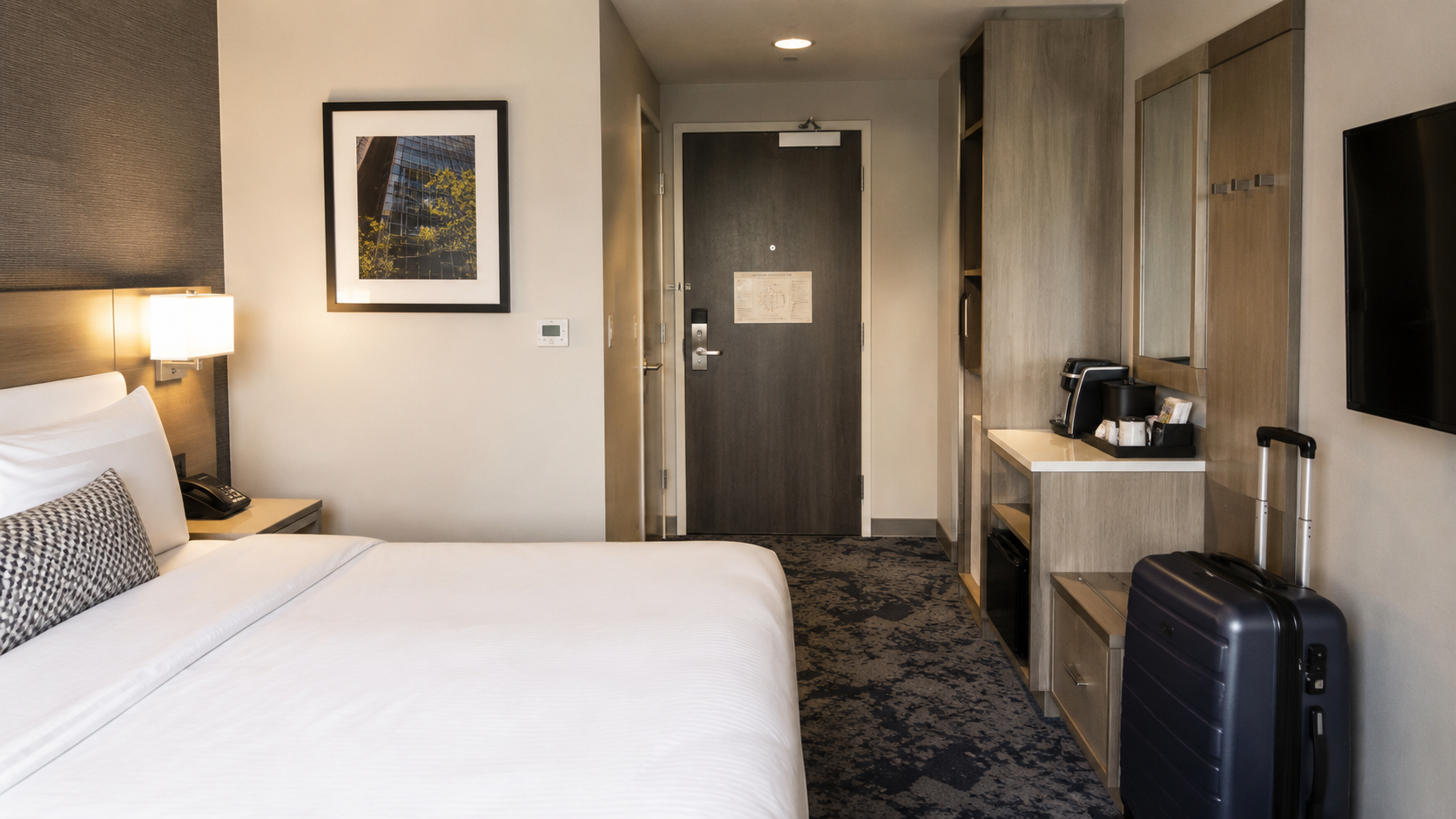
Whenever a front desk agent tells me we’ve been upgraded, I smile, say thank you and head to the room.
Then, almost as soon as the door closes, I turn around and check whether they were telling the truth.
I’m not pulling up the hotel website or comparing room categories in the app. I’m looking at the fire escape map on the back of the door.
Because that map knows exactly how much of an upgrade we received.
The Hotel Map Tells All
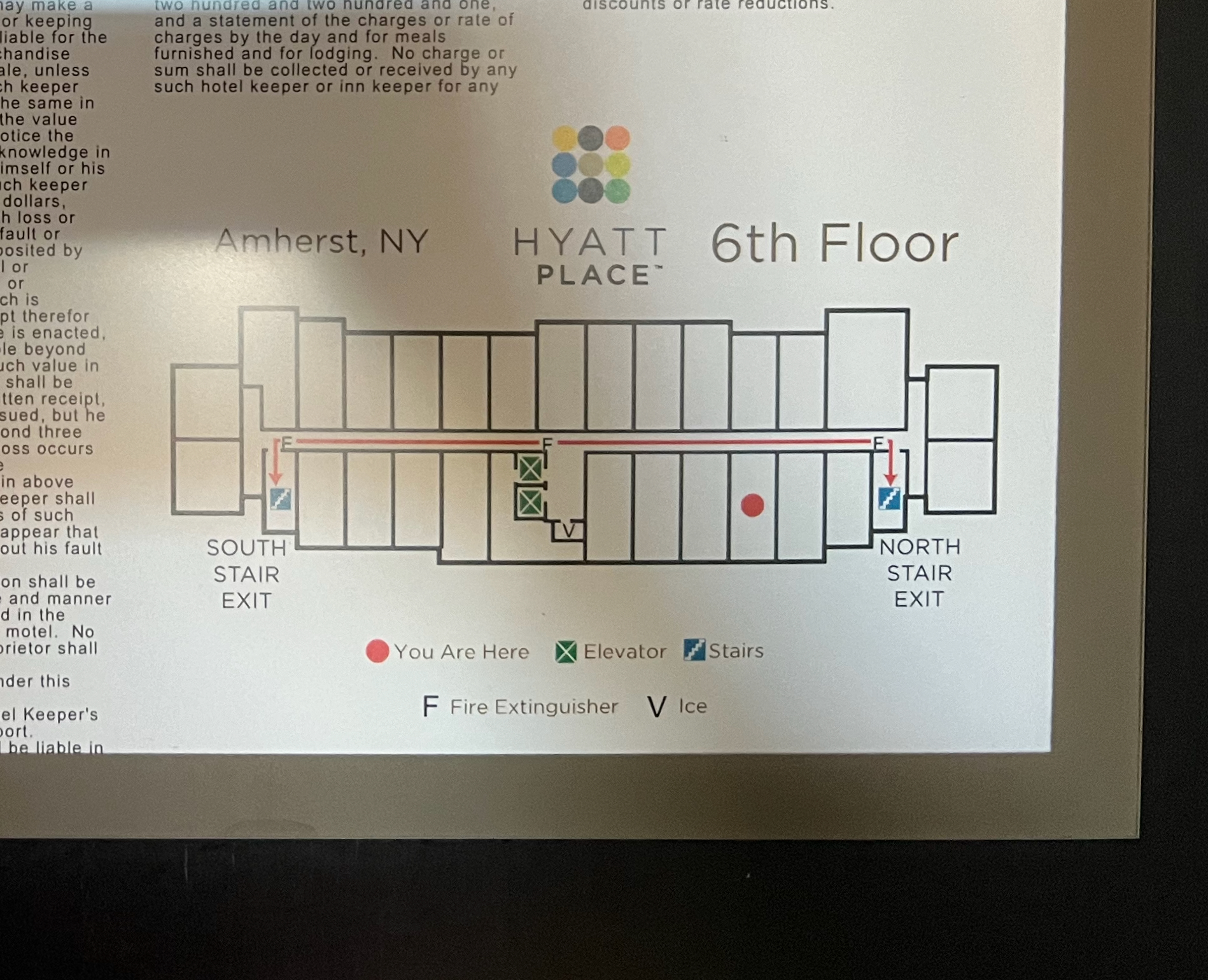
The fire escape map is supposed to help you find the stairs during an emergency. But it also provides something hotels probably didn’t intend: a floor plan showing the size and shape of nearly every room around you.
That makes it surprisingly easy to see where your room fits into the hotel’s pecking order.
Is your room noticeably larger than most of the others? Did you get one of the odd-shaped corner rooms? Or are all the rooms exactly the same size, meaning your “upgrade” may have been little more than a higher floor and a more enthusiastic welcome?
I’ve developed a habit of checking these maps wherever we stay. Not because I’m determined to catch a hotel doing something wrong, but because I’m curious.
When someone tells me we’ve been moved to a larger room, I want to know how much larger we’re talking about.

Sometimes, An Upgrade Is Only A Few Feet
At limited-service hotels such as Hyatt Place or Hampton Inn, the maps are usually fairly predictable. Most of the rooms look identical, with only a few slightly larger ones at the ends of the hallway or near an architectural corner.
At those hotels, an upgrade probably isn’t going to mean a separate bedroom, a dining table or a bathroom large enough to get lost in.
It might mean your room is a few feet deeper than the one next door.
That may not sound impressive, but a small difference can matter when you have two suitcases open, backpacks on the floor and nowhere convenient to put anything.
We’ve also stayed at hotels where the rooms on one side of the hallway were slightly wider than those on the other. You probably wouldn’t notice the difference when booking, but you might notice it once you’re trying to walk between the bed and the desk.
So when the hotel says you received a larger room, they may technically be correct.
They just might be using a very generous definition of “larger.”
Older And Quirkier Hotels Are More Interesting
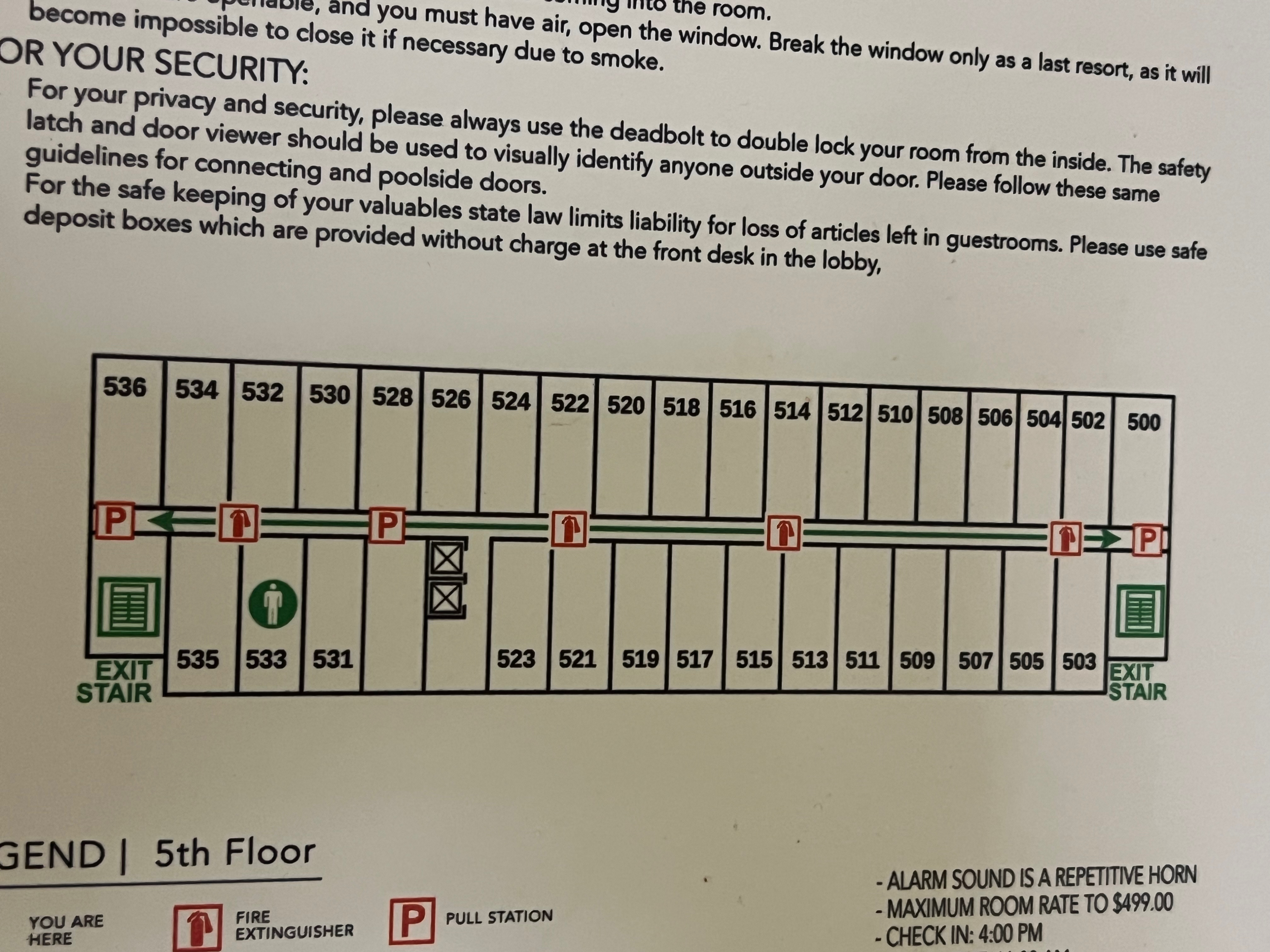
The maps become much more revealing at hotels where every room wasn’t designed from the same template.
That was certainly the case at the Moxy Times Square in New York.
We were initially assigned a room across from the elevator, which was arguably the smallest hotel room we’ve ever had, at least in the United States.
After we moved, the replacement room was slightly larger. That wasn’t difficult, considering how little space we started with.
But the fire escape map showed the full story. There were rooms on the same floor that were significantly larger than either of the ones we had been assigned. Moxy was apparently saving those for guests willing to pay its version of luxury pricing.
Of course, sometimes the map confirms that you really did get lucky.
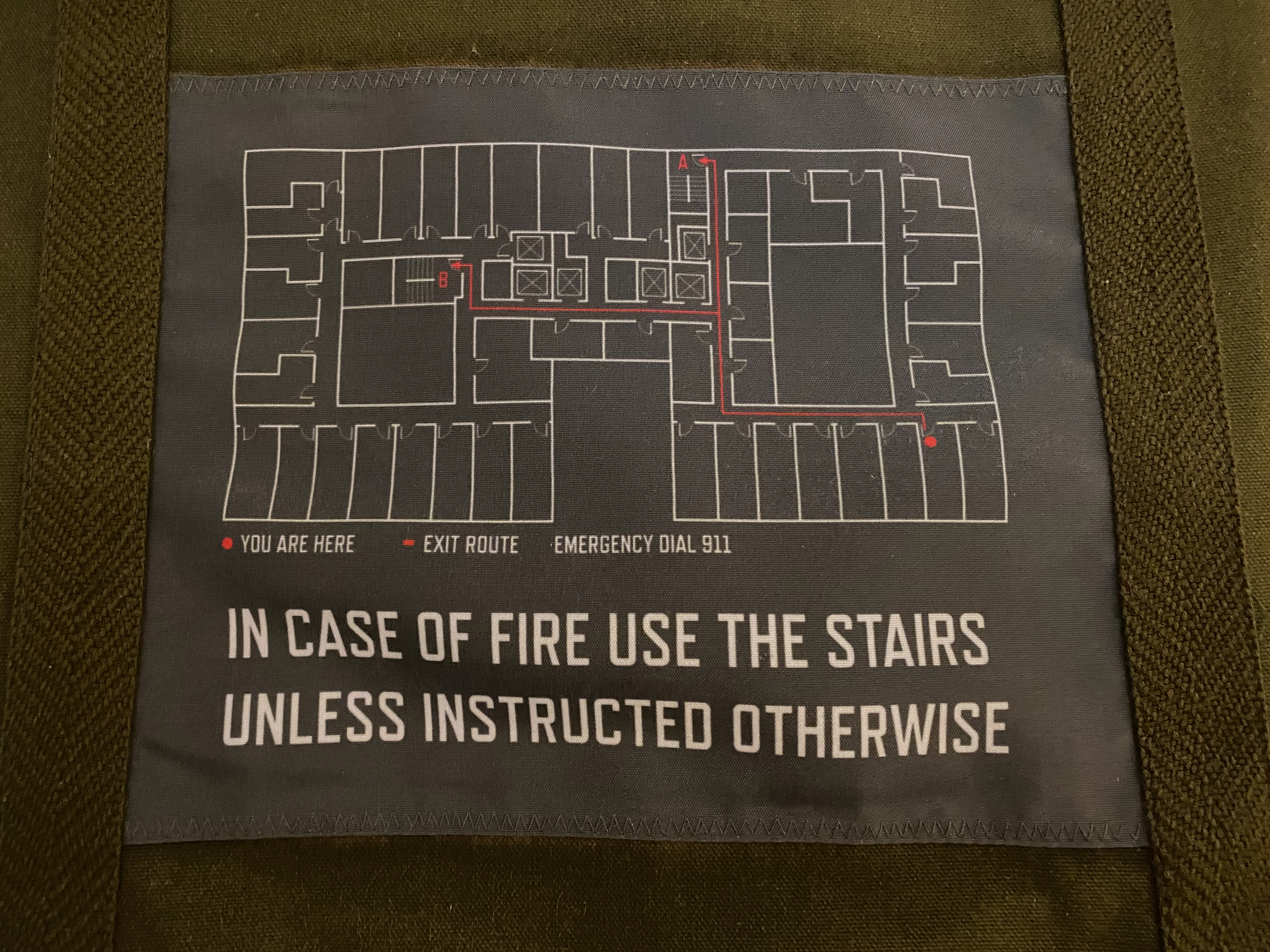
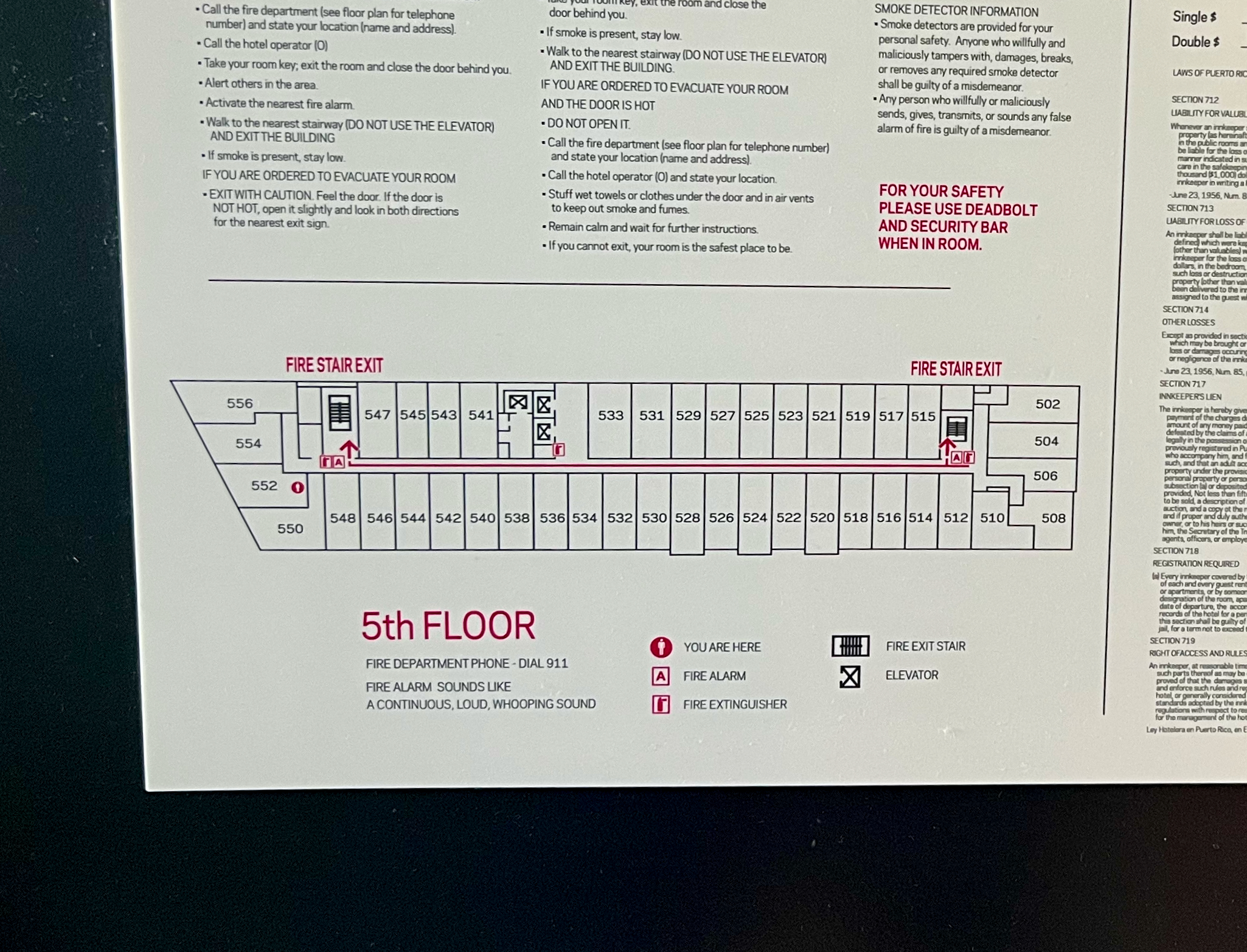
At the Aloft San Juan, our room was tucked into the end of the hallway and had an angled exterior wall. The layout was unconventional, but that odd shape gave us much more room than we expected.
It wasn’t a suite. There wasn’t a separate living area or a fancy dining room.
But we could open our luggage without creating an obstacle course, which already made it feel luxurious.
The map confirmed that our room really was one of the larger layouts on the floor. Fittingly, it was also the only time during all our years as Marriott Bonvoy Platinum members that we received what felt like a meaningful room upgrade.
Sometimes The Best Room Is Obvious
You don’t need a huge hotel for the differences to stand out.
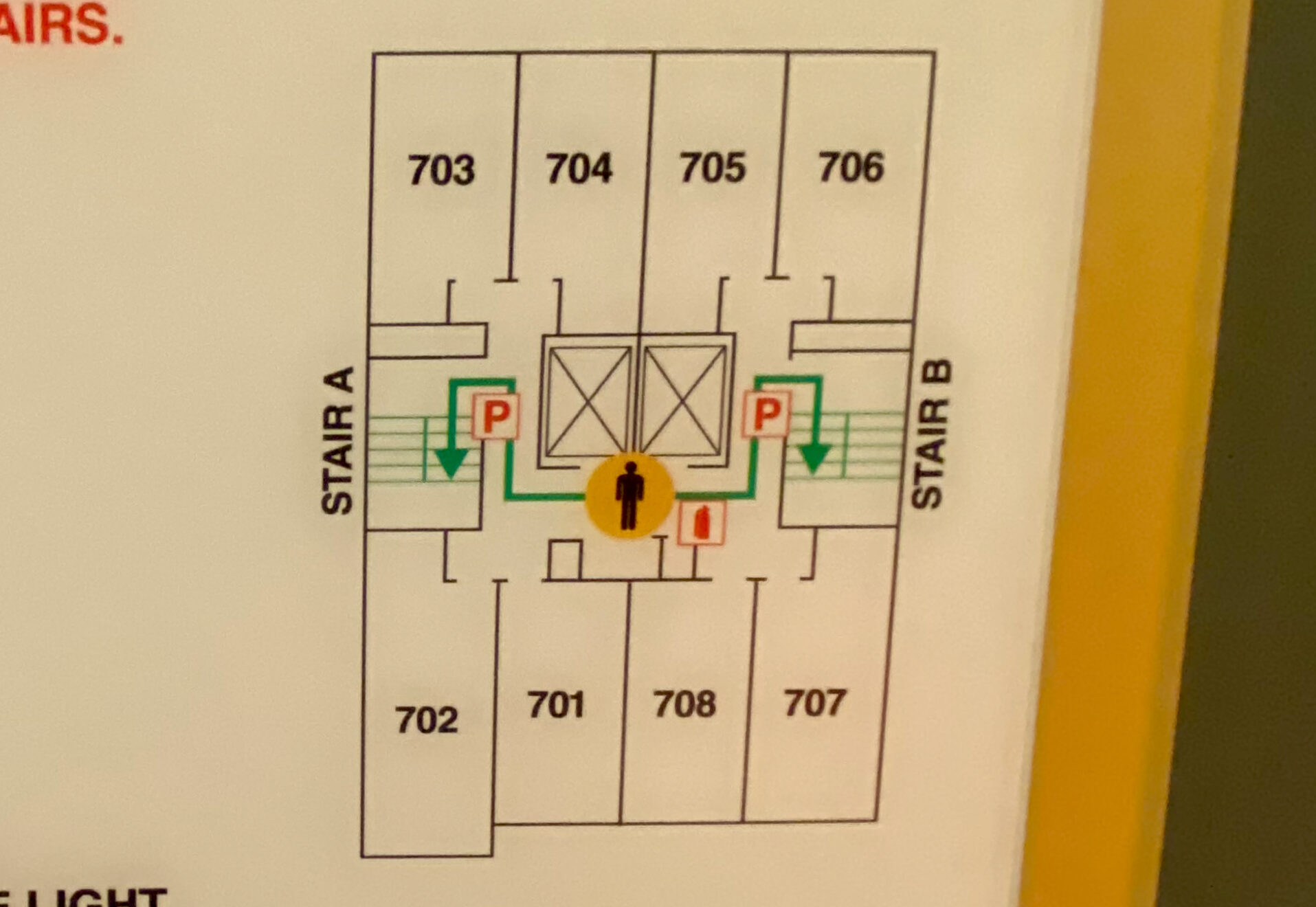
At the Hotel Draper in New York, there were only a handful of rooms on each floor.
One glance at the map showed that one of those rooms was considerably larger than all the others.
It was not difficult to identify the best room on the floor.
It also wasn’t ours.
Then there are hotels where the floor plan looks like someone kept adding new sections whenever they ran out of space.
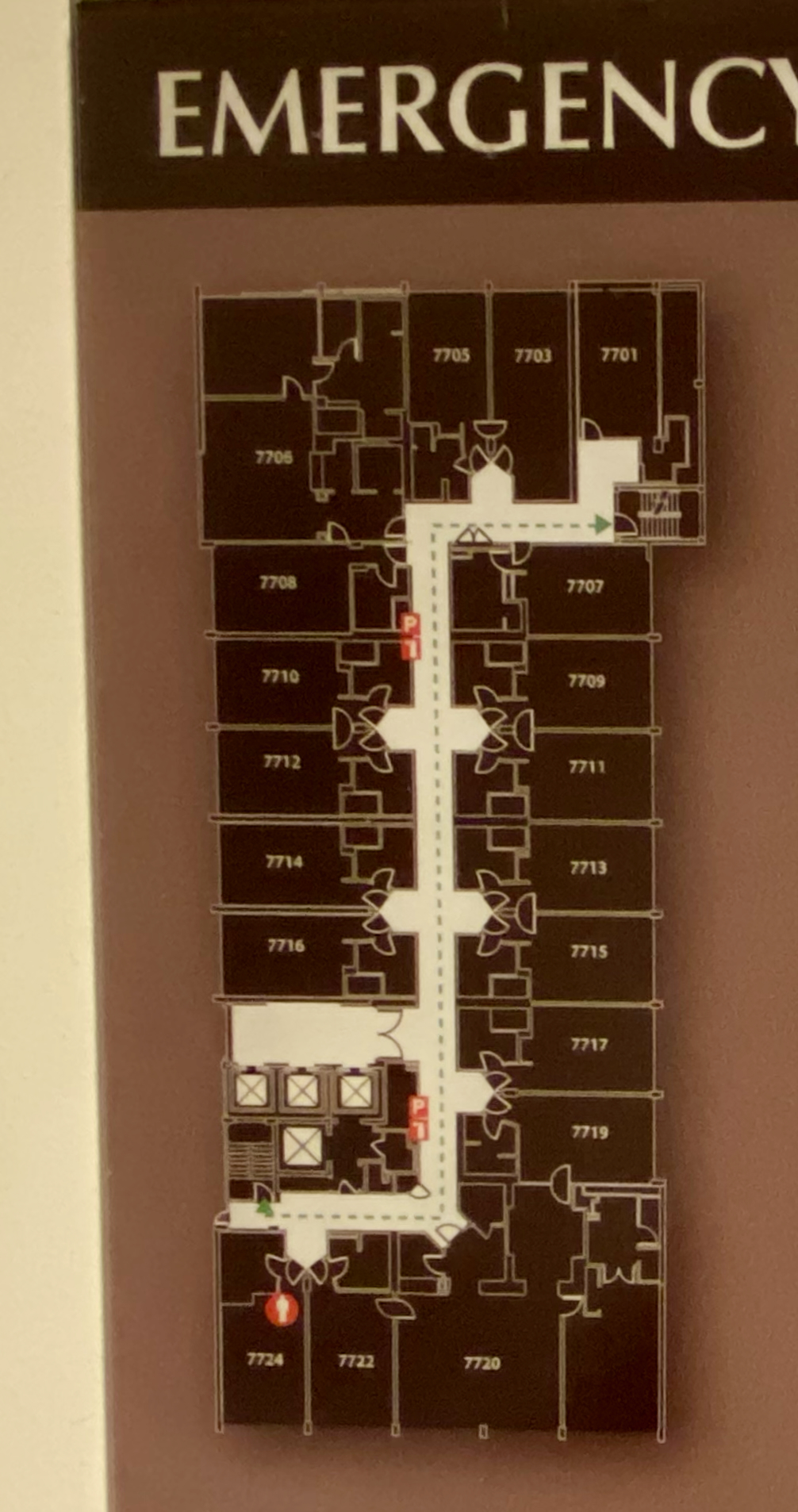
Caesars Palace in Las Vegas is a perfect example. The resort has multiple towers, countless room categories and everything from standard hotel rooms to massive suites with Roman bathtubs, grand pianos and enough furniture to fill a small house.
During our stay at Nobu Hotel, tucked inside Caesars Palace, we booked a standard room.
The room was comfortable and more than adequate for one person on a short trip. But the emergency map made it clear that it was still one of the smaller layouts on the floor.
Even at a luxury hotel, the map remains brutally honest.
Now I Always Check
I’m not expecting every status upgrade to put us into a suite. Depending on the hotel, getting a room that’s slightly larger, quieter or farther from the elevator may be the best upgrade available.
But I still like knowing what we actually received.
So the next time a front desk agent announces that you’ve been upgraded, accept the good news and head upstairs.
Then close the door, turn around and check the map.
The front desk may be trying to make you feel special. The fire escape map will show you just how special your room really is.
Want to comment on this post? Great! Read this first to help ensure it gets approved.
Want to sponsor a post, write something for Your Mileage May Vary, or put ads on our site? Click here for more info.
Like this post? Please share it! We have plenty more just like it and would love it if you decided to hang around and sign up to get emailed notifications of when we post.
Whether you’ve read our articles before or this is the first time you’re stopping by, we’re really glad you’re here and hope you come back to visit again!
This post first appeared on Your Mileage May Vary