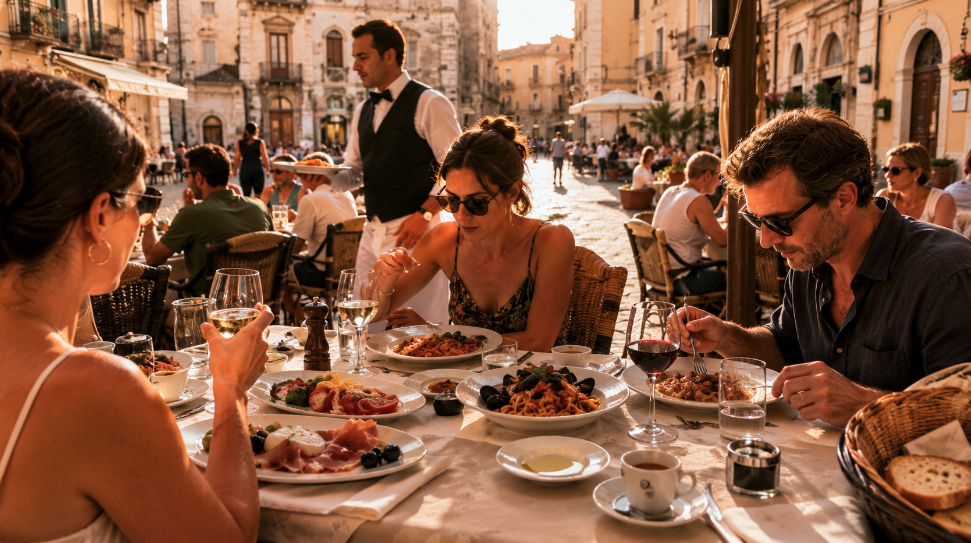
One of the best parts of traveling is experiencing another country’s food culture.
The problem is that what many Americans think of as “Italian food” often isn’t what you’ll find in Italy at all. Italian-American restaurants have evolved over generations into their own cuisine, with different dishes, different serving styles and even different dining etiquette.
So if you’re heading to Rome, Naples, Sicily or just about anywhere else in Italy, here are a few restaurant customs worth knowing before you sit down to eat.
Don’t Expect The Menu To Be Like Olive Garden
Despite what you might see on the menu at Romano’s Macaroni Grill, The Old Spaghetti Factory or Carrabba’s, you can’t actually order chicken Parmesan and spaghetti in Italy and expect the server to even know what you’re talking about—as this Boston man, on vacation in Italy, quickly found out.
@gabbydonahuee @Olive Garden ‘s biggest fan 😭😭😭😭 #italy #cultureshock #chickenparm #olivegarden
But it’s not just knowing the difference between Italian-American and “real” Italian food…
Don’t Mix Up The Courses
In the U.S., with few exceptions, most restaurants offer an appetizer, a main course and dessert.
That’s not how they do it in Italy.
Expect to be offered, in order:
- Antipasto (the starter course)
- Primo (a pasta course. Pasta is not the main course in Italy)
- Secondo e contorni (the meat or seafood course, along with seasonal vegetable side dishes. If you want a salad, that will be the vegetable side dish)
- Dolce (something sweet—their version of dessert)
- Caffè e amaro (coffee and a digestif)
You’ll be given grace if you choose to skip a course. But don’t ask for certain foods to come out in a different order or to “bring it all out at the same time.” The order of the food is purposeful—it allows the flavors to build from lightest to richest and ends intentionally with a digestion-boosting caffeine or alcohol shot.
Don’t Ask For Substitutions
In the U.S., it’s easy to ask for this instead of that, and the server won’t bat an eyelash. In other countries? Not so much. And definitely not in Italy.
It’s one thing if you have an allergy or certain dietary requirements. But asking for something like penne pasta instead of linguine just isn’t done. In Italy, chefs carefully pair ingredients for a reason, so asking to swap one pasta shape for another or making other unnecessary substitutions can come across as disrespectful.
Parmesan Doesn’t Go On Seafood
In Italy, seafood is one category of food, and cheese is another. And with rare exceptions, the two shall not be in the same dish. So asking for Parmesan on your scialatiello allo scoglio (Italian seafood pasta) would just not be done. Don’t do it!
Time Expectations
In the U.S., restaurants generally expect you to eat and get out. That’s not the case in Italy, where eating a meal in an Italian restaurant is more of a social ritual. Don’t be surprised if dinner can take three, four or even more hours.
And About That Cappuccino…
Plenty of Americans enjoy a coffee with their dessert after dinner. Not in Italy. Cappuccino is predominantly a breakfast drink, and because it’s so creamy, it’s deemed appropriate to be enjoyed with something such as a pastry.
If you want a coffee drink after breakfast, look at an espresso or macchiato. But definitely not a cappuccino.
Will someone refuse to serve you one after dinner? Probably not. But you’ll definitely stand out as a tourist.
The good news?
Italians generally understand that visitors won’t know every local custom. You’re not expected to eat like you’ve lived in Rome your entire life.
But making even a small effort to understand how meals are traditionally served—and respecting those traditions while you’re there—goes a long way.
And who knows?
You might even discover that slowing down, lingering over dinner and letting the meal unfold one course at a time is one of the best souvenirs you bring home from Italy.
Want to comment on this post? Great! Read this first to help ensure it gets approved.
Want to sponsor a post, write something for Your Mileage May Vary, or put ads on our site? Click here for more info.
Like this post? Please share it! We have plenty more just like it and would love it if you decided to hang around and sign up to get emailed notifications of when we post.
Whether you’ve read our articles before or this is the first time you’re stopping by, we’re really glad you’re here and hope you come back to visit again!
This post first appeared on Your Mileage May Vary