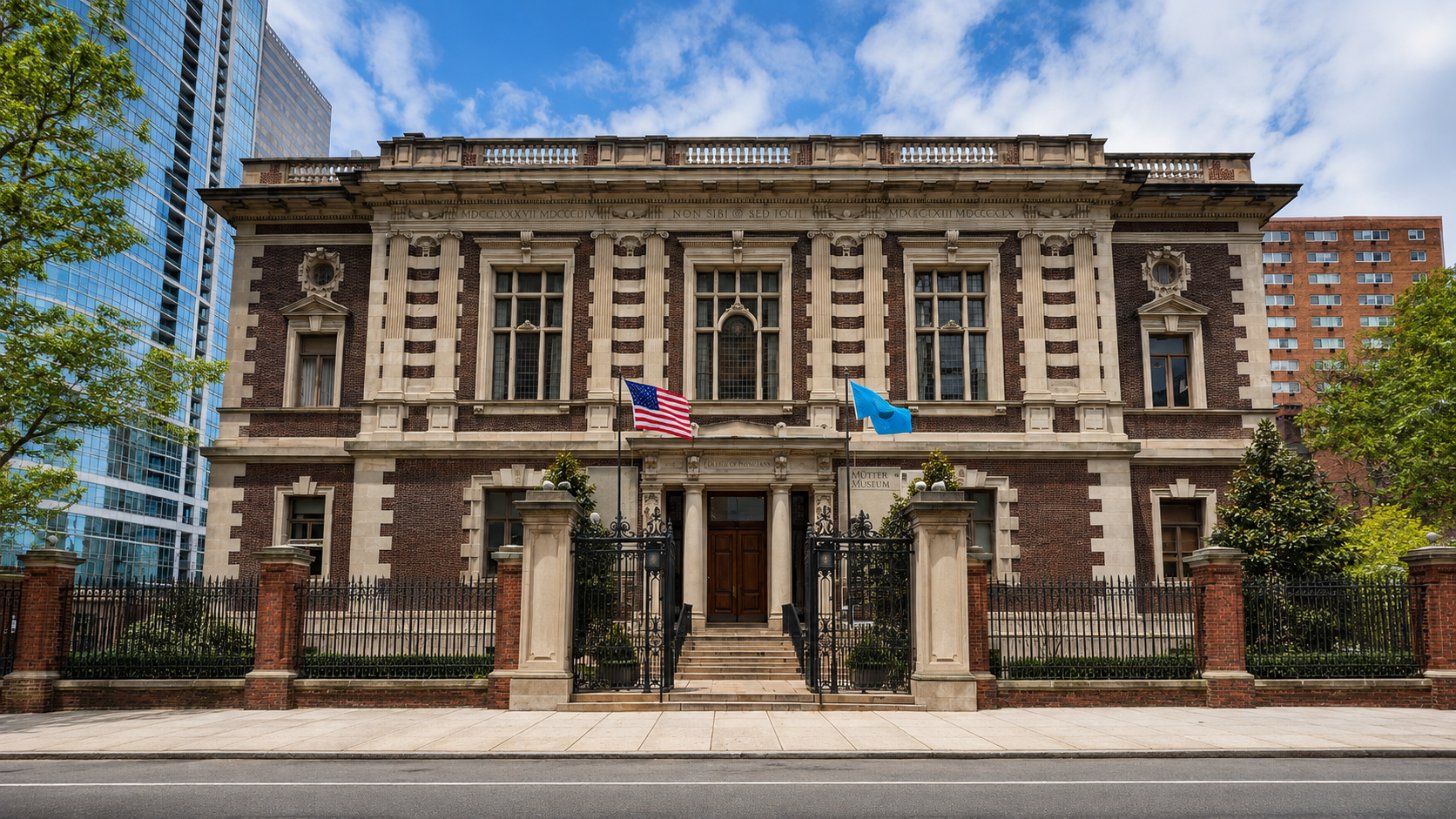
When most people plan a day in Philadelphia, they probably start with Independence Hall, the Liberty Bell or a cheesesteak.
We started with a museum filled with preserved organs, unusual skeletons, medical instruments and things doctors have removed from people’s bodies.
That probably says something about the way we travel.
We tend to seek out places that are a little off-center. While we’ll visit the major attractions, some of our most memorable experiences have come from museums and historic sites that aren’t on everyone’s checklist.
That’s how the Mütter Museum became the main reason we took the train from New York City to Philadelphia for the day.
Sure, we also visited Independence Hall and stopped at Reading Terminal Market for a sandwich. But the Mütter Museum was actually the reason the trip happened in the first place.
This Isn’t Your Typical Medical Museum
The Mütter Museum is part of The College of Physicians of Philadelphia, the oldest private medical society in the United States.
Its collection began with a donation from surgeon Dr. Thomas Dent Mütter in 1859. His goal wasn’t to create a collection of oddities for people to stare at. The specimens, models and medical instruments were intended to help physicians understand the human body and improve medical education.
That distinction matters because it shapes how you experience the museum.
Yes, some of the displays are unsettling. Others are simply strange. But the museum isn’t presented like a carnival sideshow. It’s a museum about medical history, the human body and what doctors learned from people who lived with diseases and physical conditions that weren’t always understood at the time.
Some Displays Were Fascinating. Others Were Hard To Look At.
The museum has the feel of an old-fashioned medical collection, with wooden cabinets filled with specimens, bones and models. You move from one display to another, never quite knowing what you’ll encounter next.
Some displays were fascinating from a historical perspective.
One of the museum’s best-known exhibits features Chang and Eng Bunker, the conjoined brothers whose fame gave rise to the term “Siamese twins.” The museum displays a plaster death cast of their torsos, along with their conjoined livers.
After the brothers died in 1874, physicians from The College of Physicians performed their autopsy. Seeing the cast and learning how their bodies were connected made their story feel far more real than simply reading about them in a history book.
Then there was the Chevalier Jackson collection, which falls into the category of strange rather than disturbing.
Dr. Jackson developed techniques for removing objects people had swallowed or inhaled. Over his lengthy medical career, he accumulated more than 2,000 retrieved objects, including coins, buttons, pins, small toys and other things that presumably weren’t supposed to end up inside a person.
It’s the sort of display that makes you wonder how some of those objects got there, and how relieved the patients must have been when Dr. Jackson removed them.
Other exhibits weren’t as easy to view. The museum contains preserved organs, skeletons showing the effects of serious medical conditions and specimens from people who lived and died with diseases that modern medicine can now treat or better understand.
Some displays invited close inspection and careful reading. There were others where a quick glance was enough.
Why We Have So Few Pictures
Photography wasn’t permitted inside the main museum galleries when we visited. Considering the sensitive nature of the collection and the fact that many displays contain human remains, that policy made sense.
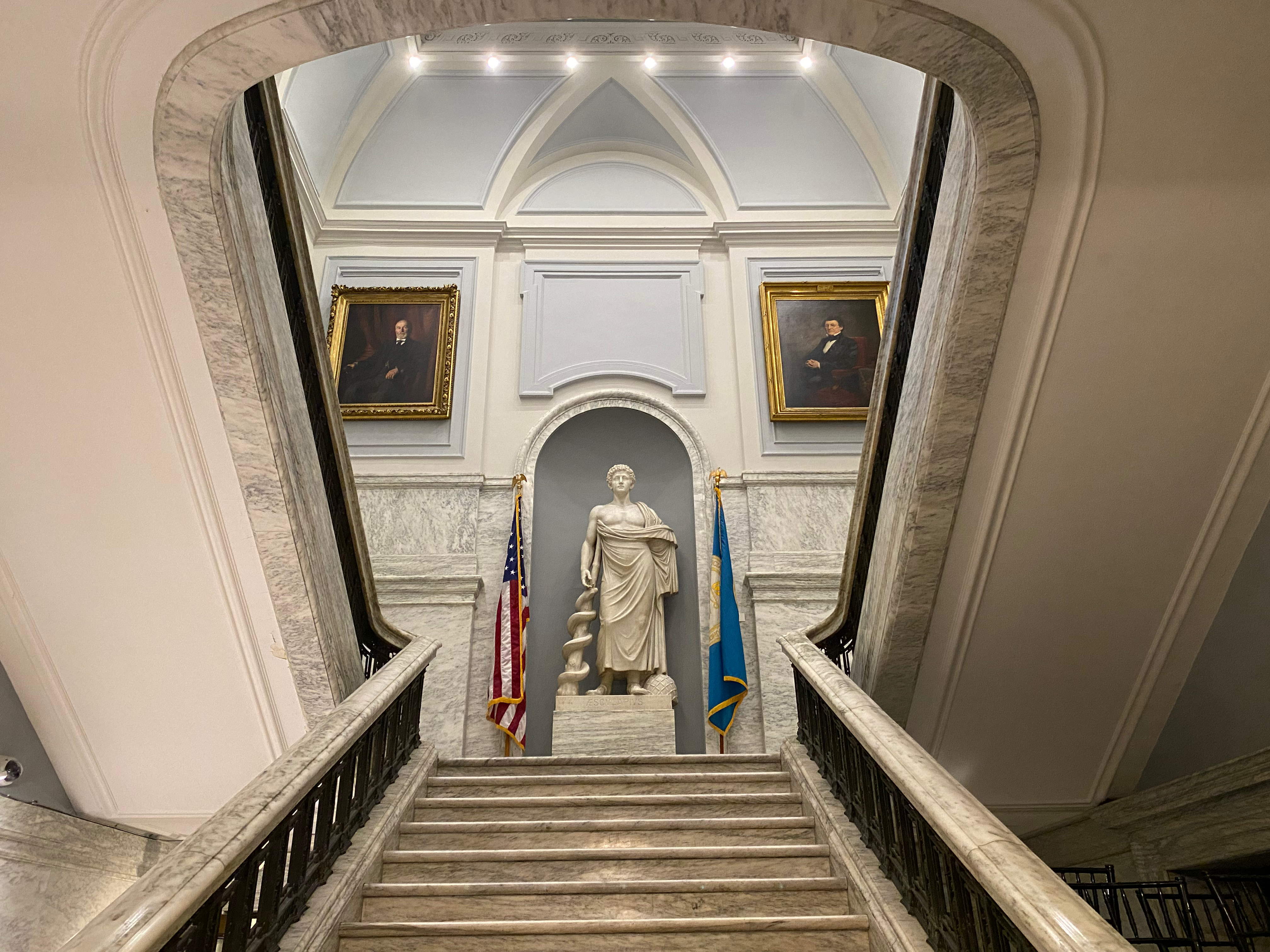
Photography was allowed in parts of the building outside the primary galleries, including the lobby and the area containing an iron lung. That at least gave us a few pictures from our visit without photographing the most sensitive parts of the collection.
The building itself is worth noticing. The College of Physicians occupies an impressive Beaux-Arts building designated a National Historic Landmark. Its marble staircase, formal rooms and dark woodwork provide an appropriate setting for a museum devoted to centuries of medical history.
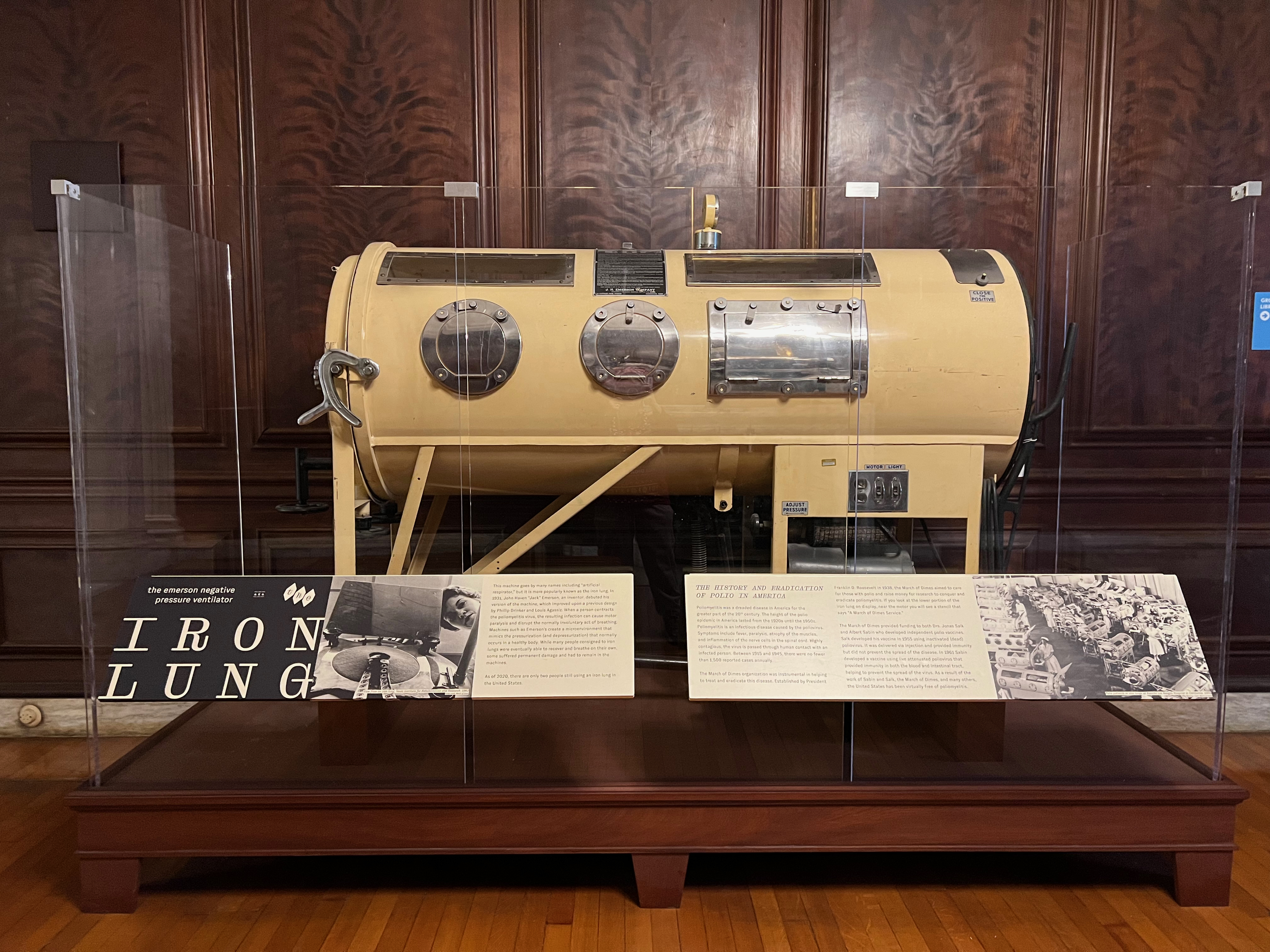
The iron lung was particularly interesting because it showed how dramatically medical treatment has changed within a relatively short period. Before vaccines made polio rare in the United States, some patients depended on machines like this to breathe.
It’s one thing to see an iron lung in an old photograph. Standing next to one and imagining someone spending weeks, months, or even years inside it is something else entirely.
The Debate Over The Mütter Museum
In recent years, the Mütter Museum has faced difficult questions about its collection and how it should display human remains.
In 2023, museum leadership removed its online exhibits and many of its videos while beginning an ethical review of the collection. That decision led to considerable controversy. Supporters worried that the museum would lose the unusual character that made it valuable, while museum leadership argued that it needed to examine how the remains had been acquired and whether displaying them met modern ethical standards.
Those aren’t unreasonable questions. Many of the museum’s specimens were collected between the mid-1800s and mid-1900s, when ideas about consent were very different from today. Some people represented in the collection may never have agreed to have parts of their bodies preserved and displayed.
The museum has since adopted new policies governing how it acquires, studies, photographs and displays human remains. It has also been working to identify the people behind the specimens whenever records make that possible.
However, I don’t think the answer is to assume visitors go to the Mütter Museum simply to gawk at something grotesque.
That wasn’t the atmosphere we encountered.
The people walking through the galleries were reading the descriptions and learning about the medical conditions represented by the displays. Some exhibits may attract visitors because they’re unusual, but the museum provides the historical and medical context needed to make them more than curiosities.
The collection can be uncomfortable while still having value. In fact, some of that discomfort is what makes the museum effective. It reminds you that these specimens came from real people, and that many endured illnesses or conditions doctors were only beginning to understand.
Was It Worth The Trip?
The Mütter Museum won’t appeal to everyone. If preserved organs, bones and examples of serious diseases make you uncomfortable, this probably isn’t where you want to spend an afternoon in Philadelphia.
We knew what we were getting into, and it was exactly the sort of place we wanted to visit. Yeah, we like “quirky.”
It’s strange, unsettling, historically fascinating and unlike almost any other museum we’ve visited. More importantly, it shows how much medicine has changed while reminding visitors that every medical discovery began with a real person.
For us, that easily qualified it as a destination worth taking the train from New York to see.
The sandwich at Reading Terminal Market and our visit to Independence Hall were nice additions.
But the Mütter Museum was the reason we went to Philadelphia that day.
Want to comment on this post? Great! Read this first to help ensure it gets approved.
Want to sponsor a post, write something for Your Mileage May Vary, or put ads on our site? Click here for more info.
Like this post? Please share it! We have plenty more just like it and would love it if you decided to hang around and sign up to get emailed notifications of when we post.
Whether you’ve read our articles before or this is the first time you’re stopping by, we’re really glad you’re here and hope you come back to visit again!
This post first appeared on Your Mileage May Vary