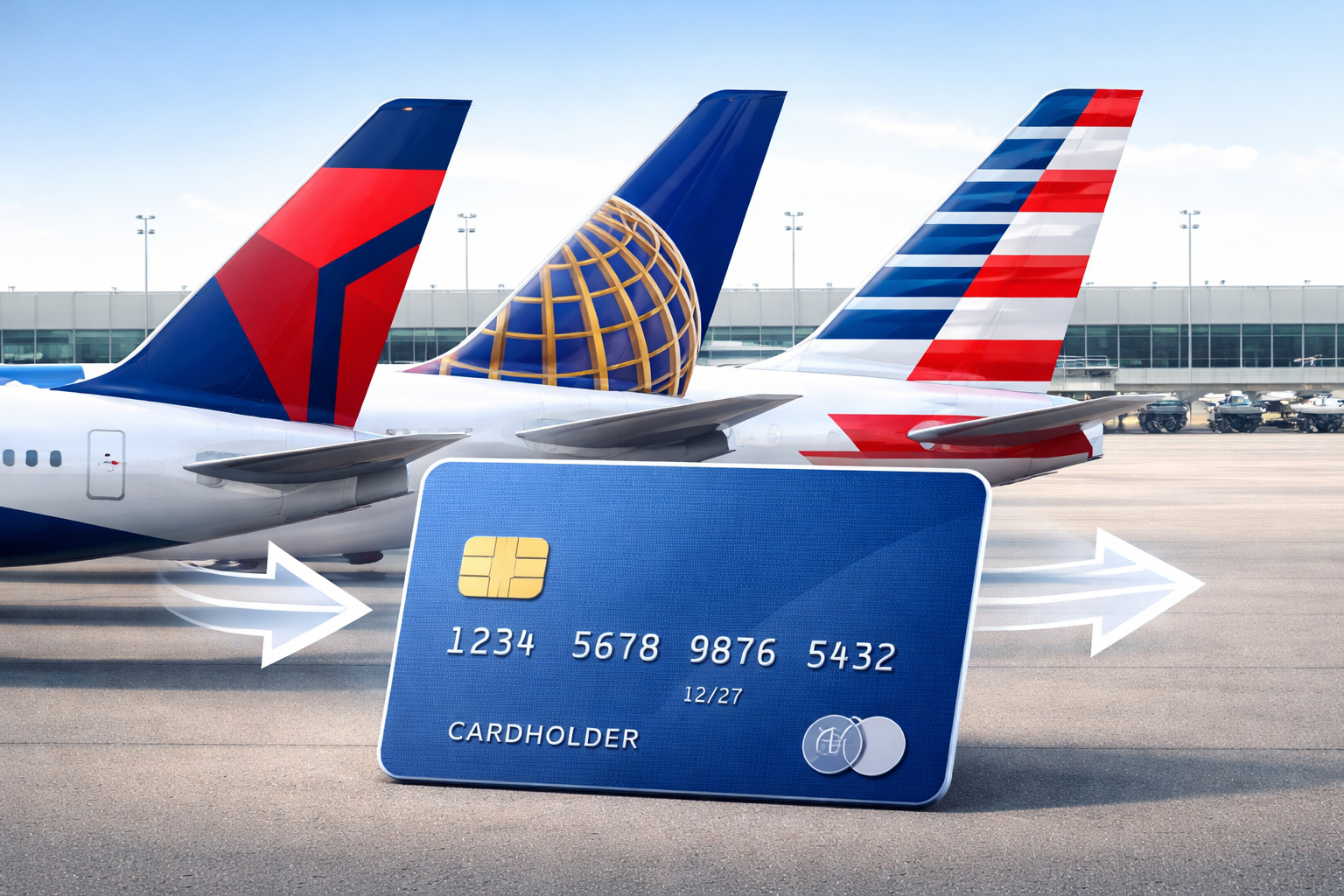
Airline loyalty programs generate billions of dollars in revenue each year from their co-branded credit cards. In many cases, those partnerships with banks are more profitable than selling airline tickets.
So it’s no surprise that airlines keep looking for ways to encourage travelers to sign up for their cards. What’s interesting lately is that the three largest U.S. airlines seem to be taking very different approaches.
Delta, United, and American are all pushing their credit cards harder than ever—but they’re doing it in very different ways.
- Delta is offering extra value if you hold the card.
- United is increasingly making the program work better for cardholders.
- American has turned card spending into a path toward elite status.
You could think of it as three different strategies:
Carrot. Stick. Shortcut.
Each airline is chasing the same goal—getting more travelers to carry its co-branded credit card. But the way they’re doing it reveals a lot about how each airline sees the future of its loyalty program.
Let’s take a closer look at how each approach works.
Delta: The Carrot
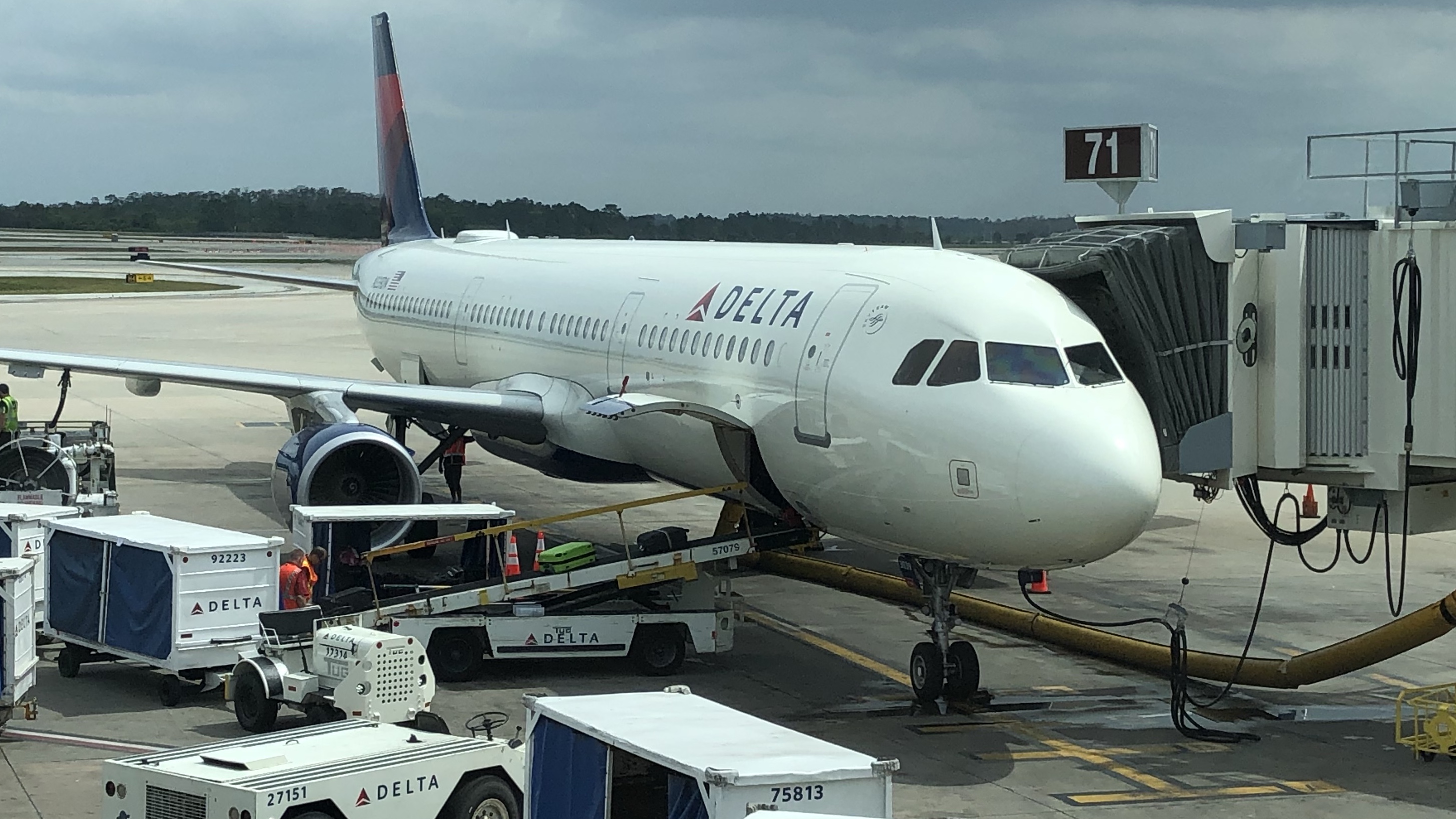
Delta’s strategy focuses on adding value for cardholders without reducing the baseline experience for everyone else.
The clearest example is the TakeOff 15 benefit, which gives Delta SkyMiles credit card holders a 15% discount when redeeming miles for Delta-operated flights.
For example, if a flight normally costs 50,000 SkyMiles, a cardholder would pay 42,500 miles.
Non-cardholders can still book the same award flights—they simply don’t receive the discount. The benefit doesn’t remove options from other members; it just gives cardholders a better redemption value.
Delta has layered other incentives onto its credit cards as well, including:
- Medallion Qualification Dollar (MQD) boosts from card spending
- Companion certificates on several cards
- Travel-related statement credits and perks
The key point is that the card enhances the program rather than changing how it works for everyone else. In other words, Delta’s message is simple:
Have the card and your miles go further.
United: The Stick
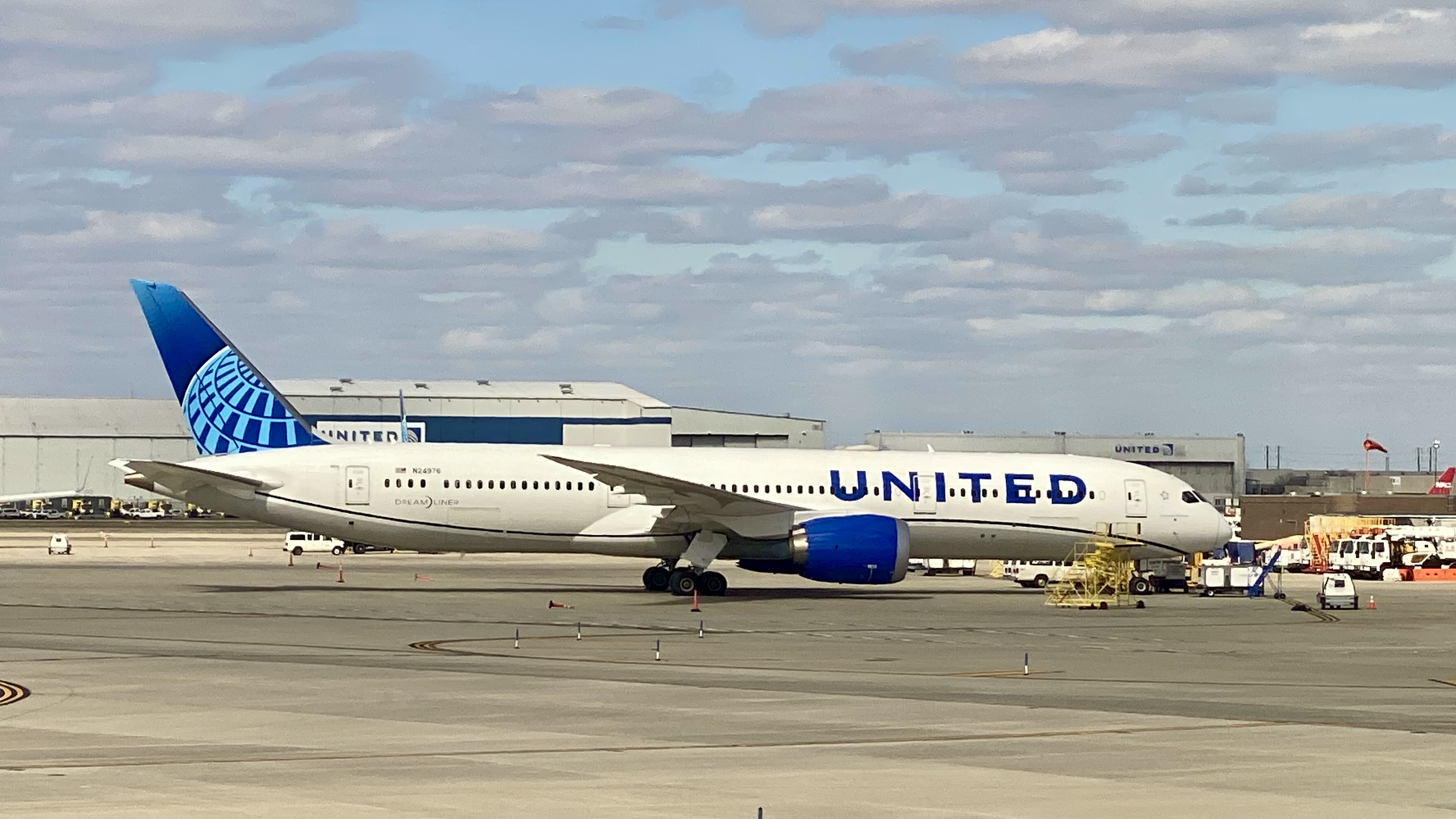
United’s approach feels noticeably different—and the airline’s upcoming MileagePlus changes make that even clearer.
Starting with tickets purchased on or after April 2, 2026, United will introduce several changes that create a much larger gap between members who hold a United co-branded credit card and those who don’t.
The biggest shift is how miles are earned when flying United.
Currently, general MileagePlus members earn 5 miles per dollar spent on United tickets. Under the new structure, that drops to 3 miles per dollar unless the member holds a United credit card. Cardholders, on the other hand, will earn significantly higher rates depending on status level.
United is also making Basic Economy even less rewarding. Beginning in April, members who buy Basic Economy tickets will earn zero miles unless they have elite status or hold a United co-branded credit card.
At the same time, United is adding several new benefits for cardholders, including:
- At least 10% off award tickets booked with miles
- 15% or more off awards for Premier members who also hold a United card
- Higher mileage earning rates on United flights
- Expanded access to lower-priced Saver award inventory
Individually, none of these changes blocks non-cardholders from participating in MileagePlus. But together they increasingly create two different versions of the program—one for cardholders and one for everyone else.
That’s what makes United’s strategy feel less like a reward and more like a push.
Have the card… or earn fewer miles and miss out on some of the best deals.
American: The Shortcut
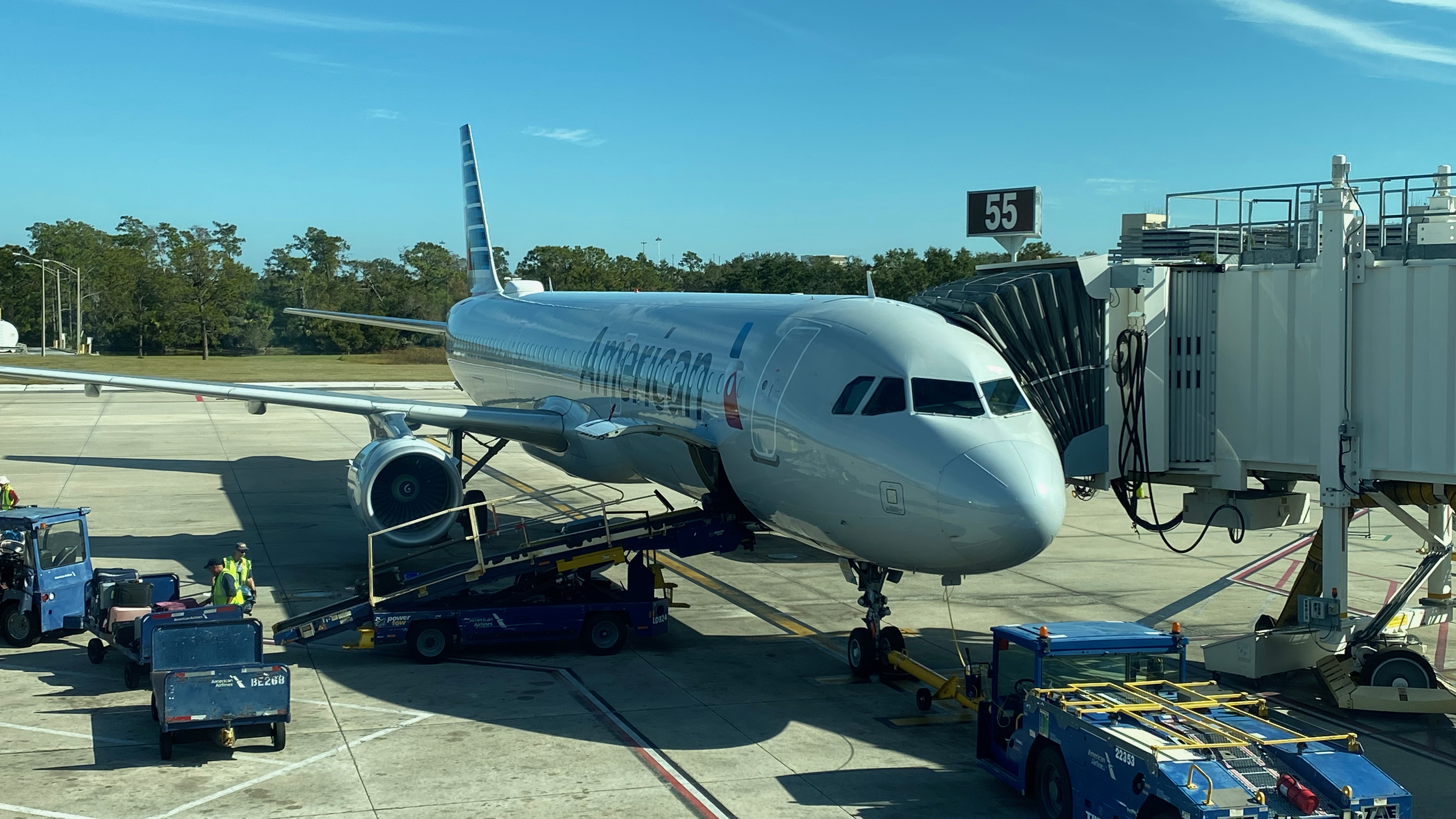
American Airlines has taken a third approach that’s different from Delta’s and United’s. Instead of focusing primarily on award discounts or inventory access, American has turned its co-branded credit cards into one of the easiest ways to earn elite status.
A few years ago, American revamped its AAdvantage program around a new metric called Loyalty Points. While flying still earns Loyalty Points, so do many everyday activities—including spending on an American Airlines co-branded credit card.
Under the system, the math is simple:
- 1 AAdvantage mile earned = 1 Loyalty Point toward elite status
In practice, someone who spends heavily on an AAdvantage card could reach mid-tier elite status with relatively little flying.
American still rewards flying, of course. But the Loyalty Points system clearly encourages members to engage with the program in multiple ways—including through credit card spending.
That makes the credit card less of a perk and more of a shortcut toward status.
Have the card, and you can climb the elite ladder faster.
So, Where Does This End?
When you step back, the pattern is pretty clear.
Delta uses its co-branded cards as a carrot: hold the card and your miles go further.
American uses its cards as a shortcut: spend on the card and you can climb the status ladder faster.
And United is increasingly using its cards as a stick: hold the card, or the program simply works worse—especially when it comes to earning miles on certain fares and getting the best value from awards.
Where does it end? If you’re a United flyer and you didn’t already have a United card, United just gave you all the incentive you need.
Not because it makes the experience nicer. But it increasingly makes the experience less rewarding if you don’t.
Want to comment on this post? Great! Read this first to help ensure it gets approved.
Want to sponsor a post, write something for Your Mileage May Vary, or put ads on our site? Click here for more info.
Like this post? Please share it! We have plenty more just like it and would love it if you decided to hang around and sign up to get emailed notifications of when we post.
Whether you’ve read our articles before or this is the first time you’re stopping by, we’re really glad you’re here and hope you come back to visit again!
This post first appeared on Your Mileage May Vary