United offers several categories of seats on its planes, but it’s not always clear what you’re actually getting. The names can be vague, and the differences aren’t always obvious at first glance.
For U.S. domestic flights, you’ll typically see these options:
- United First – The domestic first-class product, featuring a larger reclining seat at the front of the plane
- Economy Plus – Standard economy seats with extra legroom, located toward the front of the cabin
- Preferred Seats – Standard seats closer to the front (and often avoiding middle seats), but without extra legroom
- Economy – A standard seat with carry-on allowance and seat selection
- Basic Economy – A stripped-down ticket with restrictions; best avoided unless you’re comfortable with the limitations
On most domestic flights, there are only two cabins: First and Economy. While the seats themselves are largely the same throughout Economy, location and legroom can vary significantly depending on what you select.
Boarding
Passengers seated in Economy Plus do not automatically receive priority boarding.
However, many travelers sitting in those seats may still board earlier due to elite status or fare class, which can make it seem like Economy Plus comes with boarding perks—even though it doesn’t on its own.
Seating
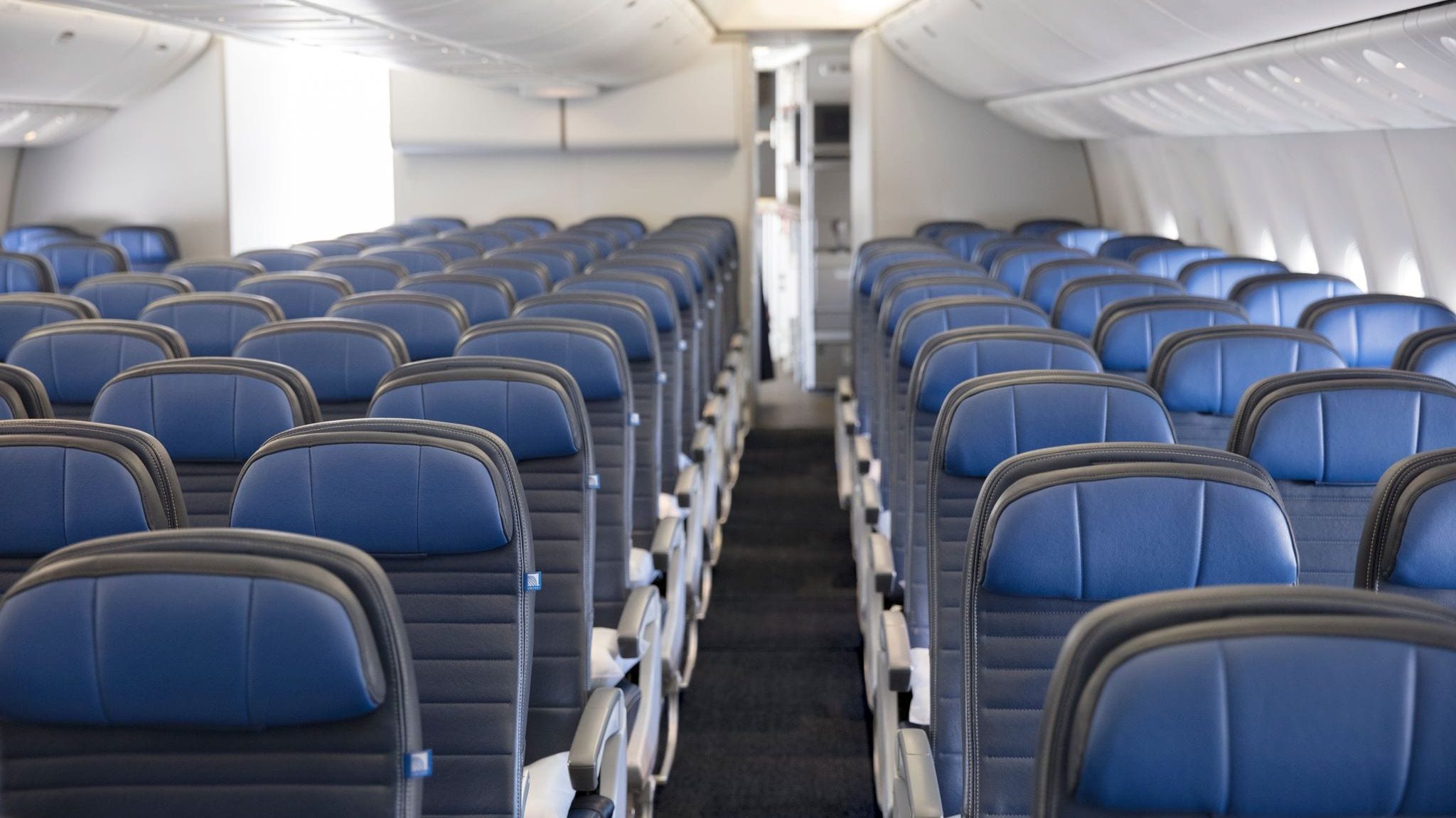
The seat in Economy Plus is the same as you’ll find throughout the main Economy cabin. The key difference is the extra legroom.
These seats are also located toward the front of the Economy section, which can help you get off the plane more quickly after landing.
Economy Plus is available on all United flights and most United Express flights. You can select or upgrade to an Economy Plus seat at booking, after purchase, or during check-in.
I was able to select Economy Plus seats when I checked in for my flight because, at the time, I had Silver elite status. Since these upgrades are space-available, I logged in right at the 24-hour mark.
The first flight was a short hop on an E170, where the extra space made a noticeable difference.
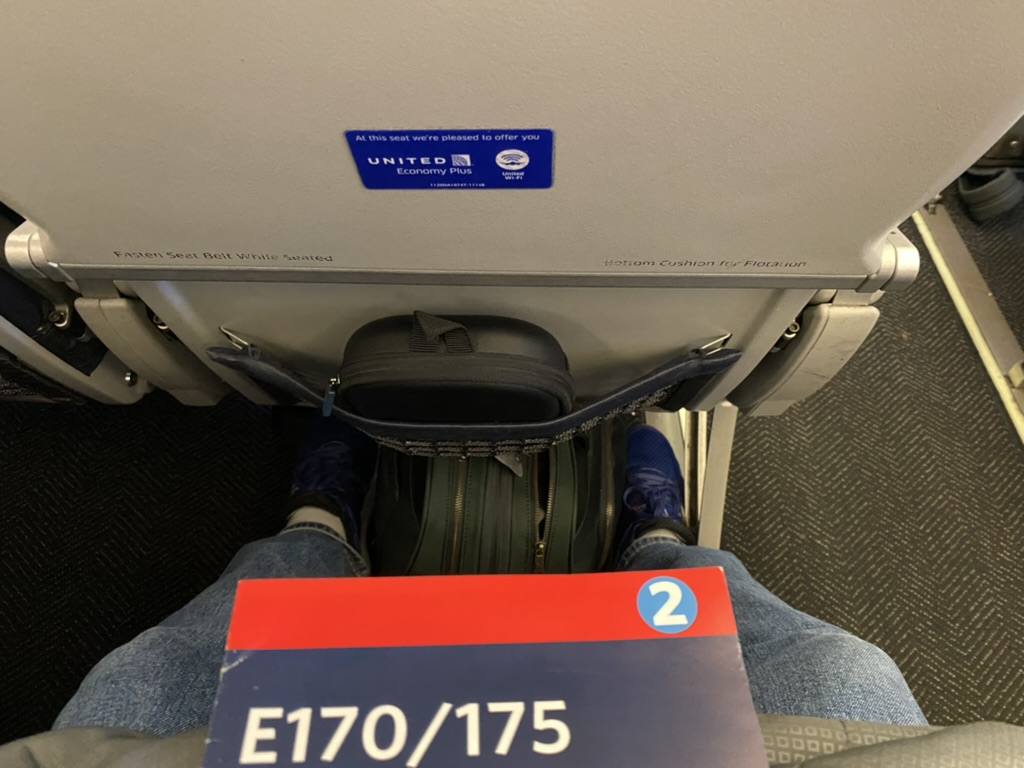
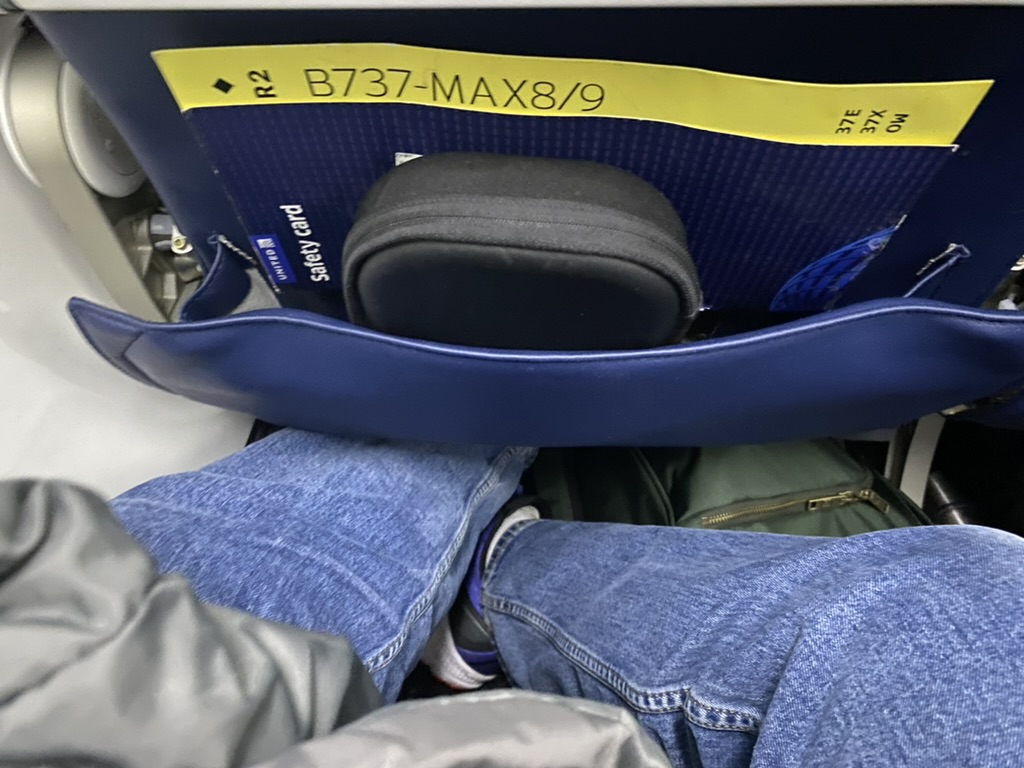
My next flight on a 737 MAX wasn’t quite as roomy, but I still had several inches of clearance between my knees and the seat in front of me. At just under 6 feet tall, I was able to stretch out comfortably.
In-Flight Service
In Economy Plus, you’ll get the same snacks and service as the rest of the Economy cabin.
If you’d like to purchase additional food or drinks, United now accepts contactless payments and stored payment methods, so you’re no longer limited to pre-registering a card before your flight.
Is It Worth It?
The price for Economy Plus varies depending on the flight length and seat you select. Bulkhead and exit row seats are typically the most expensive, while middle seats are usually a few dollars cheaper than window or aisle seats.
As an example, I’ve seen United charge between $72 and $94 for a flight from Orlando to Newark (a little over two hours).
Many people sitting in Economy Plus didn’t pay for those seats. If available, United Gold, Platinum, and 1K members can select Economy Plus seats at the time of booking. Silver members can choose from the remaining seats at check-in.
Seat availability is constantly shifting as higher-tier elites are upgraded to First Class, opening up more seats behind them.
But if you’re paying for the seats, is it worth it?
It depends on the trip and your personal preferences.
If you’re tall and can’t sit comfortably in a regular seat, then a few extra inches of legroom isn’t a luxury—it’s a necessity. For others, it may be worth paying to sit closer to the front, especially if you have a tight connection.
For shorter flights, it can be hard to justify paying a premium just for extra legroom. In some cases, I’d rather pay for JetBlue’s Even More package, which can offer significantly more room.
That said, on a longer flight—especially a redeye—those extra inches can make a real difference. It might be the difference between getting 20 minutes of sleep or a few solid hours.
Final Thoughts
Economy Plus sits in that middle ground between comfort and cost. It doesn’t completely change the experience, but in the right situation, it can make a noticeable difference.
The key is knowing when that difference is worth paying for—and when it’s not.
Want to comment on this post? Great! Read this first to help ensure it gets approved.
Want to sponsor a post, write something for Your Mileage May Vary, or put ads on our site? Click here for more info.
Like this post? Please share it! We have plenty more just like it and would love it if you decided to hang around and sign up to get emailed notifications of when we post.
Whether you’ve read our articles before or this is the first time you’re stopping by, we’re really glad you’re here and hope you come back to visit again!
This post first appeared on Your Mileage May Vary

1 comment
Not worth it for Sharon. Worth it for Joe. If you want to sit next to each other, I guess it is worth it for both of you. 🙂