Before our trip to Germany, I spent way too much time trying to figure out Deutsche Bahn train travel.
Not because trains in Germany are impossible to understand, but because they work differently from how many Americans understand train travel. When you’re used to booking flights, renting cars, or taking the occasional commuter train, the DB system can feel like a lot at first.
There are different ticket types. Seat reservations are separate. Some fares are flexible, others aren’t. The app matters. Platform screens matter. And if you’re traveling with luggage, even the type of train and the station where you change trains can make a difference.
This isn’t meant to be a review of our train trips in Germany. Instead, these are the things I wish I had understood before booking DB trains.
Download The DB Navigator App Before You Go
If you’re taking Deutsche Bahn trains, download the DB Navigator app before your trip. Don’t wait until you’re standing in a station trying to figure things out with luggage in one hand and a train departure board in front of you.
The app is useful for far more than storing your ticket. It shows your itinerary, platform information, connection details, delays, track changes and train status. It can also alert you when something changes, which is especially helpful if you’re not familiar with the station.
During our trip, the app became one of those things I checked constantly. It didn’t make every train run perfectly, but it did make the system much easier to follow.
Book In Advance, But Don’t Automatically Pick The Cheapest Fare
DB tickets can work a lot like airline tickets. If you’re booking long-distance trains such as ICE, IC or EC services, prices are often better when you book early. Waiting until the last minute can mean paying much more, especially on popular routes or travel days.
But this is where you need to slow down before choosing the lowest price.
The cheapest fare may be fine if your plans are firm. However, if there’s any chance you’ll want to change times later, a slightly more flexible ticket can be worth it. That was the difference between being stuck with our original departure from Hamburg and being able to adjust when our plans changed.
Understand The Ticket Types Before You Click Buy
This was one of the biggest things I had to learn. DB has different ticket types, and they’re not all equal.
The cheapest option, Super Sparpreis, is the closest thing to Basic Economy. It can be a great deal, but once you’re outside DB’s short cancellation window after booking, you should treat it as locked in. If your plans change, you may be buying a new ticket.
Sparpreis is still tied to a specific long-distance train, so it isn’t fully flexible. However, it can give you more wiggle room than the rock-bottom fare because you may be able to cancel before the day of travel, pay the fee, receive a voucher and then rebook. That helped us when we wanted to change our departure time from Hamburg. We weren’t just stuck with the train we originally picked.
Then there’s Flexpreis, which costs more but gives you the most flexibility. That can be useful if you’re connecting from a flight, traveling on a day with uncertain plans, or just don’t want to be locked into a specific departure time.
The important lesson is to look beyond the price. The cheapest ticket may be fine if your plans are set. But if there’s any chance you’ll want to leave earlier, leave later or adjust the trip, it’s worth reviewing the fare rules before clicking buy.
Reserve Seats, Especially If You’re Traveling Together
On DB long-distance trains, buying a ticket and reserving a seat are not always the same thing. You can have a valid train ticket without having an assigned seat.
If you’re traveling solo, you might be willing to take your chances. But if you’re traveling as a couple, family or group, reserving seats can avoid a lot of awkward wandering through train cars looking for open places together.
For us, seat reservations were worth it. We weren’t trying to turn every train ride into a luxury experience. We just wanted to know where we were sitting so we could stay together when possible and avoid spending the first part of the trip searching for open seats.
Know How Reserved Seats Are Marked
This was one of those things that made more sense once we were on the train.
Seats on long-distance trains often have small displays showing whether they’re reserved and, in some cases, for which portion of the trip. So a seat might be open when you board, but reserved starting at a later stop.
That means an empty seat isn’t always truly available for the whole ride. If you don’t have a reservation, look carefully before settling in. Otherwise, you may get comfortable only to have someone show up later with a valid reservation for that seat.
Learn What The Quiet Car Is
Some ICE trains have quiet zones, and they’re exactly what they sound like.
They’re meant for passengers who want a quieter ride, which means avoiding phone calls, loud conversations, videos without headphones and the general noise that might be fine elsewhere on the train.
If you want to chat with your group, don’t book the quiet car. If you want to read, work or zone out, it can be a great option. Just know what you’re choosing before you reserve seats there.
Use The Platform Screens To Find Your Train Car
This is one of the best parts of the system once you understand it.
German train platforms often have screens showing where each train car will stop along the platform. That matters because ICE trains can be long. If your reservation is in one car and you’re standing at the opposite end of the platform, you may have a long walk after boarding.
It’s much easier to line up in the right area before the train arrives. The platform screens can tell you where your car should stop, so you’re not trying to drag bags through multiple train cars after boarding.
Smaller Stations May Mean Stairs
This was something we didn’t fully appreciate until we were doing it with luggage.
At larger stations, such as Hamburg or Frankfurt Airport, transferring between trains was pretty straightforward. There were escalators, elevators, wide platforms and plenty of signs. It felt more like navigating an airport or major transit hub.
Smaller stations were different. On our way to Rothenburg, some transfers required us to climb down from one platform and then back up to another. That’s not a big deal if you’re traveling light, but it becomes much more noticeable when you’re carrying suitcases.
It’s a good reminder that train travel can be easier than flying in many ways, but it’s not always effortless. If you have heavy bags, mobility concerns or a tight connection at a smaller station, don’t assume it will be a simple cross-platform transfer.
Not Every Train Is Built The Same Way
This was another thing that became obvious once we were traveling.
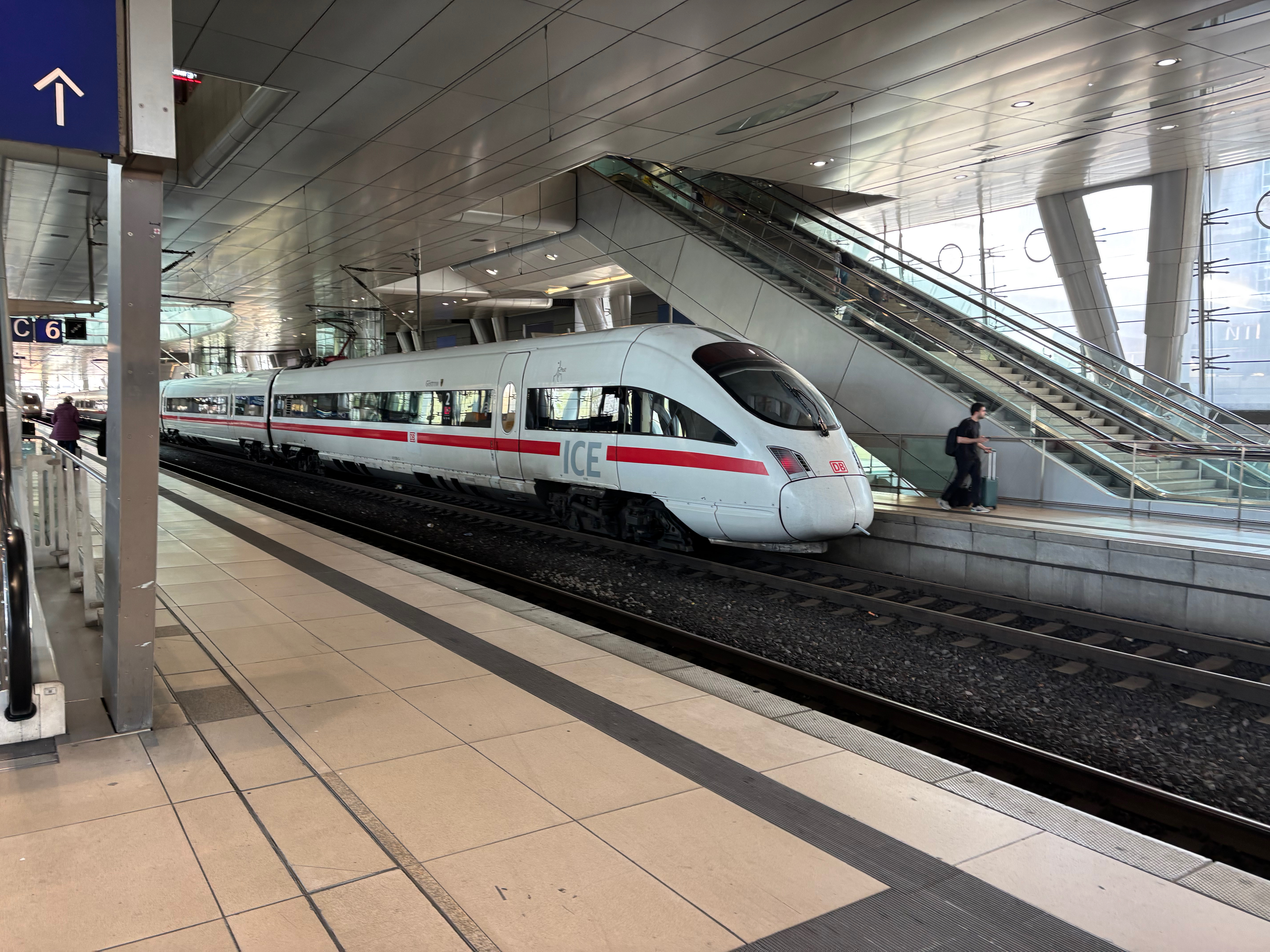
The long-distance ICE trains are designed for passengers traveling between cities, often with luggage. They have more room, dedicated luggage racks and overhead shelves that are actually useful. Unlike many trains in the U.S., ICE trains often have overhead racks that can accommodate a carry-on-size bag, not just a backpack or jacket.
That doesn’t mean you should put every suitcase overhead. If you have a larger case, use the luggage racks and save the overhead space for smaller carry-ons and personal items. It makes boarding easier for everyone and keeps the aisles from turning into an obstacle course.
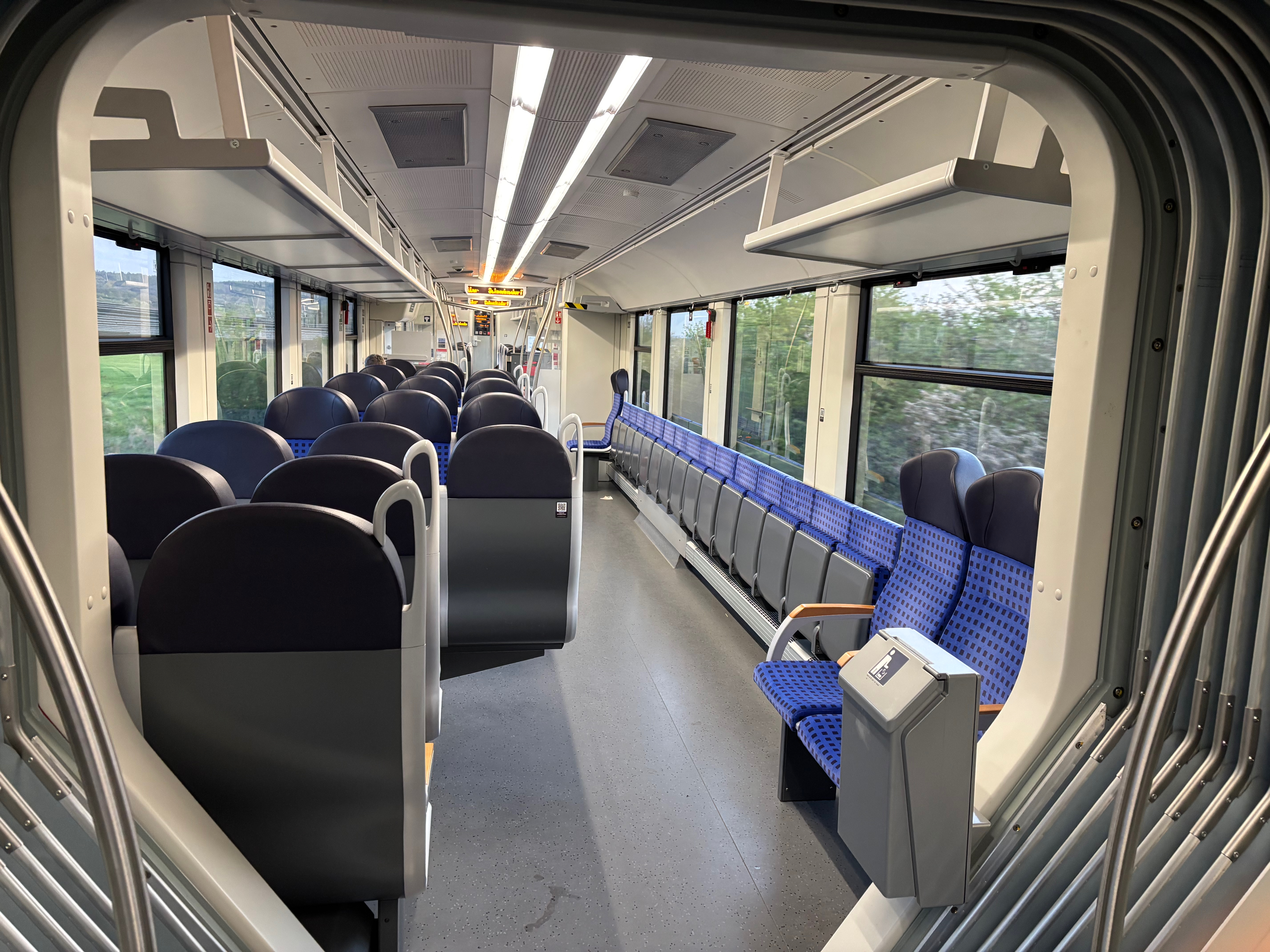
The smaller regional trains were a different story. They worked fine for getting where we needed to go, but they were not designed around travelers with big suitcases in the same way. There may be less luggage space, narrower aisles and more awkward boarding or transferring.
That’s worth knowing before you pack. A route that looks simple on paper may include a long-distance ICE train followed by a smaller regional train and a transfer at a station where you’re carrying bags up and down stairs.
Try To Snag A Table If You’re Traveling As A Group
If you’re traveling with four people, a table seat setup can make the ride much more pleasant. It gives everyone a place for drinks, snacks, cards, laptops or just elbow room.
The downside is that table seats can be popular. If you see them available when booking and you know your group would use the space, it may be worth choosing them early.
It’s not necessary for every trip. But on a longer ride, having a table can make the train feel less like mere transportation and more like a usable part of the trip.
ICE Trains May Have A Dining Car
This was one of the pleasant surprises.
Many ICE trains have onboard catering, and some have a dining car or bistro area where you can sit at a table and eat instead of balancing snacks at your seat.
For longer rides, knowing there may be a dining car changes how you plan. You don’t necessarily need to buy everything in the station before boarding, although having backup snacks is never a bad idea.
It also gives you another place to sit for a bit if you want to stretch your legs, have a drink or take a break from your assigned seat.
Don’t Assume “Germany” Means Perfect Punctuality
German trains have a reputation for precision. That reputation may be historically deserved, but I wouldn’t build a modern DB itinerary on the assumption that every train will run exactly on time.
That doesn’t mean you should avoid trains. It just means you should be realistic, especially if you’re making connections.
If you have a tight connection, a delay can quickly turn into stress. If you’re connecting to a flight, an event or another non-refundable booking, leave more buffer than you think you need. The app helps by alerting you to delays and changes, but it can’t make a late train arrive on time.
Watch For Track Changes
The good news is that DB usually provides platform information in advance, and the app can alert you if something changes.
That was one of the more reassuring parts of using the system. Instead of constantly staring at departure boards, we could monitor the app and adjust if needed.
Still, when you’re at the station, pay attention. Track changes can happen, and German train stations can be busy enough that you don’t want to figure that out at the last second.
Final Thought
Booking Deutsche Bahn trains can look intimidating if you’re used to flying or driving everywhere. There are different fare types, seat reservations, coach numbers, quiet cars, luggage racks, platform zones and onboard dining options to figure out.
But once you understand the basics, it starts to make sense.
The biggest lesson is that DB train travel rewards a little preparation. Download the app, book early when it makes sense, reserve seats if you care where you sit, and don’t schedule tight connections just because the word “Germany” makes you think everything will run perfectly.
It’s not difficult. It’s just different.
Want to comment on this post? Great! Read this first to help ensure it gets approved.
Want to sponsor a post, write something for Your Mileage May Vary, or put ads on our site? Click here for more info.
Like this post? Please share it! We have plenty more just like it and would love it if you decided to hang around and sign up to get emailed notifications of when we post.
Whether you’ve read our articles before or this is the first time you’re stopping by, we’re really glad you’re here and hope you come back to visit again!
This post first appeared on Your Mileage May Vary
2 comments
Great article.
I use DB all the time when in or traveling thru Germany.
A few things to add to your article:
1) DB trains are a bit of a mess at the moment with lots of construction (delays) and strikes. Make sure you allow for a lot of time if taking the train to an airport for a flight. I have learned the hard way that if I’m taking an international flight – I arrive a day earlier by train to the airport or take an evening flight to allow for delays along the way.
2) When your train or a portion of the trip is cancelled there are ways to rebook on the DB app. BUT often times it will say that you can take any other train. This is true HOWEVER if you booked seats you literally won’t have confirmed seats on the alternate trains. I’ve seen people fighting about seats and I’ve seen people sitting on the floor of business class because there were no seats and the conductors are NOT helpful in this case. Or I’ve seen people move from seat to seat to seat because passengers with confirmed seats arrive at the next station.
3) Sometimes DB assigns seats to you directly. If you are wondering where the seats are, there’s a great website where you can find the train (by country) and the train seat map. You’ll need to know some details about the train but I have found it VERY helpful: https://www.seat61.com/european-train-seat-maps.htm#Germany
Well researched (and/or experienced), Joe!
A couple more tips from someone who has lived in Germany for the past 50 (YIKES!) years and used the German train system regularly for all of that time:
1. ICE (InterCityExpress) trains are often in 2 sections so, if you aren’t reserving a seat (to match the ticket you’ve bought), don’t assume that the entire train is ending at the same destination. When they separate the two sections of the train at certain stations, you may not have time to exit the section you’re in and have time to RUN to the other section – especially if you are not close to the “hitching” car at the middle of the train.
2. The busiest train days are usually Friday and Sunday. Prices are invariably higher on those days – unless you are willing to travel VERY early or VERY late.
3. If you should miss a very short connection, try to find a conductor (Schaffner) to have your ticket stamped showing that you weren’t at fault. Generally, the trains marked on your non-flexible tickets are not changeable without the stamp (or an announcement being made that all set times are “aufgehoben”, meaning you can take any following train to your destination). Additionally,most ICE connections to another ICE train traveling in the same direction are on the other side of the same platform.
4. The DB (Deutsche Bundesbahn) is relatively reliable (although there’s always “moaning and groaning” about them never being punctual). But remember that almost all major connections (Munich-Berlin, Munich-Frankfurt, Cologne-Frankfurt, etc. etc.) run almost every hour during the daytime.
And with the price of gas over here right now (approx $10.00 per gallon) and traffic conditions, the train will almost always be cheaper and faster than renting a car.
4. Lastly….if you’re over 65, be sure and check that distinction when you are purchasing your ticket. It may save you some money.