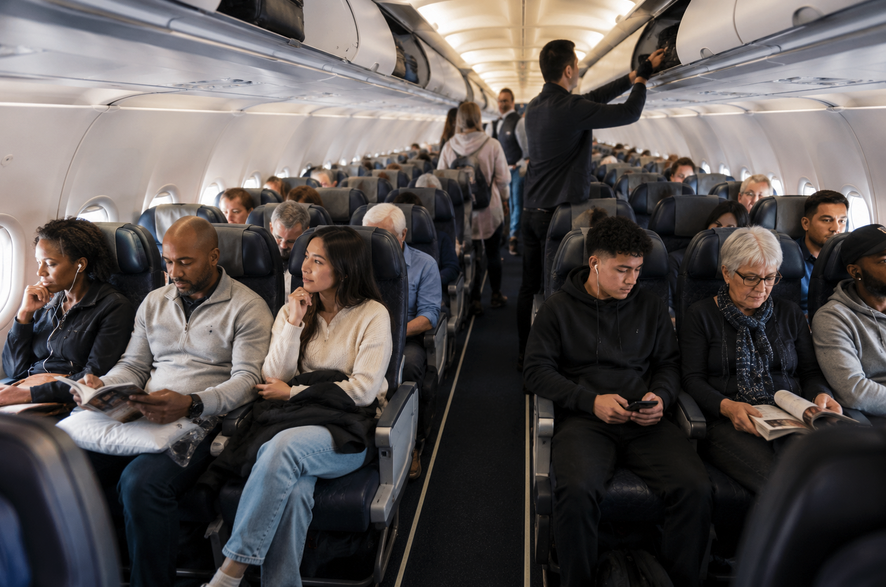
Most travelers don’t just board a plane and take whatever seat they’re given.
Some always choose the window. Others refuse to sit anywhere but the aisle. (And yes…there are actually people who voluntarily choose the middle seat.)
But that’s just the beginning.
Some passengers insist on sitting near the front of the plane, while others prefer the back. Some avoid sitting near the lavatories at all costs. Others always book the left side of the aircraft instead of the right, or even insist on odd-numbered seats over even-numbered ones.
Coincidence?
According to psychologists, maybe not. They say the seat you instinctively choose may reveal surprising clues about your personality, how you handle stress and even your need for control.
Choosing your seat
Nowadays, most people have a choice of paying for seat selection or having the airline assign you a seat. Even that is a “tell” that goes beyond willingness to pay for seat selection.
Most things about air travel feel chaotic. There’s lots of people, long lines, TSA officers telling you what to do. And even when you get to the plane, you may have to deal with gate lice and the potential question of who you’re going to have to sit next to. That’s before you even think about the unknowns regarding the cleanliness of the lavatory and the poor life choices of the person who sat in your seat before you did.
Being able to pore over seat maps and choose your seat gives passengers a sense of control in all that chaos. And that makes them feel more powerful.
The same goes for people who have rituals about, say, odd or even numbered seats – the more control you have, the more manageable you’ll think everything is, and therefore, the calmer you’ll feel. And having that feeling of control or power is important.
Chris Lipp, a social psychologist at Tulane University, studies power dynamics. He says:
People who feel more powerful are less sensitive to sitting next to someone. They’re comfortable with less interpersonal space, less worried about others encroaching on their space, and less vigilant because they don’t feel threatened by others.
The middle seats illustrates this power dynamic. Lipp notes that powerful people have no problems with sitting in the dreaded middle seat. They claim both armrests with an outwardly confident appearance. Meanwhile, anxious travelers either guard the armrest like a border wall or avoid it completely to prevent any contact.
Window vs. aisle can also be a control move, based on personality. Psychologists suggests that introverts prefer window seats so they can have privacy and control, while extroverts gravitate towards aisle seats for mobility (being able to get up without bothering anybody else) and easier interaction.
The same idea applies to passengers who prefer the front (they’re the type of people who want to disembark quickly and avoid feeling trapped) vs. those who intentionally choose the back (They’re more relaxed about waiting, less concerned with being first off the aircraft and often actively avoid the chaos of the front rows). Neither preference is particularly better or worse, but they reflect different tolerances for waiting.
Even those left- vs. right- people are showing how their brain works.
Performance psychology specialist Sam Wones says that once you unconsciously favor one side over another, your brain attaches onto that. “Some people unconsciously favor one side due to how their brain processes spatial awareness or comfort,” Wones explained. Maybe sitting on that side felt slightly better once, or you had a good flight on that side. The reason doesn’t matter. Once the pattern exists, your brain, for its own reasons, sticks with it
Also, for what it’s worth, analysis of Air Canada and American Airlines seat data shows that passengers disproportionately choose the left side. That means the right side offers (granted, slightly) better odds of an empty seat next to you. Winning!
Oh, and if you’ve read this and are thinking, “Who the hell obsesses that much over airplane seats?” well, that’s another tell. Whereas strategic planners are very conscientious and prefer control, acceptors are generally more adaptable, with lower anxiety and a higher tolerance for uncertainty.
So how accurate is all of this? Who knows?
Maybe you always choose the window because you’re an introvert. Maybe you always choose the aisle because you drink too much Diet Coke on flights. Maybe you insist on Row 12 because you once had a great flight there in 2019 and now you’re convinced it’s lucky.
Psychologists will probably tell you all of those choices reveal something about your personality.
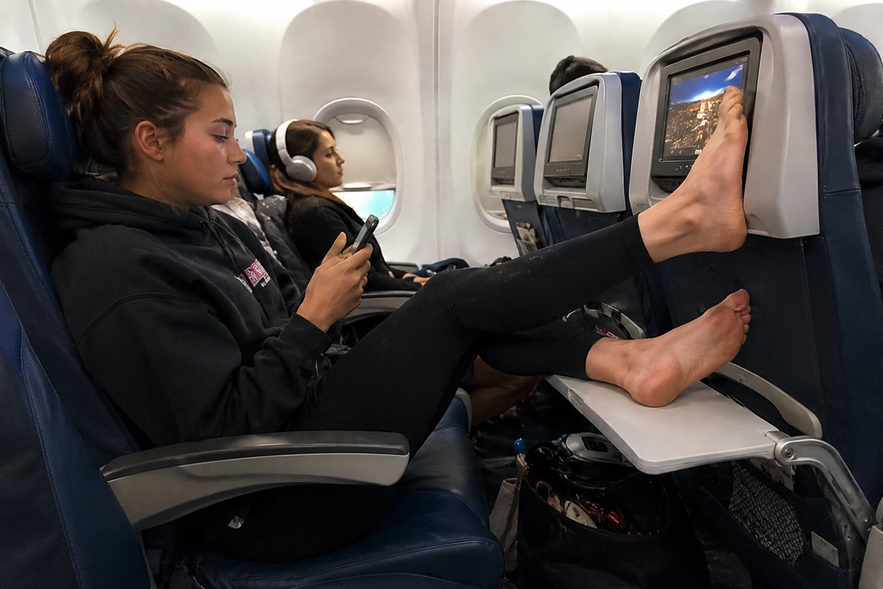
Me? I’m just trying to avoid the barefoot person who thinks the tray table is a footrest.
Want to comment on this post? Great! Read this first to help ensure it gets approved.
Want to sponsor a post, write something for Your Mileage May Vary, or put ads on our site? Click here for more info.
Like this post? Please share it! We have plenty more just like it and would love it if you decided to hang around and sign up to get emailed notifications of when we post.
Whether you’ve read our articles before or this is the first time you’re stopping by, we’re really glad you’re here and hope you come back to visit again!
This post first appeared on Your Mileage May Vary