When you plan to fly, there are certain things you’re expected to do before you’re allowed through airport security and onto your plane. But sometimes life happens and you may not be in compliance as much as you originally planned or expected.
Or maybe you just don’t want to follow directions because of, you know, reasons. 😉
We’ve gone through some of these situations in the past:
- Can you refuse a TSA patdown?
- Can you actively avoid your bags going through the airport scanner?
- A lesson in poor decisions: what happens when you ignore a Customs & Border Patrol agent
To change gears for a moment, over the past several years, the U.S. federal government, like governments in other parts of the world, has invested heavily in facial recognition and other biometric technology.
It started becoming much more noticeable about a half-dozen or more years ago, particularly as a way to identify travelers entering and leaving the country by plane. TSA began introducing similar technology at security checkpoints not long afterward, including for domestic travel.
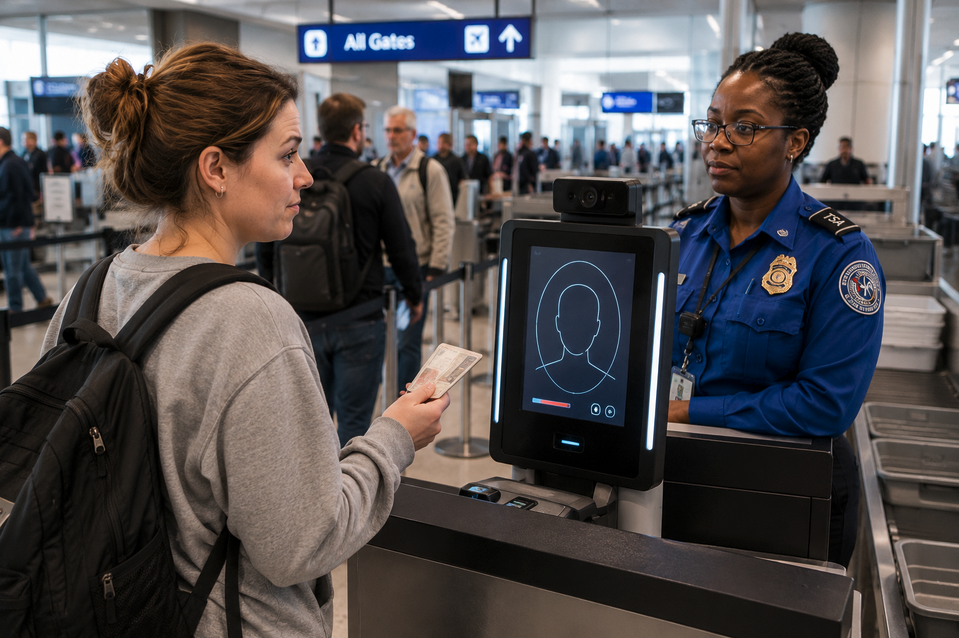
The program has slowly expanded, and many, many TSA security checkpoints now have kiosks that ask to take your picture. The technology compares your live photo with the image on the ID you present to help TSA verify that you are, indeed, you.
And occasionally, the technology helps uncover something else entirely (as this woman discovered).
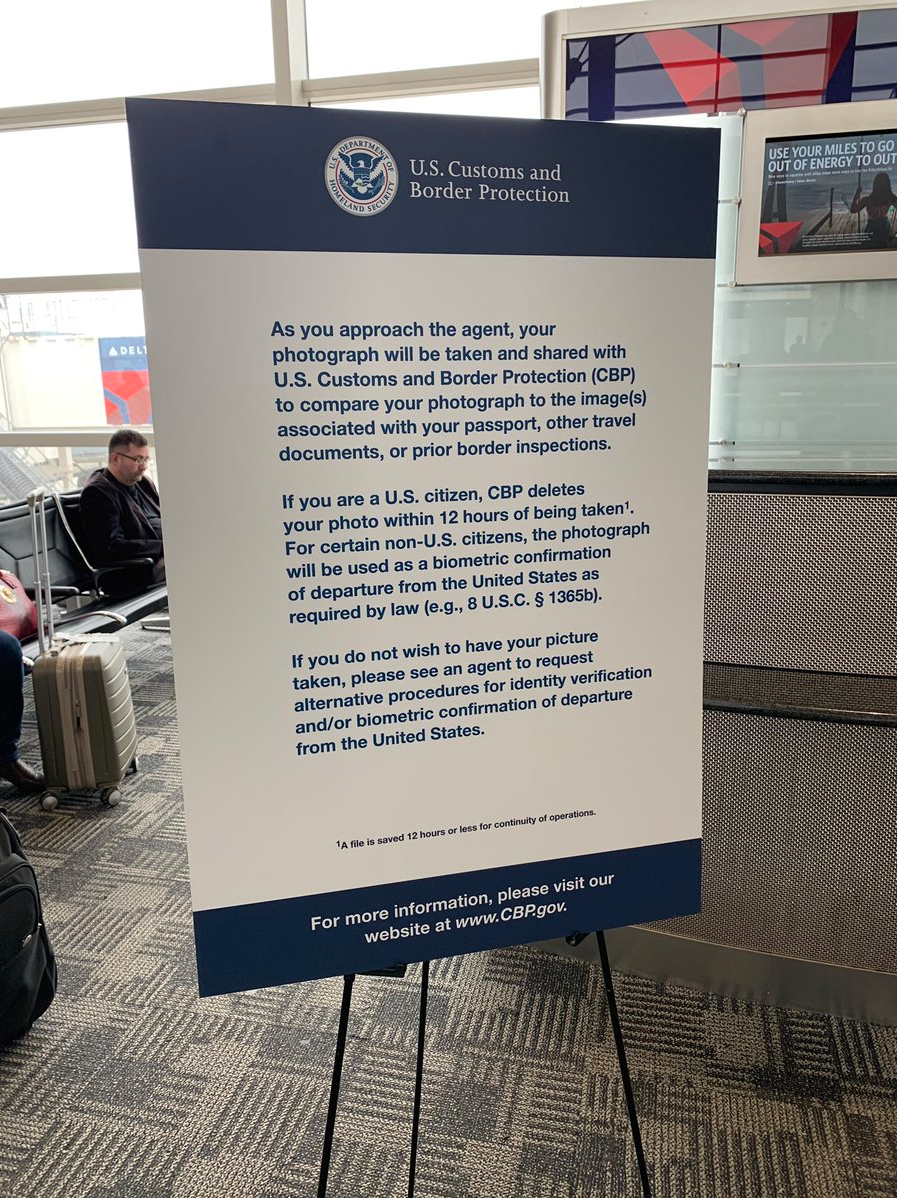
When the program was first introduced, signs at checkpoints made it clear that having your photo taken was voluntary and that you were allowed to refuse if you wished.
PC: Twitter/Juli Lyskawa
When the program was first introduced, signs at checkpoints made it clear that having your photo taken was voluntary and that you were allowed to refuse if you wished.
But the whole “take your photo” thing has been around for a few years now. And sometimes rules change, particularly once something moves beyond that original “introductory” stage.
So more than one traveler has wondered:
Can You Refuse To Get Your Photo Taken At TSA?
Yes. You still can.
Signage at the TSA kiosk still says so:
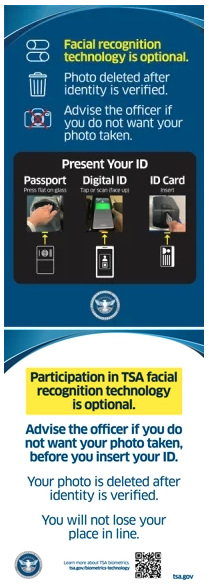
And the TSA’s website says so, as well:
TSA is currently updating CAT-2 screens with clear language that notifies travelers they may decline having their photo taken. TSA also has signage posted at the checkpoint indicating that the technology is optional and travelers may decline having their photo taken. Travelers under 18 are not photographed.
TSA is grounding its exploration of facial recognition solutions in rigorous scientific study and analysis to include alignment with National Institute of Standards and Technology (NIST) standards and applies stringent safeguards for traveler privacy and convenience:
-
Standard ID credential verification is in place – Travelers who decide not to participate in the use of facial recognition technology will receive an alternative ID credential check by the TSO at the podium. The traveler will not experience any negative consequences for choosing not to participate. There is no issue and no delay with a traveler exercising their rights to not participate in the automated biometrics matching technology.
What happens if you refuse?
Surprisingly, not much.
If you decline to have your photo taken, the TSA officer will perform a standard ID check instead. That means they’ll verify your identification the old-fashioned way rather than using automated facial matching.
TSA specifically says travelers who decline facial recognition should experience “no negative consequences” and “no delay” for doing so.
In other words, you can simply tell the officer you don’t want your photo taken.
No big deal.
Why are they using facial scanners to begin with?
Facial recognition gives TSA another automated way to verify that the person standing at the checkpoint matches the photo on the ID they’re presenting. Instead of relying solely on a TSA officer to visually compare your face with your ID photo, the technology analyzes facial characteristics and performs the comparison electronically.
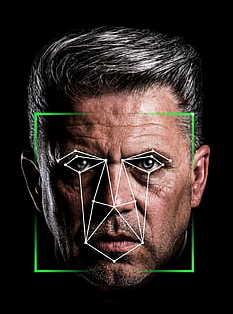
Of course, that doesn’t mean facial recognition is foolproof.
Facial recognition technology has historically shown accuracy disparities among different demographic groups, although newer systems have improved significantly. Performance can also be affected by image quality, lighting, camera angle and changes in a person’s appearance over time.
Will they eventually make facial recognition a requirement?
Who knows? At least one country has already moved in that direction, and biometric technology is becoming increasingly common at airports around the world.
Could TSA eventually make it mandatory here? Again…who knows?
So for now, if you get to the TSA podium and don’t want your face scanned, you can say no. TSA says you shouldn’t be penalized, delayed or otherwise hassled for doing so; the officer will simply verify your identity another way.
Whether that option will still exist five, ten or twenty years from now? Your guess is as good as mine.
Of course, there’s also a certain irony to worrying about that ONE camera at the TSA checkpoint.
Airports have security cameras everywhere. So do stores, streets, parking garages, hotels, doorbells and approximately 47 bajillion other places we encounter every day.
So you can tell TSA not to take your picture.
Whether you can make it through the rest of your day without appearing on somebody else’s camera is another story entirely. 😉
Want to comment on this post? Great! Read this first to help ensure it gets approved.
Want to sponsor a post, write something for Your Mileage May Vary, or put ads on our site? Click here for more info.
Like this post? Please share it! We have plenty more just like it and would love it if you decided to hang around and sign up to get emailed notifications of when we post.
Whether you’ve read our articles before or this is the first time you’re stopping by, we’re really glad you’re here and hope you come back to visit again!
This post first appeared on Your Mileage May Vary