Travel numbers remain strong across the industry. Hotels are filling up, rental cars can be hard to find, and airports continue to see huge numbers of passengers despite high airfare and occasional airline disruptions.
The traditional advice for commercial airports has long been simple: arrive two hours before domestic flights and three hours before international ones. But that long-standing advice doesn’t always reflect today’s airport realities, since the right timing depends on several factors.
Quick answer: How early should you arrive at the airport?
For most travelers, the traditional advice still works:
-
Domestic flights: arrive about 2 hours early
-
International flights: arrive about 3 hours early
However, the right timing can vary depending on several factors, including baggage lines, airport size, security wait times, and whether you have TSA PreCheck or CLEAR.
In fact, some airports have even promoted a “3-2-1” rule for arriving before a flight:
-
Arrive at the check-in counter 3 hours before departure
-
Be in the TSA security line 2 hours before
-
Reach your gate 1 hour before boarding
And yes, some experienced travelers are probably rolling their eyes already.
Why airport arrival times vary so much
If you fly frequently and know exactly how long it takes to get from your car to your gate, you might only need 30–45 minutes.
But most travelers don’t have that level of experience, and airports can be unpredictable. That’s why it’s worth breaking down where the time actually goes.
Check-in and bag drop
Checking in at a kiosk usually only takes a few minutes.
The real time sink is often the baggage drop line, which can stretch well beyond the switchback lanes set up at many airports.
And the time of day doesn’t always help.
On one early morning trip to Hawaii, we stayed at the Hyatt Regency inside Orlando International Airport so we could walk directly to the terminal. We arrived around 5:45 a.m. for a 7 a.m. flight, assuming that would be plenty of time.
It wasn’t.
By 6:15 a.m., we had barely reached the first set of switchbacks in the Delta bag drop line. Eventually we had to ask a line monitor if we could move forward so we wouldn’t miss our flight.
One reason is limited staffing. Many airlines only have two or three agents working the bag-drop line, so if a passenger has an issue—like an overweight bag—it can slow the entire line.
Plan on about an hour for bag drop at busy airports.
When you might skip the bag drop line
Some travelers can save significant time.
For example:
-
Travelers with carry-on luggage only
-
Passengers flying domestic first class or international business/first class
-
Travelers using priority check-in counters
Smaller airports can also reduce wait times, since fewer flights usually mean fewer passengers.
As always, Your Mileage May Vary.
Ways to save even more time
Many airlines allow online or mobile check-in.
If you check in online and only bring a carry-on bag, you can often walk straight to the TSA checkpoint without stopping at the check-in counter.
Some airlines also offer bag-drop shortcuts or self-service options that may shorten the wait. Skycaps can also help reduce your wait time if their line isn’t too long.
TSA security checkpoint
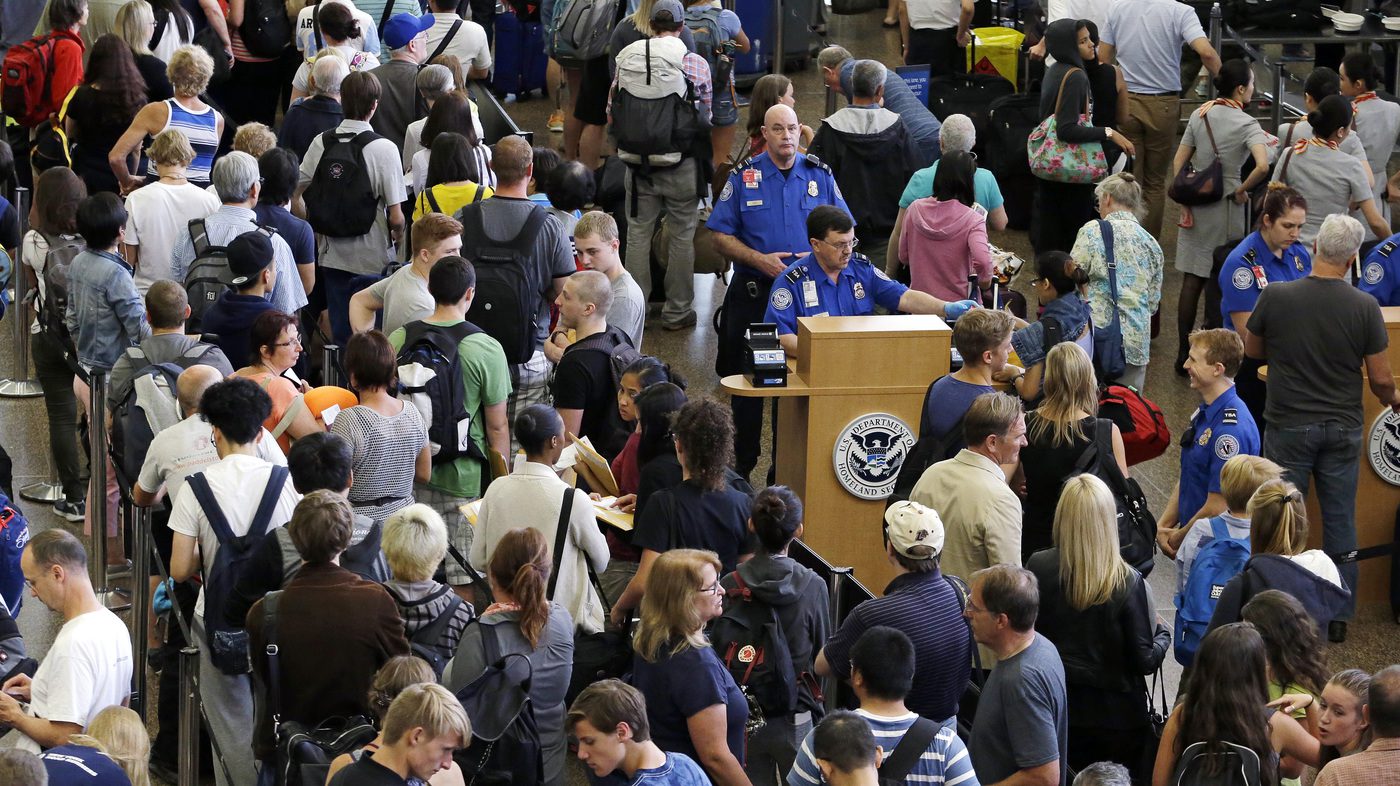
Lines of travelers snake past TSA agents at Seattle-Tacoma International Airport
Security lines can be the most unpredictable part of the airport experience.
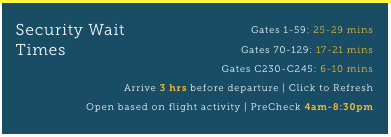
On a quiet day, you might get through in minutes. During peak travel periods, waits can stretch 45–60 minutes or longer.
The MyTSA app has become a helpful tool for estimating wait times at many U.S. airports. Checking it for several days before your trip—around the time you expect to arrive—can help you anticipate potential delays.
Exceptions that can speed things up
Certain programs and ticket types may reduce security wait times:
TSA PreCheck
Trusted travelers usually have shorter lines and simplified screening.
CLEAR
CLEAR members can often move directly to the front of the ID check line before entering the security queue.
Airline priority lanes
Some airlines offer dedicated security lanes for premium tickets or elite status.
Examples include:
-
United Premier Access
-
Southwest Business Select or A-List status
Availability varies by airport.
Other factors that affect airport timing
Several additional factors can impact how early you should arrive:
-
Travelers with young children or elderly passengers may need extra time.
-
Large airports often require longer walks between security and gates.
-
Smaller airports can be significantly quicker to navigate.
For example, navigating Salt Lake City International Airport can take considerably longer than moving through a smaller airport such as Key West International Airport.
FAQ
How early should I arrive at the airport for a flight?
The traditional recommendation is two hours before domestic flights and three hours before international flights. However, the right arrival time depends on factors such as baggage check lines, airport size, and security wait times.
Feature Photo (cropped): Cory Doctorow (yes really!) / flickr
Want to comment on this post? Great! Read this first to help ensure it gets approved.
Want to sponsor a post, write something for Your Mileage May Vary, or put ads on our site? Click here for more info.
Like this post? Please share it! We have plenty more just like it and would love it if you decided to hang around and sign up to get emailed notifications of when we post.
Whether you’ve read our articles before or this is the first time you’re stopping by, we’re really glad you’re here and hope you come back to visit again!
This post first appeared on Your Mileage May Vary

1 comment
@Sharon, there’s another thing to consider as well. Boarding times. I think 40-50 minutes before departure (and earlier) is common, so if you want a shot at overhead space, you definitely need to arrive early. That’s especially true for UA, since their boarding process sucks. Multiple pre-boarding groups and extremely long Groups 1 and 2 lines mean that you HAVE to line up early.