The outrage of the day in the Hyatt world is that Park Hyatt Sydney and Park Hyatt Tokyo are apparently being treated as resorts for late checkout purposes.
That matters because World of Hyatt’s late checkout benefit works differently depending on how a property is classified. At regular Hyatt hotels, Discoverist and Explorist members are eligible for 2 PM late checkout, while Globalist members are eligible for 4 PM late checkout. But at Hyatt resorts, hotels with casinos, and Destination Residences, late checkout is subject to availability. Hyatt Residence Club resorts are excluded altogether.
So when people noticed that Park Hyatt Sydney and Park Hyatt Tokyo were being treated as resorts, the reaction from several corners of the travel internet was pretty predictable.
“How dare they?”
Except I’m going to take the slightly contrarian view here: I’m not sure these hotels are doing anything wrong.
The Problem Isn’t These Hotels. It’s Hyatt’s Rules.
I’ve written about this before, because Hyatt’s late checkout benefit has always had a rather large escape hatch built into it. The issue is not new. Hyatt’s own language has long made it clear that the difference between a Hyatt hotel and a Hyatt resort may not always be obvious.
That’s not my interpretation. That’s Hyatt’s wording.
Hyatt says members are encouraged to contact a Global Care Center for help determining whether a property is considered a hotel or a resort. In other words, the company already knows this distinction is not always clear from the name, location, branding, or what most guests would casually assume.
That’s the loophole.
If Hyatt allows a property to be classified as a resort, then the late checkout benefit changes. Whether guests think the property “feels” like a resort is beside the point. Hyatt has created a system where the internal classification matters more than common sense.
Is Park Hyatt Sydney Really A Resort?
That depends on what standard you’re using.
If your definition of a resort is a sprawling beachfront property with cabanas, golf carts, multiple pools, and guests wearing wristbands, then no, Park Hyatt Sydney probably isn’t what you have in mind. It’s a luxury city hotel in one of the best locations in Sydney, with views of the harbor, the Opera House, and the Harbour Bridge.
But if Hyatt’s definition allows a property to be classified as a resort because of its setting, amenities, or whatever internal criteria the company uses, then the hotel is not inventing a rule out of nowhere. It is using the rule Hyatt already gave it.
That may be frustrating. It may be bad for members. It may even be bad optics.
But that’s not the same thing as the hotel breaking the rules.
As for us, the closest we’ve gotten to Park Hyatt Sydney was riding past it during a bike tour around the harbor. Based on the current conversation, that may remain the most economical way to experience it.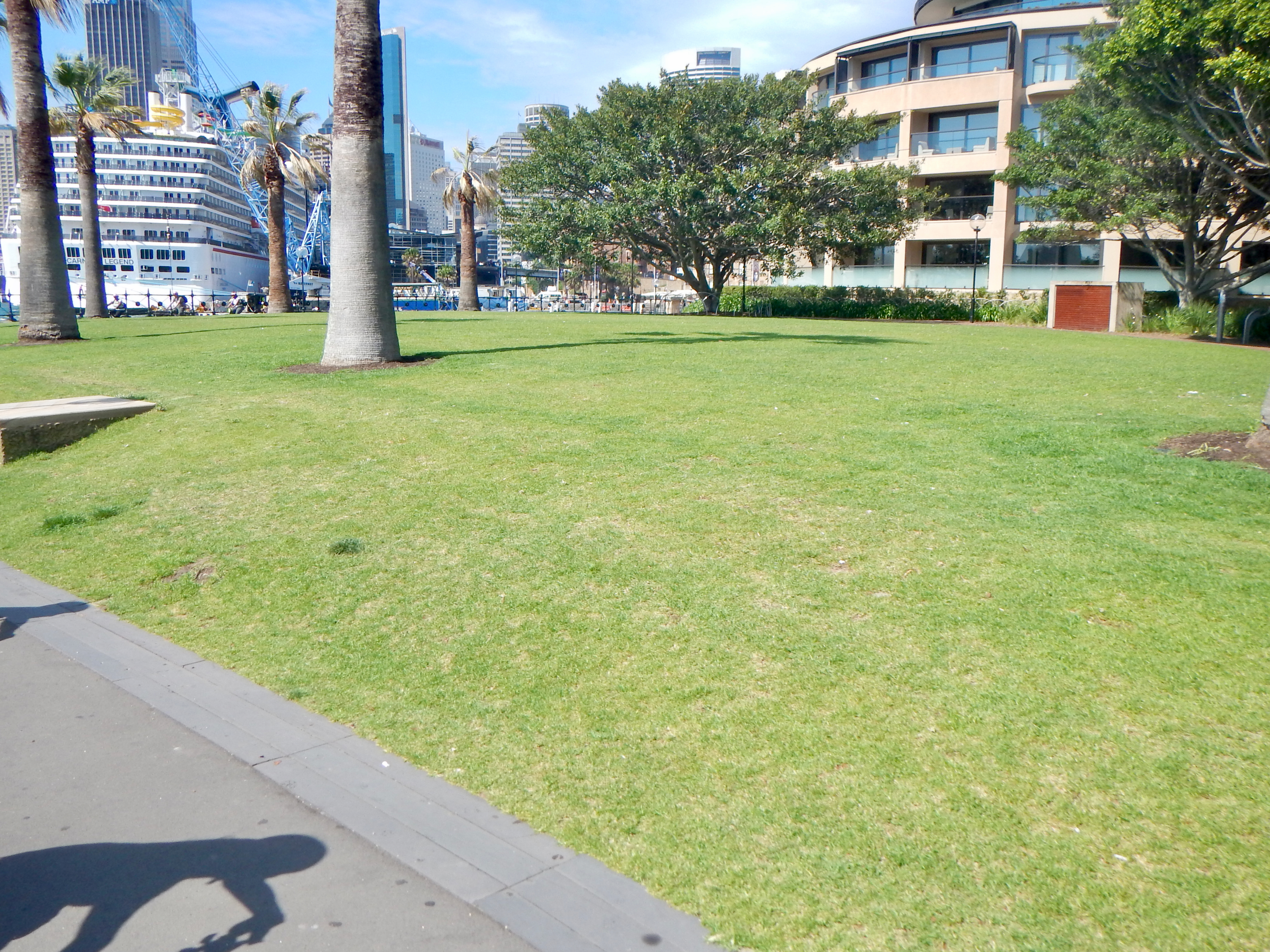
Hyatt Has Let This Happen For A While
This is where I think some of the anger is misplaced.
It is easy to point at Park Hyatt Sydney or Park Hyatt Tokyo and say they are dodging elite benefits. But the bigger issue is that Hyatt has allowed properties to fall into these exception categories for years. The program terms do not give members a simple, transparent, publicly useful list that says exactly which properties are exempt from guaranteed late checkout.
Instead, members are told to contact Hyatt if they need help figuring it out.
That might be fine for a one-off stay. It is less useful if you’re choosing between several expensive hotels and one of the reasons you value Hyatt status is because of a guaranteed 4 PM checkout.
In that situation, the classification matters. A lot.
A Public List Would Help
If Hyatt wants to keep this policy, there is a pretty simple solution: publish a list of properties where late checkout is subject to availability.
That would not fix the benefit. It would not make Globalists happy when a city property suddenly appears on the “resort” list. But it would at least make the rules clearer before people book.
Hyatt already knows which properties are considered resorts, casino hotels, Destination Residences, or otherwise exempt from the standard late checkout language. There is no reason members should have to call and ask, especially when late checkout can be one of the main reasons someone chooses Hyatt over another chain.
Give members the list. Let them decide whether the property still works for them.
Is Hyatt’s Late Checkout Too Generous?
This is where I may lose some people.
Hyatt’s late checkout benefit has long been one of the stronger elite perks among major hotel programs. A guaranteed 4 PM checkout for Globalists at eligible hotels is genuinely useful. Even 2 PM for lower-tier elites is better than what many other chains offer, where late checkout is often more of a request than a promise.
But when a benefit is that generous, hotels will look for pressure valves. Late checkout creates operational problems. If enough guests stay until 4 PM and the next wave of guests expects rooms to be ready around the same time, something has to give.
That doesn’t mean guests are wrong to value the benefit. It also doesn’t mean hotels are wrong to dislike how difficult it can be to deliver.
It means Hyatt created a benefit that sounds simple but becomes complicated in practice.
The Real Devaluation Already Happened
I understand why Hyatt loyalists are annoyed. Late checkout is one of those benefits that can make a trip much easier, especially when you have an evening flight. Losing the guarantee at high-end properties feels like a status devaluation.
But I’m not sure the correct target is Park Hyatt Sydney or Park Hyatt Tokyo.
The real issue is that Hyatt has written the rules in a way that allows this outcome. If properties can opt into, request, or otherwise receive a resort designation that changes how elite benefits apply, then members should be upset with the structure of the program, not only with the individual hotels using the structure.
The ship has probably sailed on Hyatt being the small, simple, member-friendly program many people remember. As the program grows, and as more expensive properties join the system, we’re going to see more exceptions, more category moves, more peak pricing pain, and more places where the fine print matters.
That’s not fun. But it also shouldn’t be surprising.
Final Thought
I’m not defending the practice as member-friendly. I’d much rather Hyatt make the late checkout rules clearer and publish a property-by-property list of where the benefit is not guaranteed.
But I also don’t think Park Hyatt Sydney or Park Hyatt Tokyo are the villains here. If Hyatt’s rules allow these properties to be treated as resorts, then they are using the system Hyatt created.
That may make the benefit less valuable. It may make Hyatt status feel less special. It may make some members think twice before booking these properties.
But getting mad at the hotels for following rules that already exist probably misses the bigger issue.
Want to comment on this post? Great! Read this first to help ensure it gets approved.
Want to sponsor a post, write something for Your Mileage May Vary, or put ads on our site? Click here for more info..
Like this post? Please share it! We have plenty more just like it and would love it if you decided to hang around and sign up to get emailed notifications of when we post.
Whether you’ve read our articles before or this is the first time you’re stopping by, we’re really glad you’re here and hope you come back to visit again!
This post first appeared on Your Mileage May Vary


4 comments
Interesting take. I partially disagree but interesting nonetheless. The hotels are acting like weasels to circumvent rules they clearly knew existed. That’s not letting Hyatt itself off the hook. From the way things are looking, WOH is the new Bonvoy and Hyatt is greedily following page after page of the Bonvoy playbook on how to alienate intensely loyal customers.
Your solution of clearly posting which hotels are resorts – whether they’re blatantly not a resort or actually are – is sensible and would at least mitigate the hostility Hyatt is engendering. Personally I think that the hotels knew what they were getting into and they can just put elites into normal rooms rather than upgraded ones to help ease the crush. Loyal customers obviously aren’t getting any attention so maybe the hotels themselves need to push harder on corporate rather than scamming guests.
While I’m personally glad to not have a dog in this fight, my sense is a lot of the anger comes from the fact that being loyal to Hyatt is more difficult due to their smaller footprint vs the other major players. One must often go out of their way to find a Hyatt, and in exchange it is expected that such loyalty will be rewarded more handsomely. Historically, that’s generally been true. But when they do things like this, which looks a lot like “playing games” with one of their most aspirational properties…top tier status holders are going to get ticked.
Of course the flip side is, PH Sydney attracts top tier status holders from all over the world and probably has a large contingent of them staying at any given moment…perhaps to the point that it would impact operations if they all could get a 4pm checkout.
Hyatt is like Delta. a company resting on a reputation a decade ago that is now a Cult with no real value.
This post is extremely unconvincing. Words have meanings and if the standard isn’t discernible by any of a long list of criteria then it just doesn’t exist.
Being expected to call a “global care center” (such an insulting term) to get answers to things that should be common sense or easily looked up is a terrible customer experience.
These distinctions are entirely arbitrary and doing the arbitrary-ness behind the curtain of Hyatt’s corporate lawyers doesn’t change that.