Picking which credit cards to keep in your wallet is a little like building a stone wall.
Some cards are the large rocks. They earn bonus points or provide valuable perks in major categories such as travel and dining. Others fill more specific roles, such as earning additional points on your cell phone bill or gas purchases.
Then there are cards you keep for a particular benefit, such as primary rental-car coverage or special perks when visiting Disney.
Finally, you need something to hold everything together. That’s where an everyday spending card comes in—the mortar of your credit card wall.
This is the card you use for purchases that don’t fit into a valuable bonus category. Since those expenses can add up quickly, it makes sense to use a card that earns more than the standard 1 point per dollar.
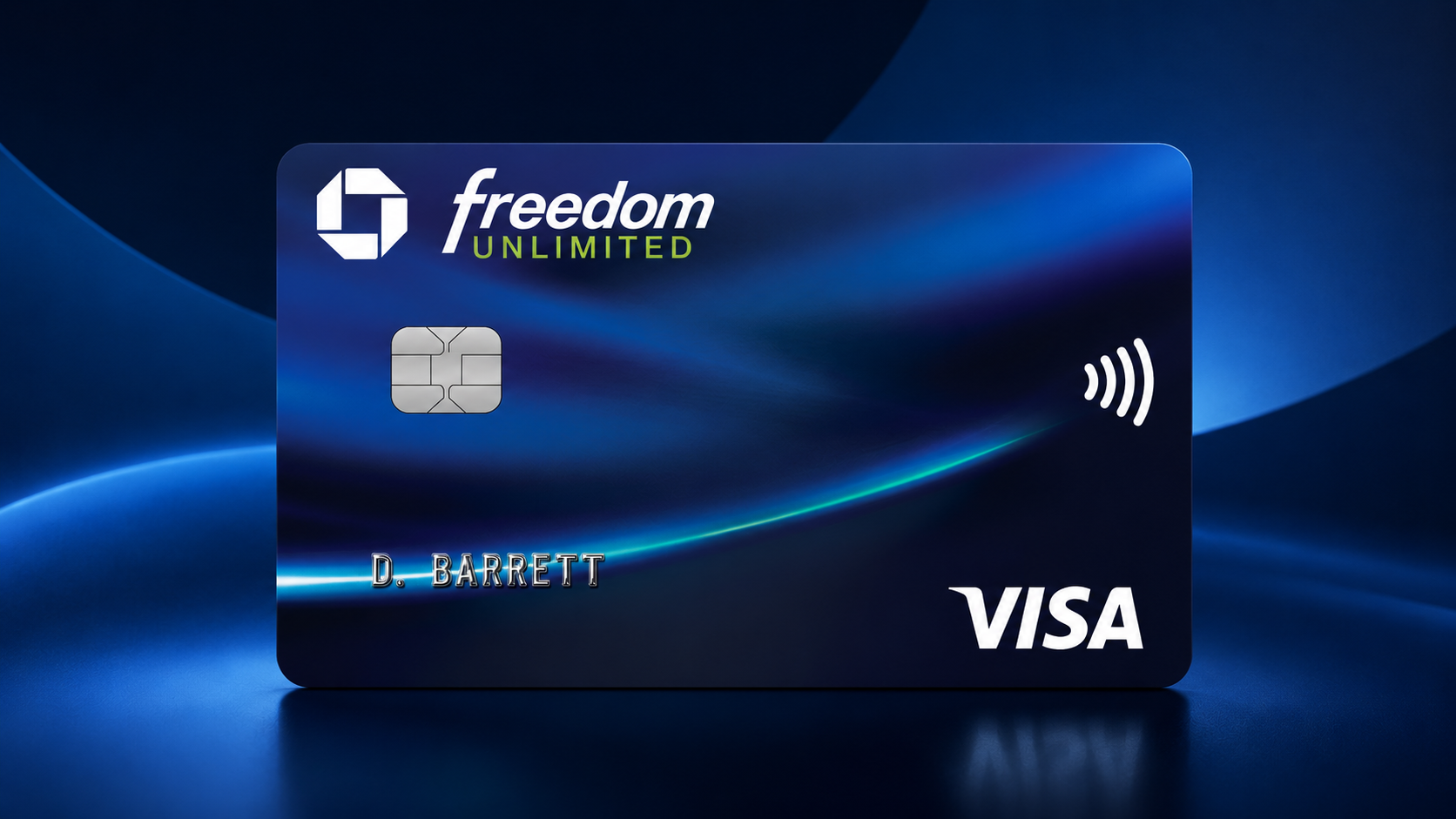
For years, the Chase Freedom Unlimited has filled that role in many Chase cardholders’ wallets. It earns 1.5X points on purchases that don’t qualify for one of its higher earning rates and has no annual fee.
However, the card makes much more sense as part of a larger Chase Ultimate Rewards strategy than it does on its own.
Chase Freedom Unlimited
You can apply for the Chase Freedom Unlimited through our Chase referral page. The page may also show the Chase Freedom Flex.
We can receive a referral bonus if you apply through that page and are approved for a card. We appreciate the support.
Credit card offers can change, so review the offer and terms shown on the application page before applying.
Annual Fee
The Chase Freedom Unlimited has no annual fee.
That makes it relatively easy to keep over the long term. Keeping a no-annual-fee card open can also help preserve the age of your credit accounts and provide another place to hold Ultimate Rewards points.
Current Welcome Offer
The Chase Freedom Unlimited currently offers a $200 bonus after spending $500 on purchases during the first three months after opening the account.
Although Chase advertises the reward as cash back, it is generally issued as 20,000 Ultimate Rewards points. Those points can be redeemed for $200 in cash back or used for travel or other purposes if you also hold an eligible premium Chase card.
The offer available when you apply can change, so confirm the current bonus and spending requirement on the application page.
Chase states that the card is unavailable if you currently have a Chase Freedom Unlimited or received a new cardmember bonus for this card within the previous 24 months.
The Freedom Unlimited is also generally subject to what’s commonly called the Chase 5/24 rule. Based on extensive reports from applicants, Chase will usually deny an application when someone has opened five or more personal credit cards across all banks during the previous 24 months.
Chase does not formally publish the 5/24 rule, and there can be exceptions, but it remains something to consider before applying.
Earning Rates
The Chase Freedom Unlimited earns:
- 5% cash back on travel purchased through Chase Travel
- 3% cash back at restaurants, including eligible takeout and delivery
- 3% cash back at drugstores
- 1.5% cash back on all other eligible purchases
The 1.5X earning rate is why many people use the Freedom Unlimited for everyday purchases that don’t earn a bonus on another card.
However, 1.5X is no longer exceptional on its own. Several cards now earn 2% cash back or 2X points on general purchases. Whether the Freedom Unlimited is the better choice depends largely on how much value you get from Chase Ultimate Rewards points.
Why We Use It For Non-Bonused Spending
The Freedom Unlimited becomes more interesting when paired with a card that allows transfers to Chase’s airline and hotel partners.
For example, someone who also has a Chase Sapphire Preferred, Chase Sapphire Reserve or Ink Business Preferred can move the points earned with the Freedom Unlimited into that account. Those points can then be transferred to Chase’s participating airline and hotel programs.
That turns the card’s 1.5% cash-back earning rate into 1.5 transferable Ultimate Rewards points per dollar.
Whether that’s better than earning 2% cash back depends on how you use the points. Someone redeeming them for cash would earn less with the Freedom Unlimited. Someone who transfers them to a travel partner and receives more than 1.33 cents per point would come out ahead.
That’s why this card’s value depends heavily on the rest of your wallet.
Foreign Transaction Fee
The Freedom Unlimited charges a 3% foreign transaction fee.
That means it isn’t a good card to use internationally or for purchases processed in a foreign currency. Even the additional points earned at restaurants won’t offset a 3% fee.
When traveling overseas, use a card that doesn’t charge foreign transaction fees.
Travel And Purchase Protections
The Chase Freedom Unlimited includes several protections that are better than what you might expect from a no-annual-fee card.
These include:
- Trip cancellation and interruption insurance: Up to $1,500 per covered traveler and $6,000 per trip for eligible prepaid, nonrefundable passenger fares when a trip is canceled or interrupted for a covered reason.
- Auto rental coverage: Coverage for eligible theft or collision damage when you decline the rental company’s collision coverage and pay for the rental with the card. Coverage is secondary to your personal automobile insurance for rentals in the United States.
- Purchase protection: Coverage for eligible new purchases against damage or theft for 120 days, up to $500 per item.
- Extended warranty protection: An additional year on eligible U.S. manufacturer warranties of three years or less.
- Travel and emergency assistance: Access to referrals and assistance while traveling, although you remain responsible for the cost of services received.
These protections are useful, but they aren’t as comprehensive as those offered by several premium travel cards.
In particular, the Freedom Unlimited doesn’t provide trip-delay reimbursement. We wouldn’t choose it over a stronger travel card solely because a purchase earns an additional half-point per dollar.
Likewise, its rental-car coverage is secondary in the United States. We generally prefer using a card that provides primary rental-car coverage.
Always consult the current Guide to Benefits for coverage terms, exclusions and claim requirements.
Introductory APR
The card currently offers a 0% introductory APR on purchases and balance transfers for 15 months from account opening.
After the introductory period, the card’s standard variable APR applies. Balance-transfer fees also apply.
Rewards are only valuable when you pay the statement balance in full. Interest charges can quickly outweigh any cash back or points earned.
Is The Freedom Unlimited Still Worth Getting?
The Chase Freedom Unlimited can still be an effective everyday spending card, but its role has changed.
When it launched in 2016, earning 1.5X on all purchases was more distinctive. Today, plenty of cards offer 2% cash back or 2X rewards on general spending, making the Freedom Unlimited less compelling as a standalone cash-back card.
Its strongest use is within a Chase Ultimate Rewards strategy. When paired with a Chase Sapphire Preferred, Chase Sapphire Reserve or Ink Business Preferred, the card provides a way to earn 1.5 transferable points per dollar on purchases that would otherwise earn only 1X.
We can use other Chase cards for purchases that earn 3X or 5X, then use the Freedom Unlimited for many of our non-bonused expenses. Those points can be combined with an eligible premium Chase account and transferred to travel partners.
That approach won’t make sense for everyone. Someone primarily interested in cash back can find cards that earn 2% on all purchases, while someone who prefers a different transferable points program may have a better option.
However, for people already invested in Chase Ultimate Rewards, the Freedom Unlimited still fills an important role. It has no annual fee, useful bonus categories and a reasonable collection of purchase and travel protections.
The card may not be the largest rock in a credit card strategy, but it can still serve as the mortar holding a Chase wallet together.
Want to comment on this post? Great! Read this first to help ensure it gets approved.
Want to sponsor a post, write something for Your Mileage May Vary, or put ads on our site? Click here for more information.
Like this post? Please share it! We have plenty more just like it and would love it if you decided to stick around and sign up for email notifications when we publish new posts.
Whether you’ve read our articles before or this is your first visit, we’re glad you’re here and hope you come back again.
This post first appeared on Your Mileage May Vary.