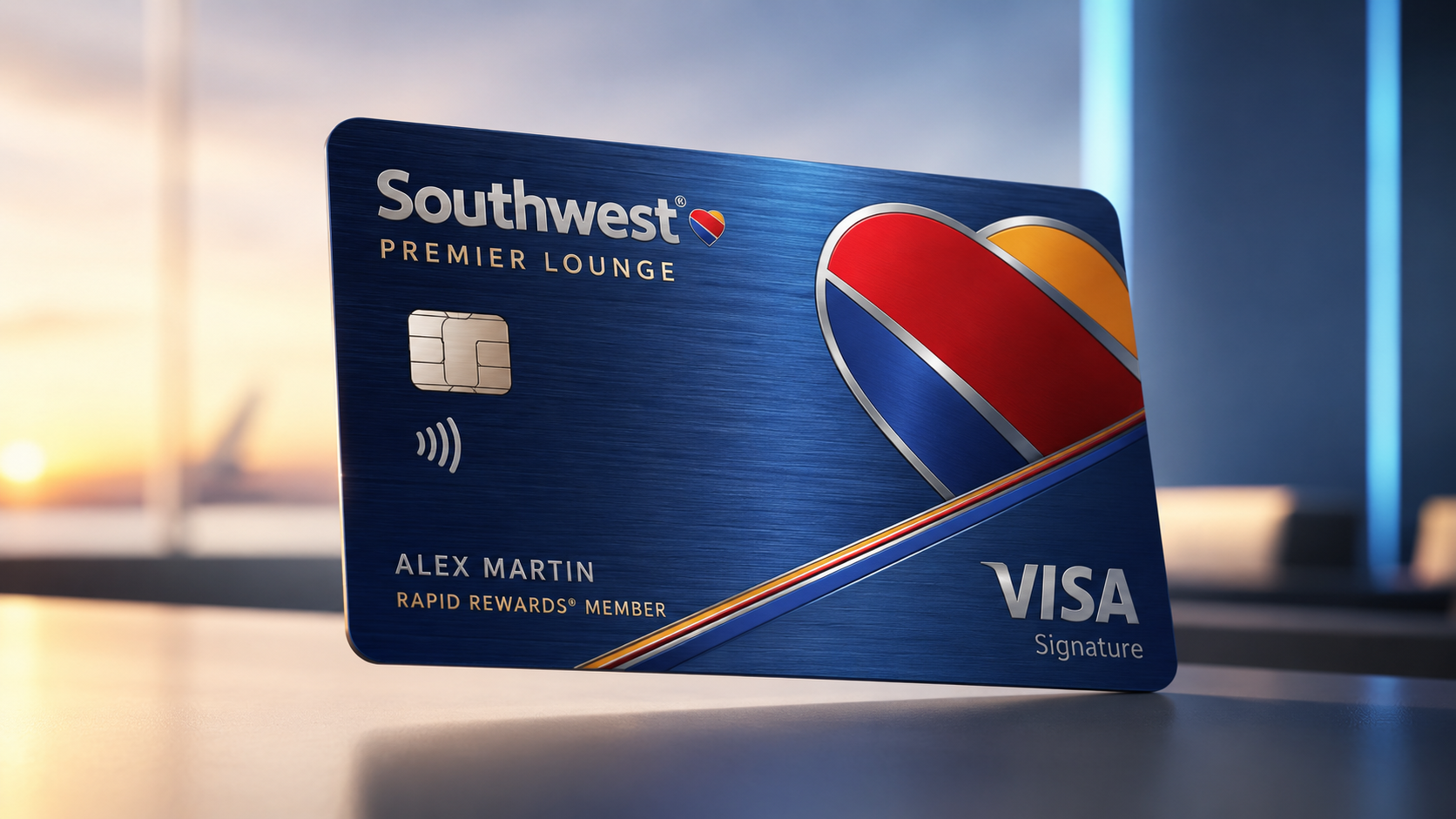
Southwest Airlines appears to be planning something that would have sounded almost unthinkable a few years ago: an expensive premium credit card tied to a network of Southwest airport lounges.
During Southwest’s second-quarter earnings call, CEO Bob Jordan confirmed that the airline is working on lounges and intends to continue expanding its co-branded credit card lineup.
“We fully intend to continue to expand the co-brand offering and opportunities for our customers. I know I’ve teased the lounges. That’s something, obviously, that there’s work underway,” Jordan said.
He stopped short of formally announcing either the lounges or a new card. Still, this is no longer just speculation about something Southwest might consider someday.
Southwest has reportedly been working on lounge space in Austin, Dallas Love Field, Nashville, Denver and Honolulu. The airline has also surveyed customers about a possible premium credit card costing somewhere between $395 and $650 annually.
That card could include access to Southwest lounges, a Priority Pass membership and some combination of seating, baggage and travel benefits.
The question isn’t whether Southwest wants to enter the premium credit card market. The cover image is a concept and does not depict an officially announced Southwest credit card.
It’s whether enough Southwest customers actually want it.
Every Travel Brand Apparently Needs A Premium Card
For years, the premium travel card market was dominated by products such as the American Express Platinum Card and Chase Sapphire Reserve. The major airlines eventually built their own expensive cards around established lounge networks, elite-style benefits and incentives to keep spending within their loyalty programs.
More recently, seemingly every travel brand has decided it needs a premium card.
JetBlue introduced the $499 JetBlue Premier Card as it prepared to open its first airport lounges. Alaska Airlines launched the $395 Atmos Rewards Summit Visa Infinite Card. Wyndham, a hotel company better known for Days Inn, Super 8 and La Quinta than high-end resorts, introduced its own $395 Wyndham Rewards Earner Premier Card.
That doesn’t automatically make any of those cards bad. Each may work for a particular type of traveler.
However, there’s sometimes a disconnect between the brand’s image and the card’s luxury positioning. A credit card can have “Premier,” “Summit” or “Infinite” in its name, but someone still has to look at the benefits and decide they’re worth paying several hundred dollars every year.
Southwest may soon face the same challenge.
What Would Make A Southwest Premium Card Different?
Southwest already has a strong credit card following. Its current cards offer anniversary points, spending toward the Companion Pass and benefits that can be useful to regular Southwest flyers.
A premium Southwest card would have to offer significantly more.
Lounge access would be the obvious centerpiece, but the value would depend heavily on where the lounges are located. Someone based in Dallas, Denver, Nashville or Austin might use a Southwest lounge regularly. Someone flying Southwest from Orlando, Baltimore, Chicago Midway or dozens of other cities might rarely see one.
A Priority Pass membership could fill some of that gap. However, Priority Pass is already included with several premium travel cards. It’s difficult to justify another expensive annual fee when the most widely available lounge benefit duplicates something a traveler already receives.
Southwest would presumably add benefits tied more directly to the airline. Possibilities previously presented in customer surveys included preferred seat selection, extra-legroom upgrades, waived fees and an annual flight credit after meeting a spending requirement.
However, versions of many of these benefits are already available through Southwest’s existing co-branded cards. A premium product would need to make them substantially better, not merely bundle them together under a higher annual fee.
Those perks also highlight one of the problems with Southwest’s transformation.
Benefits that were once part of the Southwest experience are increasingly being sold back to passengers through fares, fees, elite status and credit cards.
Would It Replace A Sapphire Reserve Or Amex Platinum?
That may be the most important question.
A general premium travel card provides benefits across multiple airlines and hotel programs. Depending on the card, that can include transferable points, travel protections, statement credits and access to several lounge networks.
A Southwest premium card would presumably provide its greatest value when flying Southwest.
That’s fine for someone who flies the airline frequently and can regularly use its lounges. But even loyal Southwest customers may still need a broader card for international trips, hotels and flights on other airlines.
Instead of replacing an Amex Platinum, Sapphire Reserve or another premium travel card, the Southwest card could become an additional annual fee.
At $395, that might be manageable if the benefits were easy to use and provided real Southwest-specific value. At $650, the card would need to offer much more than access to a handful of lounges and a collection of coupons.
There’s also the question of how many premium cards one person wants to manage. Each new product arrives with its own credits, spending requirements, enrollment rules and expiration dates. At some point, even valuable benefits can become more work than they’re worth.
Southwest Still Has Something Other Cards Don’t
Southwest does have one major advantage: an unusually loyal customer base.
Many travelers choose Southwest because of its route network, Companion Pass, and straightforward redemption system. Its co-branded cards have been popular because they help customers get more from the airline they were already flying with.
That gives Southwest a credible audience for a higher-end card.
But Southwest is also changing rapidly. Assigned seating, extra-legroom seats and checked-bag fees have made it look much more like the airlines it once differentiated itself from.
Adding lounges and a luxury credit card would continue that transformation.
The success of the card may depend on whether customers see the new Southwest as an airline offering a genuinely better premium experience—or simply another carrier charging extra for benefits that have become standard across the industry.
Would You Pay For A Southwest Premium Card?
I’m not against Southwest introducing a premium card. More choices can be useful, particularly for travelers based in cities where Southwest has a large presence and plans to operate a lounge.
But the card would need to provide something I can’t easily get elsewhere.
A small lounge network and another Priority Pass membership wouldn’t be enough. Neither would a long collection of narrowly defined credits that technically offset the annual fee but require me to change my spending habits to use them.
Southwest would need to build the card around how its customers actually travel. That could mean meaningful Companion Pass benefits, useful seat upgrades at booking, strong anniversary rewards or lounge access that extends beyond five airports.
Even then, Southwest would face a difficult question: Would customers replace an Amex Platinum, Sapphire Reserve or another premium travel card with this one, or would they be expected to add another $395 to $650 annual fee to their wallets?
For most travelers, I suspect the answer will be to keep a general-purpose premium card and use one of Southwest’s less expensive cards for airline-specific benefits.
Would a Southwest lounge card appeal to you? And what would Southwest need to include before you’d pay a $395—or potentially $650—annual fee?
Want to comment on this post? Great! Read this first to help ensure it gets approved.
Want to sponsor a post, write something for Your Mileage May Vary, or put ads on our site? Click here for more info.
Like this post? Please share it! We have plenty more just like it and would love it if you decided to hang around and sign up to get emailed notifications of when we post.
Whether you’ve read our articles before or this is the first time you’re stopping by, we’re really glad you’re here and hope you come back to visit again!
This post first appeared on Your Mileage May Vary