The FAA just showed its hand: it’s taking the path of least resistance. And if they think their new rule will actually be helpful, they’ve got another thing coming.
In other words, if something has to change, rulemakers will often call on those to reiterate the new rule (read: lip service), instead of figuring out a way to make the new rule actually effective.
Case in point: the process for exiting a plane during an aviation emergency.
You’ve probably seen video of people exiting a plane during an emergency. People from, say, Japan, do what they’re instructed to do: leave their seat in an organized manner, and leave all of their carry on bags on the plane to enhance speed and safety. From the BBC:
Japan Airlines Flight 516 turned into a fireball after it collided with a coastguard plane as it landed. Five of the six people on board the smaller aircraft – which had been due to deliver aid to victims of the powerful New Year’s Day earthquake – died.
But everyone on Flight 516 survived, with the flawless evacuation from the cabin as it filled with smoke astounding the world and winning praise from many. Aviation experts and industry professionals told the BBC it boiled down to staff on board putting their rigorous training into practice and “well-behaved” passengers who obeyed safety protocols.
“I don’t see a single passenger on the ground, in any of the videos I’ve seen, that has got their luggage with them… If people tried to take their cabin luggage, that’s really dangerous because they would slow down the evacuation,” said Prof Ed Galea, director of the fire safety engineering group at the University of Greenwich in London.
And then you’ve got us Americans. Here’s a picture of some passengers being evacuated from their American Airlines flight departing from Denver Int’l Airport earlier this year:
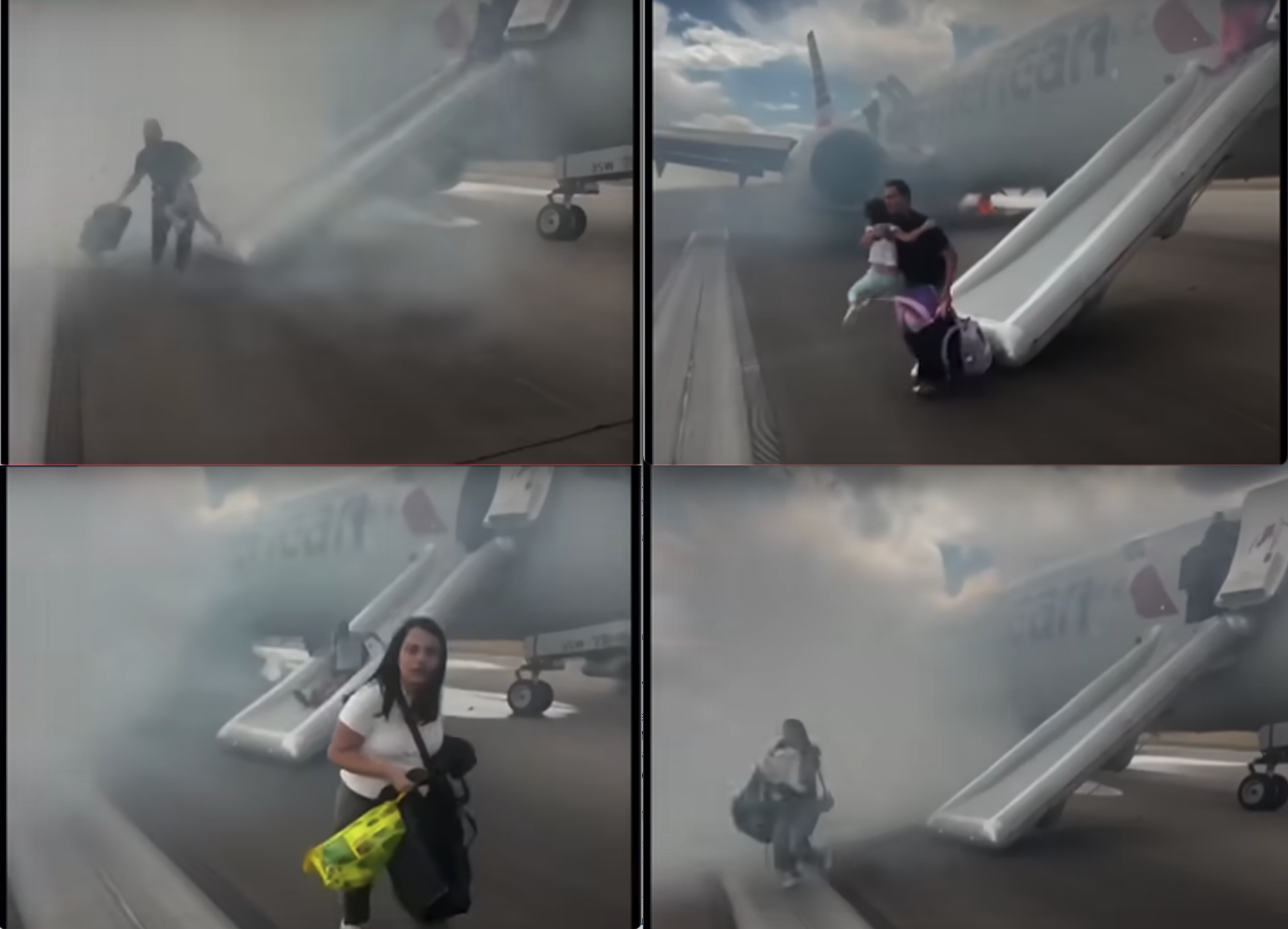
These were just some of the people who carried their rollaboards, computer bags, backpacks, and whatever else they had brought onto the plane, with them as they exited through the emergency slide.
I promise you that not one flight attendant told them it was OK to go down the slide with their stuff. But that’s us Americans – we do what we want, when we want, regardless of what we’re told, until we suffer consequences.
We’re the country of “rules are made for other people but not for me,” and FAFO.
Meanwhile, according to the FAA, commercial aircraft need to be able to be fully evacuated in 90 seconds or less. According to CNN, evacuating this aforementioned American Airlines flight took 10 to 15 minutes.
I wonder how long it would have taken if people just, you know, calmly exited the plane and left all their belongings behind, like they were told. Not that this was the first time American passengers left their plane during an emergency situation and didn’t grab their stuff. This is just the latest of many occasions.
So after many troubling evacuation incidents, the FAA is now pushing U.S. airlines to better train their flight attendants. In a new safety alert, the agency stressed that crew members must do more to enforce evacuation rules, particularly that they must leave all of their carry-on bags on the plane in the event of an emergency evacuation.
I’ve been on over 20 flights in the past month and change and yep, flight attendants have said during every safety spiel that (paraphrased), “In the event of an emergency evacuation, you must leave your belongings behind as you exit the plane.”
Tell me how influential that one sentence, thrown in among “how to open your seat belt,” “there’s a light on your safety vest that turns on when it hits water” and “oxygen is flowing, even if the bag doesn’t inflate,” will be?
Not one bit.
While these kinds of emergencies have highlighted passenger noncompliance time after time, the FAA’s directive shifts the responsibility onto flight attendants. Does the FAA really think that repeating these instructions will suddenly encourage passengers to not bring their belongings with them? Are they that out of touch with, I won’t say human nature, because people in other countries follow directions, but Americans’ nature?
From a flight attendant who’s also an influencer:
While I will always support enhanced training for flight attendants, this directive feels like a poor attempt by federal agencies to shift blame rather than critically examine their own procedures and policies. For example, why isn’t the FAA calling for penalties against the countless passengers who ignore crew instructions and drag their suitcases off during evacuations? Where is the accountability for them?
That last sentence, though.
People will keep doing what they want, unless they feel there’s some sort of punishment for being non-compliant.
During COVID, there was lots of pushback about not wearing masks on the plane (I know this current regime said it shouldn’t have happened; but that’s not the point. Right or wrong, at the time, wearing a mask was a requirement of flying). but once the airline industry and government made it 100% clear that there would be consequences for not following the rules, the pushback slowed considerably.
Maybe, instead of just telling flight attendants to remind passengers, most of whom aren’t paying attention to the safety spiel to begin with, to leave their bags behind, that it’s spelled out what will happen if they don’t. Something like, “You could be fined $X for doing so because it will slow down the evacuation process and you or others could die.” Or they could receive a lifetime ban from flying. Or something… anything… to help increase accountability.
But telling FAs to remind PAX to not bring their stuff during an emergency? That’s not going to stop anyone’s inappropriate behavior. At all.
Want to comment on this post? Great! Read this first to help ensure it gets approved.
Want to sponsor a post, write something for Your Mileage May Vary, or put ads on our site? Click here for more info.
Like this post? Please share it! We have plenty more just like it and would love it if you decided to hang around and sign up to get emailed notifications of when we post.
Whether you’ve read our articles before or this is the first time you’re stopping by, we’re really glad you’re here and hope you come back to visit again!
This post first appeared on Your Mileage May Vary

2 comments
It’s pretty simple, those without any bags gets top leave first in the front, those who want their bags can leave later. – your option … also, if you leave with your bag, you waive the right to sue … pretty simple. The choice is up to you.
You’re completely right but it’s going to take either a horrific situation where multiple people die in a western country because disembarcation was a problem due to some people caring more about their stuff than human life or the overheads being sealed by the pilots during emergency situations.