There are plenty of foods people love so much that they’ll go through a little extra effort to bring them home.
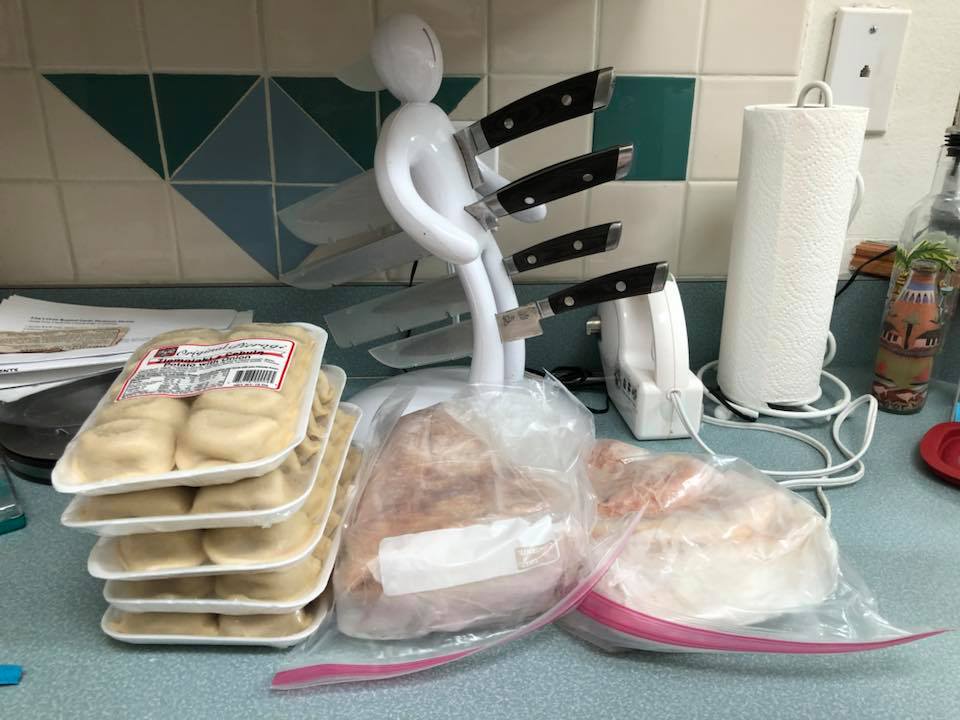
We’ve done it ourselves. We’ve brought home BBQ from Texas. We’ve crossed New York City for old-school Chinese food and brought some of that home, too. I’ve personally flown with five packages of potato & onion pierogies and an entire pizza from New Jersey after going back for my class reunion.
And we’re not alone. Some people bring home hot sauce. Others bring home wine. One person even managed to get a backpack full of H-E-B tortillas through the airport.
Honestly, I get it. Sometimes a regional food is part of the trip. And sometimes, once you get home, you’re very glad you made room in your bag for it.
But there’s a very important distinction here: bringing food on a domestic flight within the United States is not the same thing as bringing food into the United States from another country.
Domestic Flights? Usually Fine. International Arrivals? Different Story.
For domestic U.S. travel, the TSA is generally pretty flexible with food. Solid foods are usually allowed in carry-on bags, while liquids or gels over 3.4 ounces need to go in checked luggage or stay home. That’s why things like sandwiches, pizza, tortillas, cookies, candy, bread and most other solid foods are usually fine through TSA screening. You can also check the TSA’s “What Can I Bring?” food page before you pack.
There are still exceptions. Some places have agricultural restrictions, especially when traveling from places like Hawaii, Puerto Rico or the U.S. Virgin Islands to the mainland. And, as always, the final decision rests with the TSA officer at the checkpoint.
But customs is a different world.
When entering the United States from another country, travelers are required to declare agricultural products, and items like meat, poultry, fruits, vegetables, plants, seeds, soil and certain animal or plant products may be prohibited or restricted. CBP and USDA take this seriously because those items can carry pests or diseases that could affect U.S. agriculture.
Which brings us to the sandwiches.
The Case Of The 100+ Sandwiches
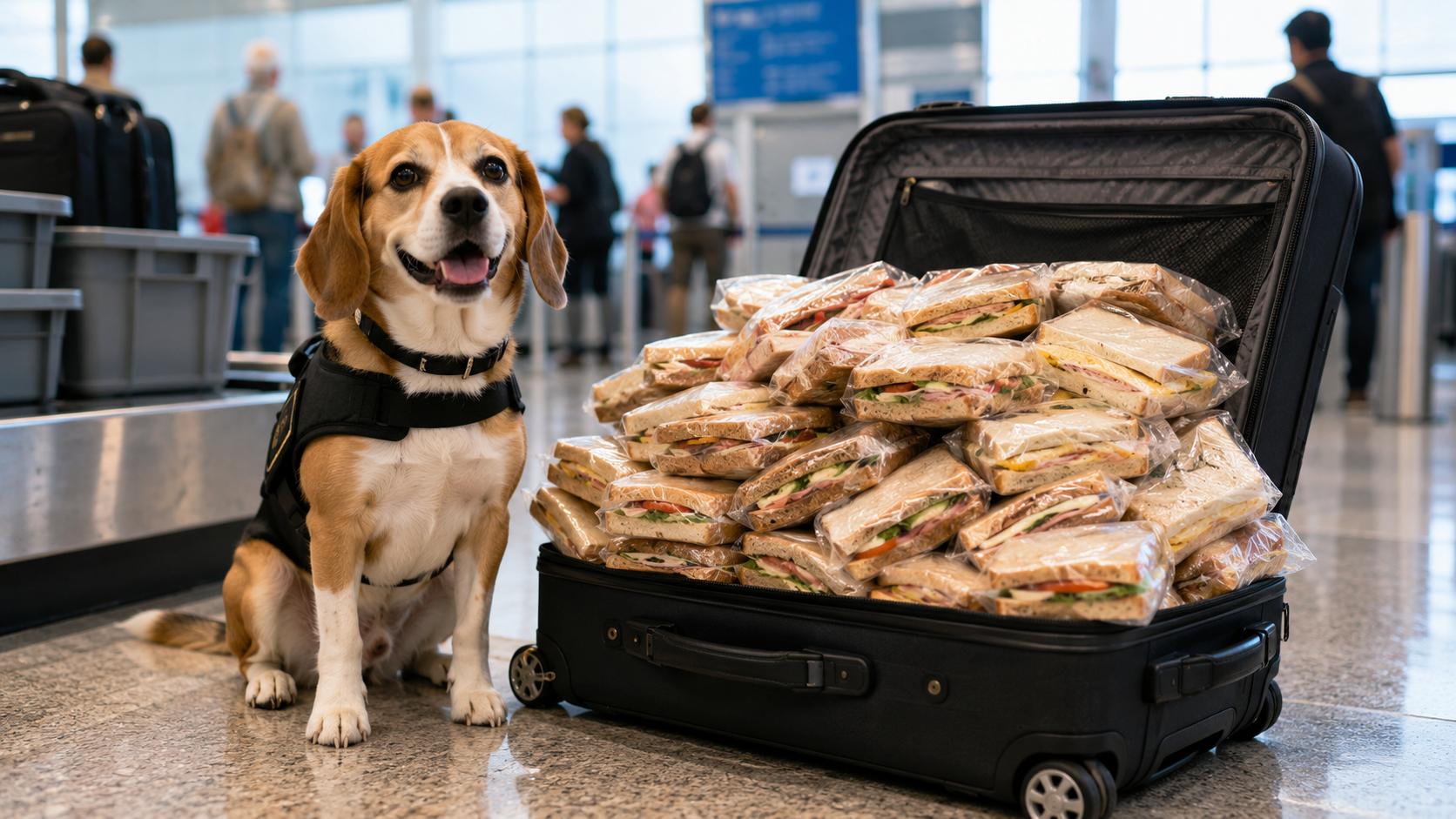
According to Snopes, a U.S. Customs and Border Protection K-9 named Merla sniffed out more than 100 pork and chicken sandwiches from Thailand in a traveler’s luggage.
Yes, more than 100 sandwiches.
That’s not “I packed a snack for the flight.” That’s “I may have misunderstood what meal prep means.”
The sandwiches were reportedly from 7-Eleven in Thailand, where the toasted sandwiches have a bit of a cult following among travelers. If you’ve spent any time reading about Thailand travel, you’ve probably seen people talk about those 7-Eleven toasties like they’re a national treasure.
Apparently, one traveler liked them enough to try to bring a whole stash into the United States.
Merla, however, had other plans.
CBP said the sandwiches were discovered in luggage and destroyed because meat products must be declared and are often prohibited from entering the country. That’s the part many travelers miss. It doesn’t matter that the food was purchased from a store, wrapped up, or meant for personal use. If it contains meat or poultry and you’re bringing it into the U.S., you need to declare it and be prepared for CBP to say no.
And Then It Was Turned Into Marketing
The funniest part of the story may be what happened next.
Rather than ignore the viral sandwich bust, Lepan Bakery, which makes the sandwiches, leaned into it. The company reportedly used the moment to remind people that while you can’t bring those sandwiches into the United States through customs, you can still buy them locally in Thailand.
That feels very on-brand.
It’s not all that different from the H-E-B tortilla situation. Sometimes a regional product becomes so beloved that travelers want to take it home with them. The difference is that tortillas in a backpack on a domestic flight are one thing. A suitcase full of pork and chicken sandwiches entering the United States is something else entirely.
So What Food Can You Bring Home?
The safest answer is: it depends.
Packaged snacks, candy, coffee, tea, spices and some commercially packaged items may be allowed, but the rules vary depending on the item and where it came from. Fresh fruit, vegetables, meat, poultry, plants, seeds and anything involving soil are where things get much more complicated.
The big rule is simple: declare it.
If you’re entering the United States with food, tell CBP what you have. If it’s allowed, great. If it’s not, they’ll confiscate it. But failing to declare food can create much bigger problems than just losing your snack.
And if a beagle starts showing interest in your bag, assume your sandwich is no longer a secret.
Final Thought
I completely understand wanting to bring favorite foods home from a trip. We’ve done it plenty of times. Most recently, we brought home a bag full of Ribena from the UK, because apparently that’s what passes for a souvenir in our house.
But there’s a big difference between bringing home food from another U.S. city and bringing food into the country from overseas. TSA may not care about your pizza, pierogies or tortillas. Customs absolutely may care about your meat-filled sandwich collection.
So bring home the snacks. Pack the regional favorites. Save room in your bag for the stuff you can’t easily buy at home.
Just make sure it’s allowed before you end up starring in the next episode of U.S. Customs Patrol.
Want to comment on this post? Great! Read this first to help ensure it gets approved.
Want to sponsor a post, write something for Your Mileage May Vary, or put ads on our site? Click here for more info..
Like this post? Please share it! We have plenty more just like it and would love it if you decided to hang around and sign up to get emailed notifications of when we post.
Whether you’ve read our articles before or this is the first time you’re stopping by, we’re really glad you’re here and hope you come back to visit again!
This post first appeared on Your Mileage May Vary