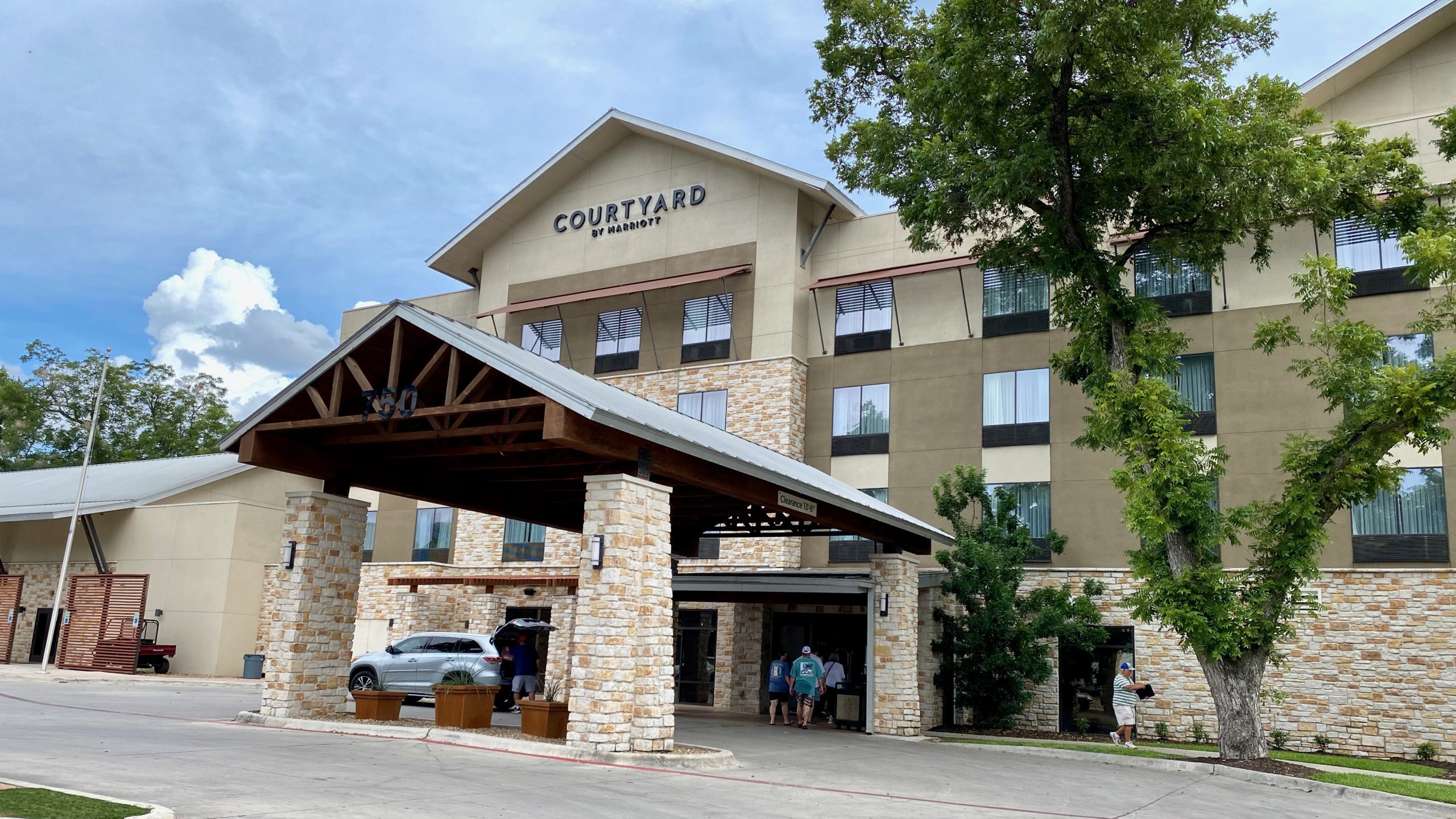
Some hotel brands are easy to understand because they’re consistent.
Hampton Inn, Fairfield Inn and Holiday Inn Express all fall into the same general category: free breakfast, basic amenities and a predictable place to sleep. There are differences between them, but most travelers understand the category.
Courtyard by Marriott is different.
I know what Courtyard started as. It was Marriott’s business-traveler brand: a step above the free-breakfast limited-service hotels, but not quite a full-service Marriott. And at many properties, that original idea still shows.
But after staying at several Courtyards over the years, I’ve noticed the brand isn’t really focused on that space anymore. Sure, some still feel like the original Courtyard experience. Others feel like a Courtyard was squeezed into another hotel’s shell. And then there are properties like Courtyard New Braunfels River Village, where the hotel feels more like a leisure property than anything designed around a weekday business trip.
That doesn’t necessarily mean Courtyard has lost its way. Moreso, it’s that over the decades, the brand has become something different.
Courtyard Started With A Clear Idea
Courtyard was created for a traveler who needed more than a basic roadside hotel but didn’t necessarily need a traditional full-service property. Marriott currently describes Courtyard as offering a “productive and refreshing” stay, with modern rooms, flexible workspaces, high-speed Wi-Fi and on-site dining.
That explains a lot about the design choices: a better lobby, places to work, à la carte breakfast, some grab-and-go food, a bar, and a room that was functional rather than fancy.
That model made sense. If you were traveling for work, especially if someone else was paying the bill, free breakfast doesn’t matter as much as having a usable desk, reliable Wi-Fi (or a wired internet connection), and somewhere to grab coffee before heading out.
But Courtyard Isn’t Just A Business Hotel Anymore
That original idea still explains a lot about Courtyard, but it doesn’t explain everything. Over time, Marriott expanded the brand far beyond the “business hotel near an office park” model.
You’ll find Courtyards near airports, in downtown neighborhoods and in major cities. They’re close to tourist areas and other places where the typical guest has nothing to do with business travel. At that point, Courtyard becomes less of a specific hotel concept and more of a general expectation.
Marriott Bonvoy has plenty of brands, but Courtyard isn’t Fairfield Inn, and it isn’t a full-service Marriott. It sits somewhere in between.
The Different Kinds Of Courtyards We’ve Stayed At
The Standard Courtyard
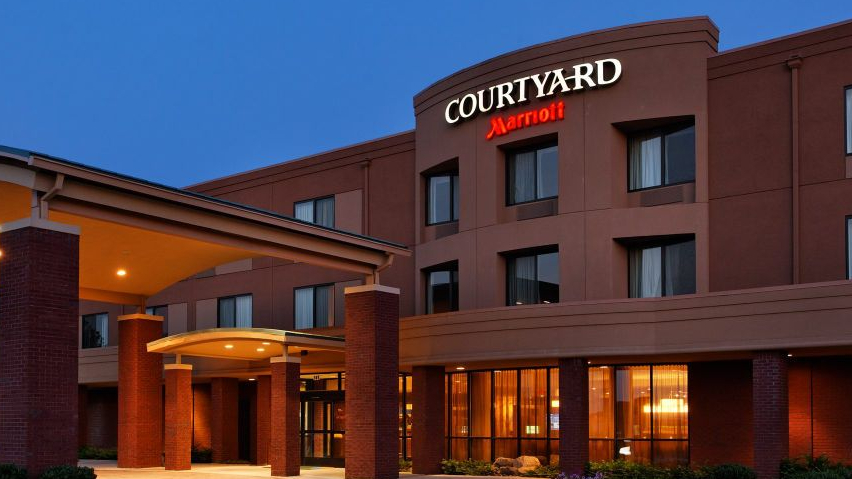
These are the properties where the brand makes the most sense. You get the Bistro, the work-friendly lobby, a room that does the job and a hotel that feels designed around functionality more than personality.
There’s nothing wrong with that. Sometimes that’s exactly what we need.
The Urban Courtyard That Feels Like Something Else
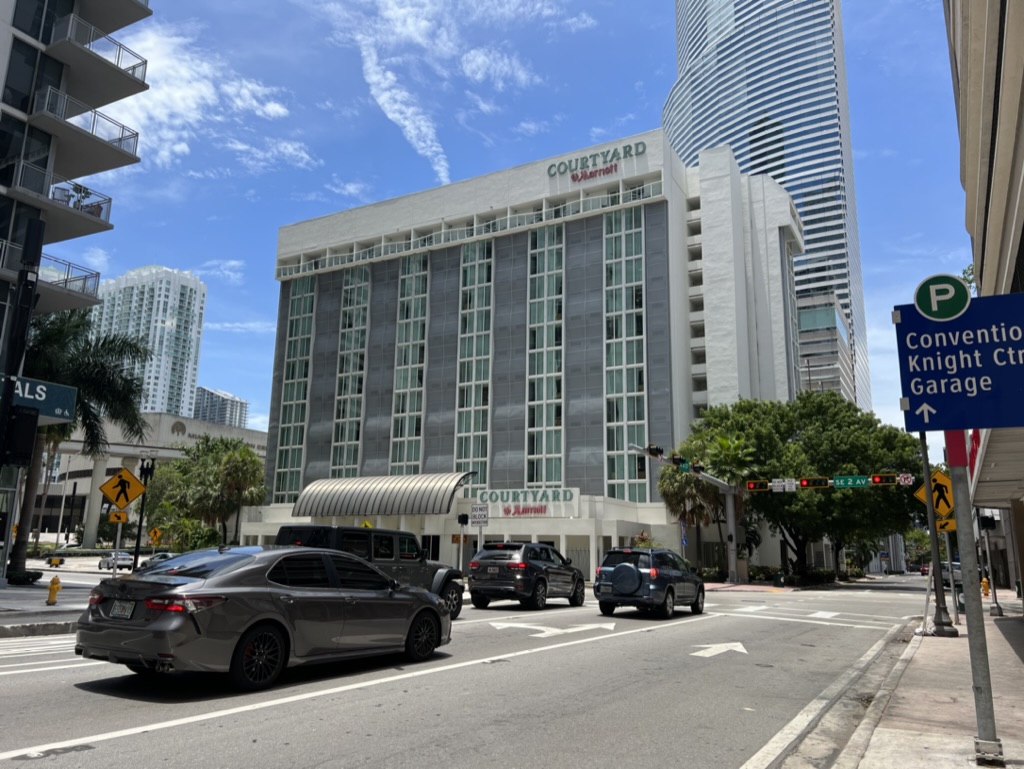
Then there are the Courtyards that don’t feel like they started life as a Courtyard at all. The Courtyard Long Island City and Courtyard Miami Downtown/Brickell Area both fall into that category for me.
They still carry the Courtyard name, but the experience is shaped as much by the building and location as by the brand. Instead of feeling like the standard Courtyard template, they feel more like urban hotels that happen to operate under the Courtyard flag.
The Courtyard That Feels Almost Like A Resort
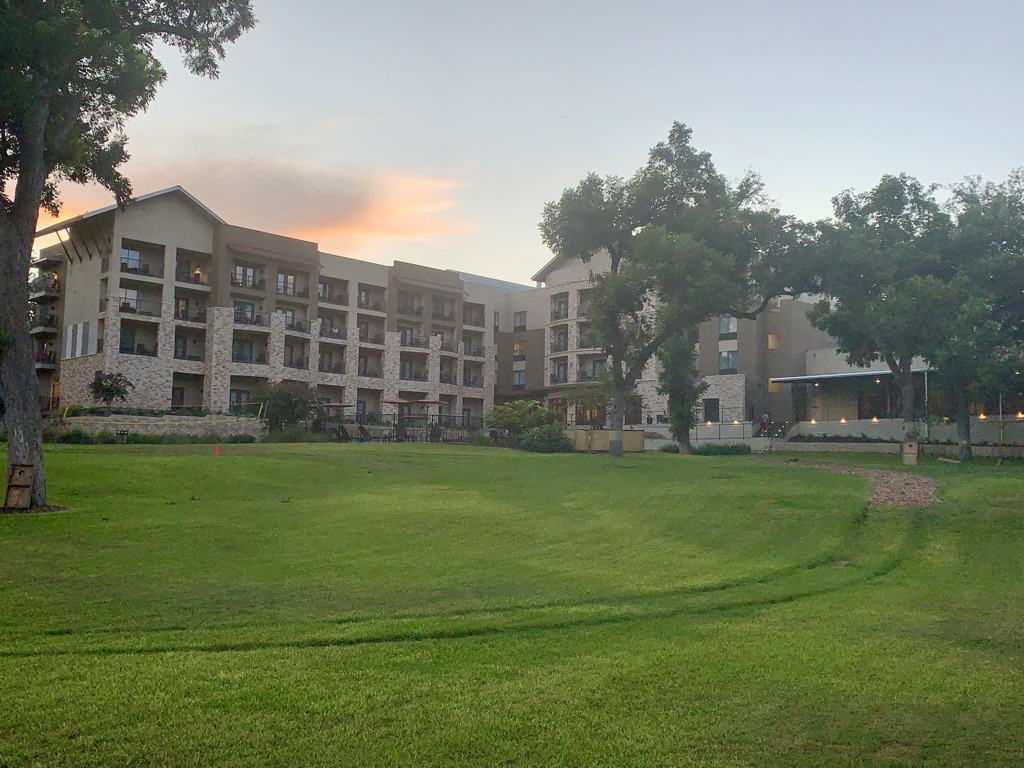
And then there are properties like Courtyard New Braunfels River Village, where the brand name almost undersells the hotel.
That property doesn’t fit my mental image of a Courtyard at all. It’s on the river, has more of a leisure feel and seems aimed at a totally different traveler than the original weekday business guest. Sure, we’ve seen our share of business travelers working in the Bistro area, but it’s not the bulk of the hotel’s guests.
Somehow, They Still Feel Like Courtyards
The strange thing is that, despite all those differences, they all feel like Courtyard by Marriott.
That may be the real strength of the brand. Marriott has expanded Courtyard into different building types, markets and guest experiences, but the name still gives travelers a general idea of what to expect. Not luxury. Not bare-bones. Not usually full-service. But familiar, practical and usually good enough for the trip.
Why Courtyard Is Hard To Copy
That’s a hard space for a hotel brand to occupy. It’s even harder to copy.
If another chain tried to create a brand like Courtyard today, I’m not sure how they’d explain it. It isn’t quite limited-service. It isn’t quite full-service. It isn’t just for business travelers anymore, but it still carries some of that business-hotel DNA.
Hilton Garden Inn is probably the closest competitor, and it does occupy some of the same space. But even that brand feels easier to explain: smaller business hotel, paid breakfast, maybe dinner, maybe a bar.
Courtyard no longer fits into that box.
And maybe that’s why no other chain has copied it exactly. Courtyard works because Marriott has spent decades teaching travelers what the name means, even as the properties themselves have become more varied.
A Courtyard can be an airport hotel, an urban hotel, a business hotel or something closer to a leisure property. In theory, that should make the brand confusing for guests. In practice, it usually isn’t.
Courtyard may have lost some of its original character as a clearly defined business-traveler hotel. But it has also become one of Marriott’s most recognizable and flexible brands.
The name may not tell you exactly what kind of hotel you’re booking. But it still tells you what kind of stay to expect.
Want to comment on this post? Great! Read this first to help ensure it gets approved.
Want to sponsor a post, write something for Your Mileage May Vary, or put ads on our site? Click here for more info.
Like this post? Please share it! We have plenty more just like it and would love it if you decided to hang around and sign up to get emailed notifications of when we post.
Whether you’ve read our articles before or this is the first time you’re stopping by, we’re really glad you’re here and hope you come back to visit again!
This post first appeared on Your Mileage May Vary